smardy bluesmardy blue

After measuring

Drinking water advisor: understand your test results

Unusual reading? Find out what it means and what helps.
1What stands out in your measurement?

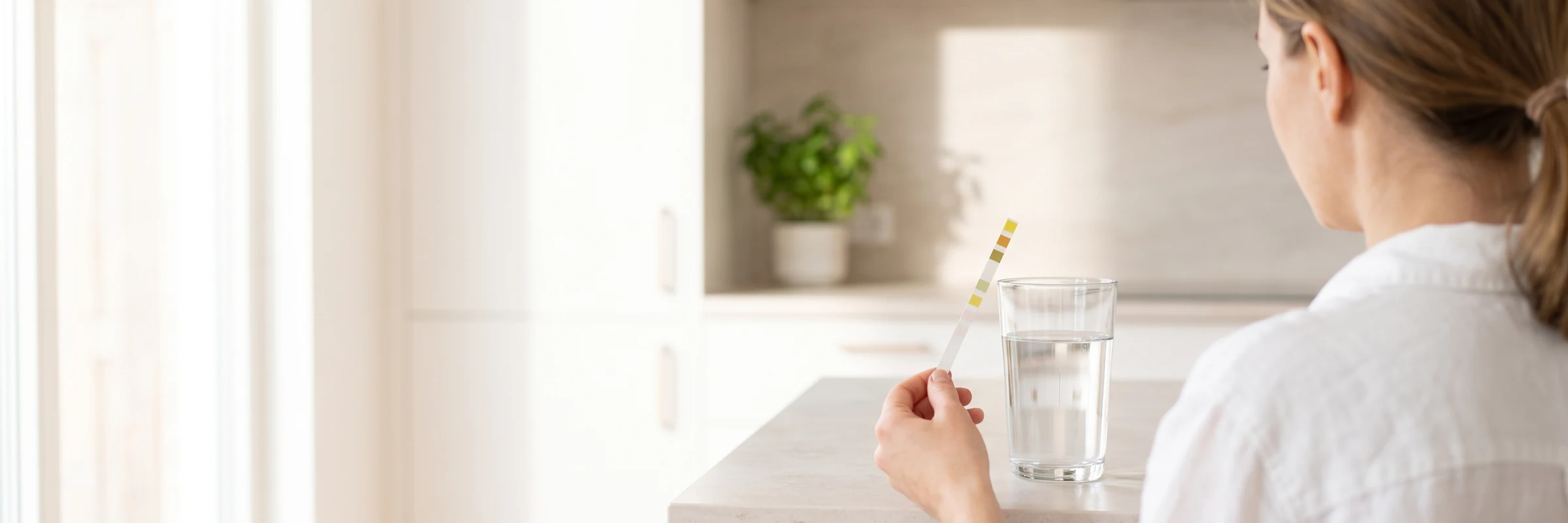
The drinking water advisor explains unusual readings: choose the value that stands out, such as pH, hardness, nitrate, lead or iron, or a problem like brown water, and the direction of the deviation. You then see the limit, what it means and what to do. If a value is above the limit, have it confirmed by a lab.

All values & measures at a glance

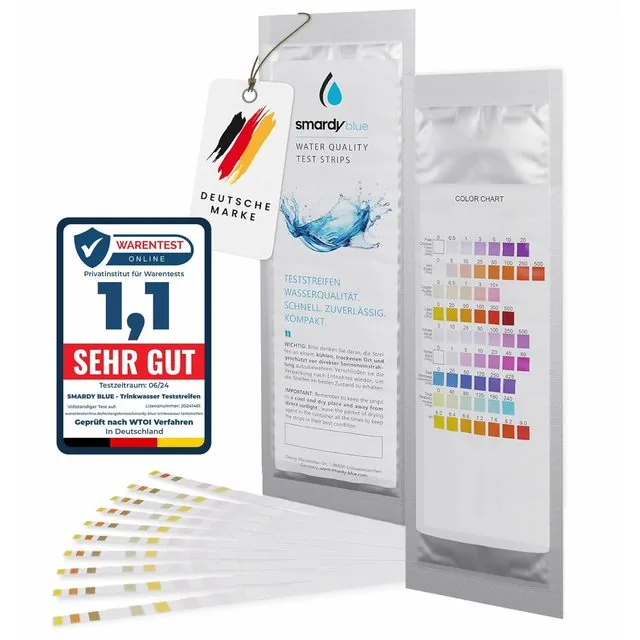
Every value with its limit, meaning and action – plus the most common issues straight from the tap.

Who is responsible? Up to the service connection your water supplier is responsible and publishes its readings online. From the service connection on, it is the owner or landlord. Test strips give you a first assessment – if a value is above the limit, have it confirmed by a lab.
Note on the products: The recommendations link to products on Amazon and do not replace the manufacturer’s instructions. Always use products as directed on the pack. Filters in the household plumbing are installed by a plumber. * Price: You can see the current price directly on Amazon – it can change at any time.
pH level
Permitted 6,5–9,5
Shows whether your water is acidic or alkaline. Tap water is almost always within the permitted range.
Value too high
What it meansAbove 9.5 the value is outside the drinking water regulations. Typical signs are a soapy taste and more limescale stains.
ActionRepeat the test with a fresh strip. If the value stays the same, ask your water supplier – it publishes its readings online.

No product needed – the action is enough.
Value too low
What it meansBelow 6.5 the water is acidic and can dissolve metals such as copper from the pipes.
ActionMeasure copper and lead as well – the 9-in-1 strip shows both. Run off water that has been standing for a while first. For a private well, a specialist installs a deacidification unit.
Then test again – ideally two samples: after the night and after running the tap.
Water hardness
Medium 8,4–14 °dH
There is no limit for hardness. It determines how much limescale builds up in appliances and how you dose detergent.
Hard · above 14 °dH
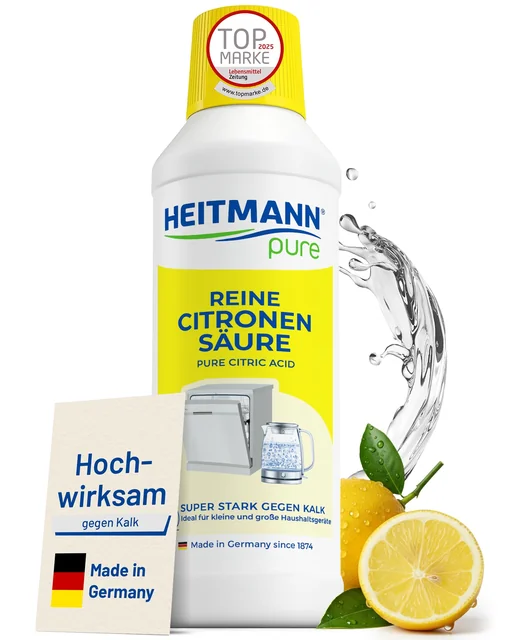
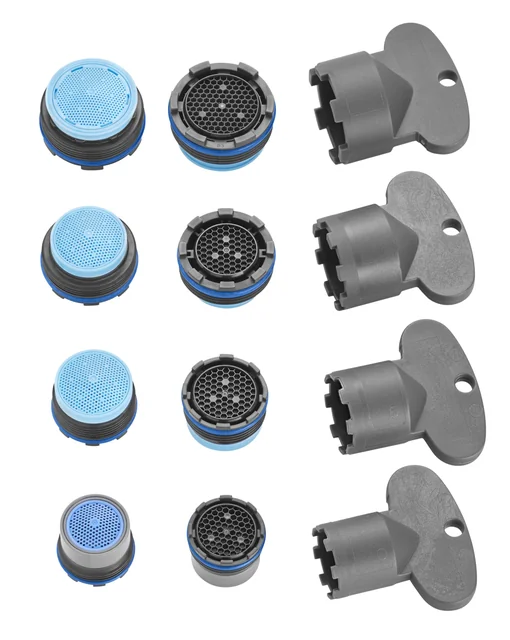
What it meansLimescale in the kettle and coffee machine, scaled-up tap aerators, white stains on glass and fittings.
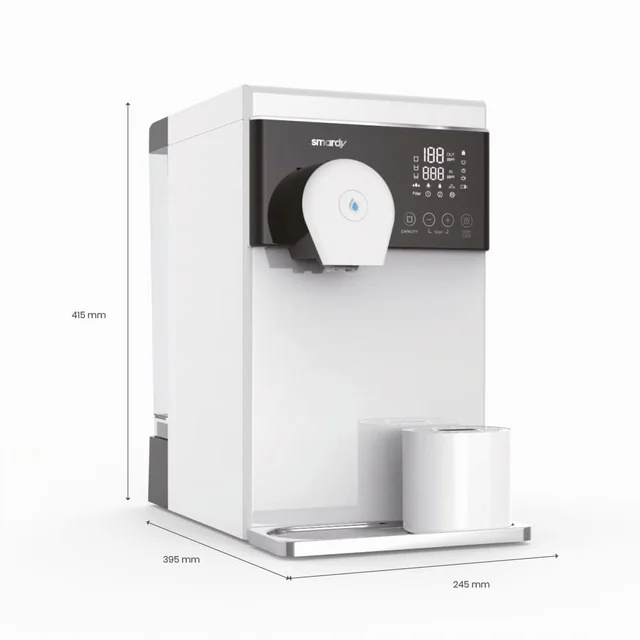
ActionDescale appliances regularly and dose detergent for the “hard” range. For tea and coffee, reverse osmosis takes the limescale out of the water.
Soft · below 8.4 °dH
What it meansSoft water hardly leaves limescale – that’s not a problem.
ActionDose detergent for the “soft” range – that saves product. Descaling is rarely needed.

No product needed – the action is enough.

Then test again – ideally two samples: after the night and after running the tap.
Nitrate
Limit 50 mg/l
Nitrate mostly comes from fertiliser and gets into the groundwater that way – an issue mainly for private wells.
Value too high
What it meansAbove 50 mg/l the water does not meet the drinking water regulations.
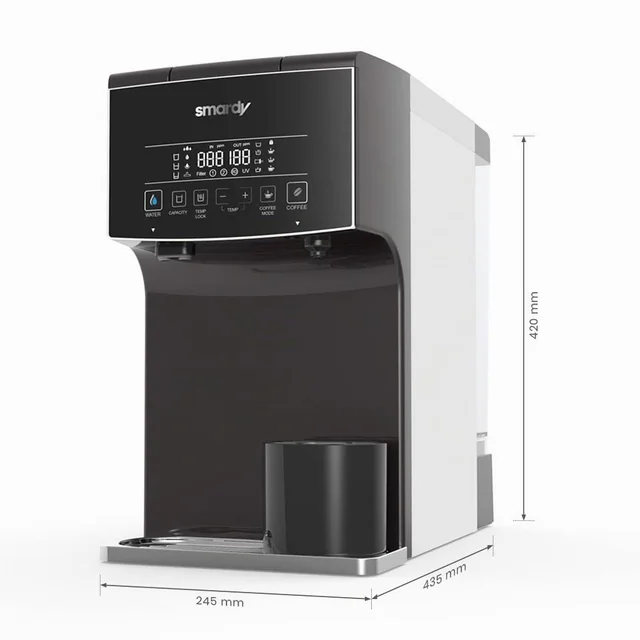
ActionTap water: repeat the test and inform your water supplier. Private well: have the value confirmed by a lab and don’t use the water as drinking water until then. Reverse osmosis reduces the nitrate content.
Then test again – ideally two samples: after the night and after running the tap.
Nitrite
Limit 0,5 mg/l
Nitrite forms when nitrogen breaks down. A raised value can point to germs or contamination.
Value too high
What it meansAbove 0.5 mg/l the water does not meet the drinking water regulations.
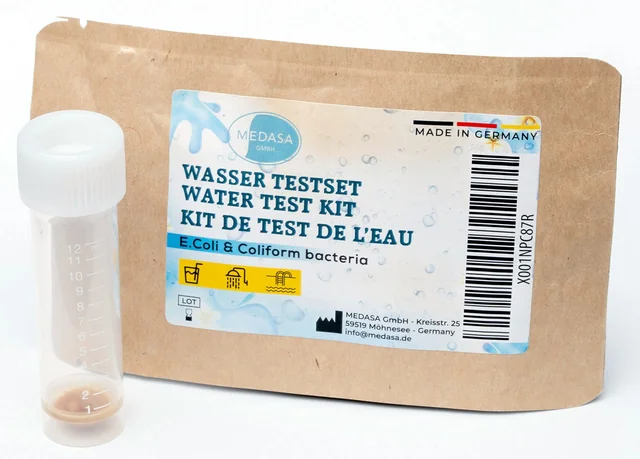
ActionRun the tap and test again. If the value stays, inform your water supplier or landlord and have the water tested for germs.
Then test again – ideally two samples: after the night and after running the tap.
Lead
Limit 0,01 mg/l
Lead almost always comes from old lead pipes in the house – they were installed until 1973.
Value too high
What it meansAbove 0.01 mg/l the water does not meet the drinking water regulations. From 12.01.2028 the limit is 0.005 mg/l.
ActionRun off water that has been standing until it comes out noticeably cooler. Inform your landlord or a plumber – lead pipes had to be replaced by 12.01.2026. Have the value confirmed by a lab.

No product solves this – the pipe has to be replaced. According to the German Environment Agency, filters are not a solution for lead.

If the value is above the limit, the lab result is what counts for your drinking water.
Copper
Limit 2,0 mg/l
Copper dissolves from copper pipes – especially from new pipes and from water that has been standing a long time.
Value too high
What it meansAbove 2.0 mg/l the water does not meet the drinking water regulations.
ActionFirst run off water that has been standing and check the pH value. If the value stays high, inform your landlord or a plumber and have it re-measured by a lab.

No product needed – the action is enough.

If the value is above the limit, the lab result is what counts for your drinking water.
Iron
Limit 0,2 mg/l
Iron turns water yellowish to brown. It comes from rusting pipes or from iron-rich well water.
Value too high
What it meansYellowish to brown water, metallic taste, rust stains in laundry and sinks.
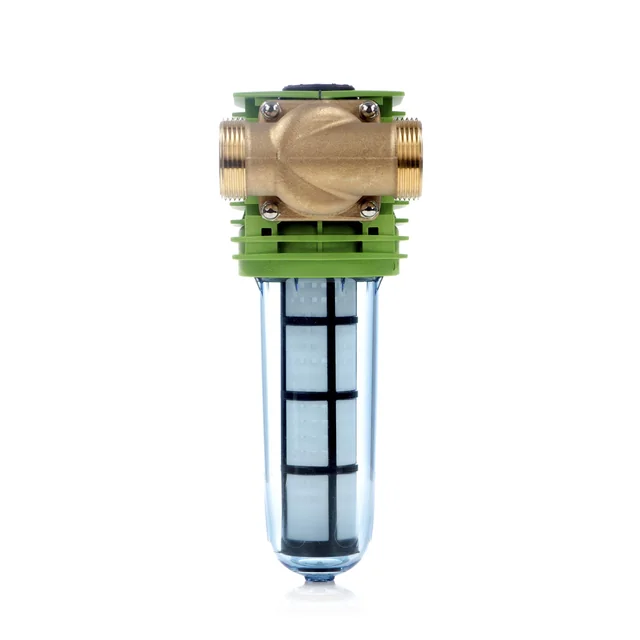
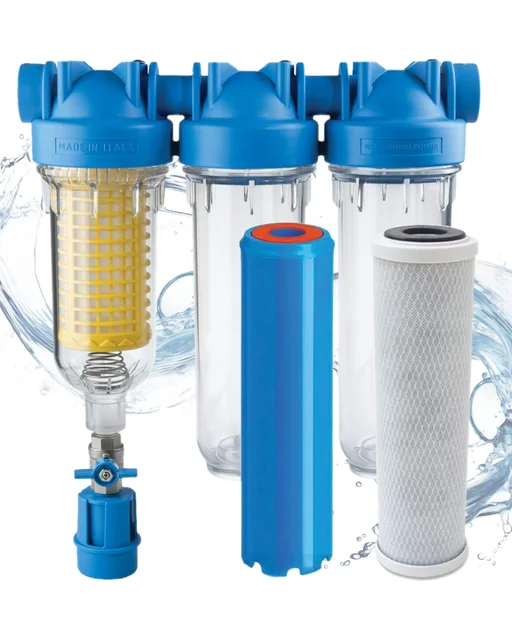
ActionRun the tap briefly. If it stays brown, ask your water supplier about work on the network and have the house pipes checked. A backwash filter after the water meter holds back rust particles; for a private well, an iron filter helps.
Then test again – ideally two samples: after the night and after running the tap.
Free chlorine
Maximum 0,3 mg/l
Your water supplier only adds chlorine when needed – after treatment at most 0.3 mg/l, in exceptional cases 0.6 mg/l.
Value too high
What it meansChlorine smell and taste. Some people can taste chlorine from about 0.3 mg/l.
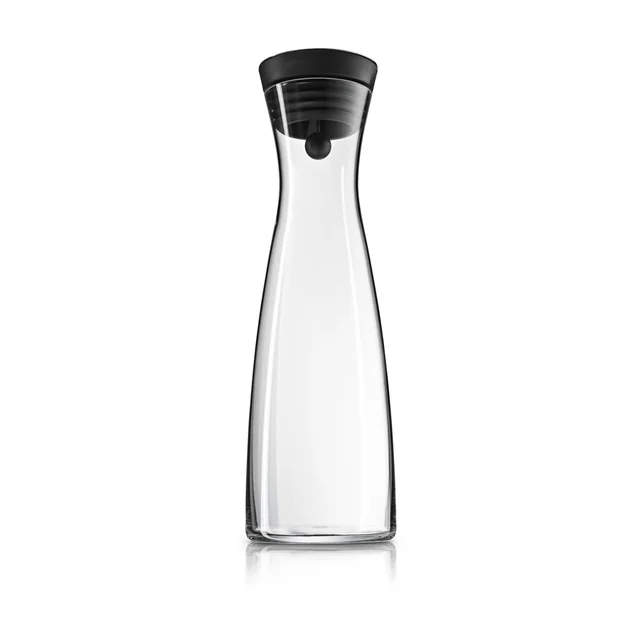
ActionAsk your water supplier whether chlorine is currently being added – this is usually only temporary. Keep water cool in a carafe; reverse osmosis reduces the chlorine content.
Then test again – ideally two samples: after the night and after running the tap.
Brown or cloudy water
The water comes out of the tap discoloured or cloudy.
Typical problem
SignsMilky and clears in the glass from the bottom up: just air. Yellowish to brown: usually iron or rust from the pipes.
ActionLet a glass stand and watch it. If it’s brown, run the tap and measure iron. If it stays that way, ask your water supplier or a plumber.
Limescale on taps and appliances
White rims, scaled-up tap aerators and deposits in the kettle.
Unusual smell or taste
Your water smells or tastes different from usual.
Typical problem
SignsRotten eggs: hydrogen sulphide, often in hot water or well water. Musty: the water stood in the pipe for a long time. Chlorine: the supplier is disinfecting.
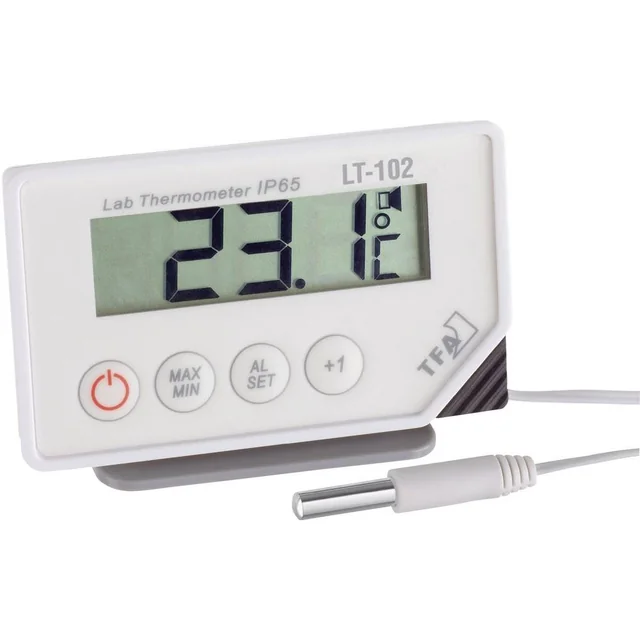
ActionCheck cold and hot water separately and run off water that has been standing a long time. If only the hot water smells, measure the temperature at the tank – the German Environment Agency specifies at least 55 °C.

Sources: Drinking Water Ordinance 2023 (§§ 17, 46, Annexes 2 and 3), the German Environment Agency’s list of treatment substances under § 20 TrinkwV, German Environment Agency (guide “Trinkwasser aus dem Hahn”, tip “Blei im Trinkwasser”, press dossier on nitrate), Detergents and Cleaning Agents Act § 9, district authority fact sheets on copper, manufacturer information. As of: October 2026.