


Home › Drinking water & home
Drinking water test kits for your home
Hardness, nitrate, lead & more — test your tap water easily yourself.
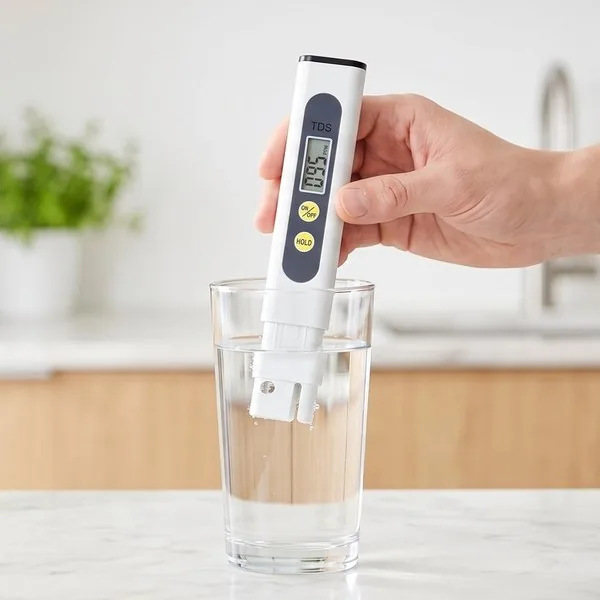
 fastDigital meterspH · TDS · hardness
 digitalLab testaccredited analysis
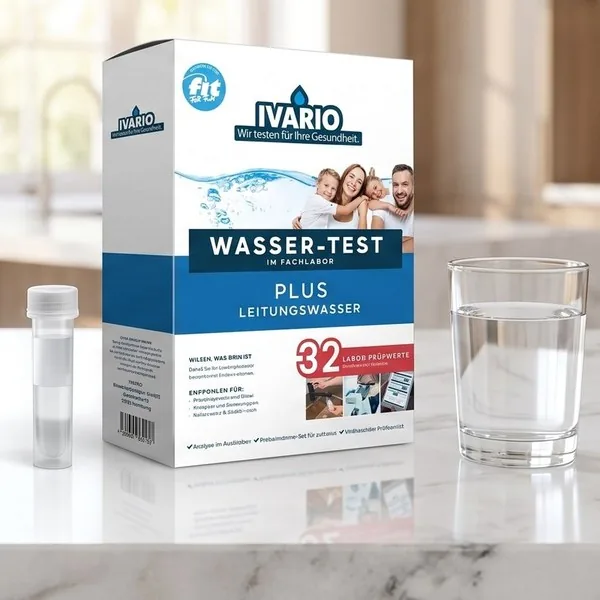 accurate
You can test drinking water at home with test strips, digital meters or an accredited lab test. Worth checking are water hardness, nitrate, pH, and lead and copper from old pipes; with your own well, also nitrite and bacteria. A multi-test strip covers the most common values in one step; for legally reliable results, use an accredited lab.
Find your system
The right test strips for your tap water
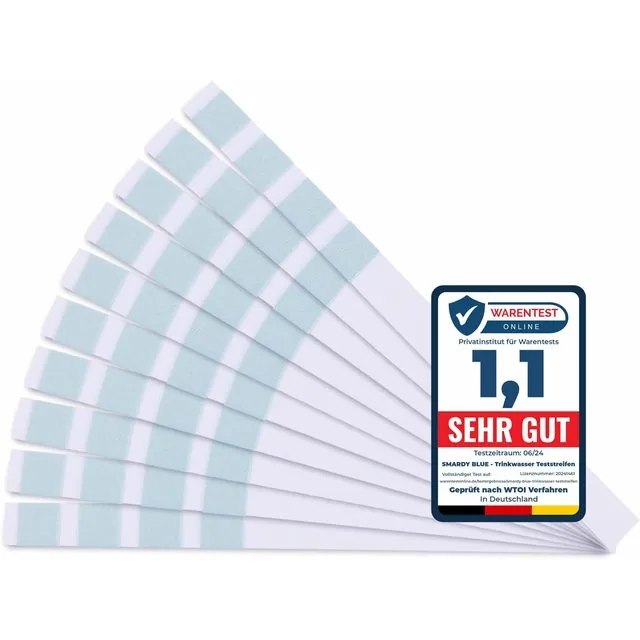
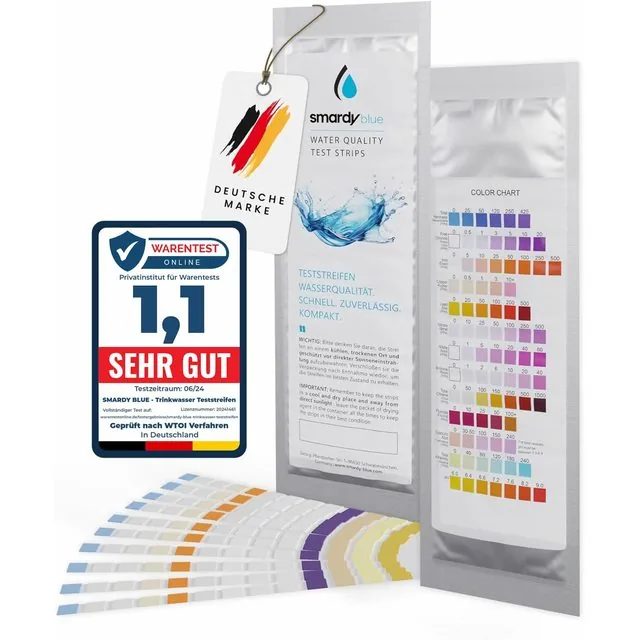
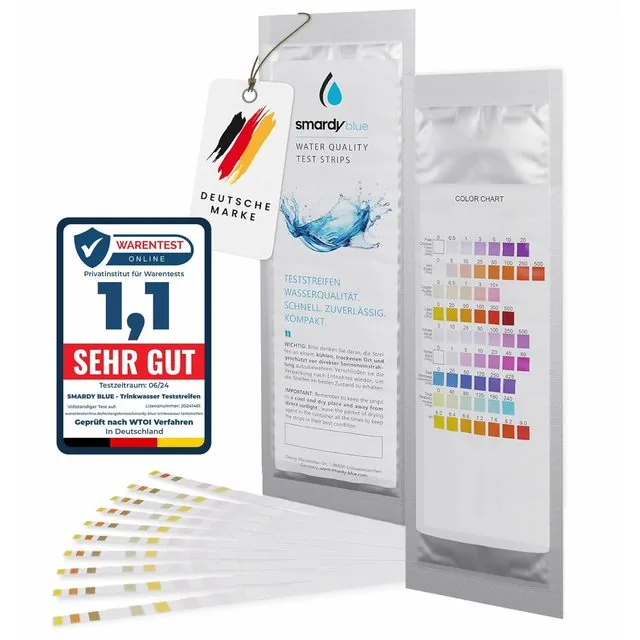
Prices incl. VAT, as of the last update. Amazon prices may have changed; the price on the Amazon product page at the time of purchase applies. As an Amazon Associate we earn from qualifying purchases.
Good to know
The key values at a glance
These values decide whether your tap water is clean and safe. The ideal range for each:
Test every time
too lowtastes flat, slightly corrosive
too highlimescale in kettle, pipes & appliances
Tipfilter or softener for hard water
too lowacidic, can dissolve metals
too highsoapy taste, limescale spots
Tipusually managed by the utility
Limits
too lowharmless, no lower limit
too highabove 50 mg/l — above the limit
Tipwith your own well, test regularly
too lowharmless, no lower limit
too highsign of bacteria, max. 0.5 mg/l
Tiplet the water run, test again
When needed
too lowharmless, no lower limit
too highchlorine taste & smell
Tiplet the water sit briefly
too lowharmless, no lower limit
too highabove 0,01 mg/l — above the limit
Tiplet stagnant water run off in the morning
Guide
Understand water, test it right
Tap, well and coffee machine – what you can check yourself.

Pure water — straight from the tap
From reverse osmosis to water testing: water expertise from a single source.
To smardy blueQuick answers
Common questions
In drinking water it is especially worth checking the water hardness, the nitrate content, the pH value as well as lead and copper from old pipes. With your own well, nitrite and bacteria are added. A multi-test strip covers the most common of these values in one step and quickly shows you the state of your tap water.
Water hardness is given in degrees of German hardness (°dH): up to about 8,4 °dH water is considered soft, up to 14 °dH medium and above that hard. Hard water leads to limescale in the coffee machine, kettle and pipes. Your exact hardness level is often also stated by your local water supplier.
Nitrate mainly enters the groundwater from agriculture and fertilisation. The legal limit in drinking water is 50 mg/l. Tap water almost always stays within the limit; with your own well you should test regularly.
Lead and copper almost always come from old household pipes. A particularly strict limit of 0,010 mg/l applies to lead, and from 12 January 2028 even 0,005 mg/l. For pipes laid before 1973, a test is especially worthwhile, as lead pipes may still be in place here.
Yes, multi test strips are very well suited to well and spring water, because they show several typical values such as hardness, nitrate, nitrite and pH at the same time. This way you can quickly spot unusual values. For legally reliable results, for example to approve drinking water, however, the path still leads through an accredited laboratory analysis.
For a first overview, a single measurement of your current state is enough. After that, another test is worthwhile whenever something changes: after moving house, if the taste or smell changes, or if you have your own well. This way you spot changes early and always know whether your drinking water is within the recommended range.
Help or advice — feel free to get in touch
Phone: 0800 8727 739
Real people no hold queue — we’re here for you personally.
Mon–Fri 9:00–15:00 · free of charge
Email: info@smardy-blue.com
Drop us a line — we usually reply to every message personally within 24 hours.
Contact us
Still have a question? Through our contact form you’ll quickly find the right answer.