


Home › Aquarium & pond
Aquarium water test kits for tank and pond
Nitrite, ammonium and KH at a glance — for a stable tank.
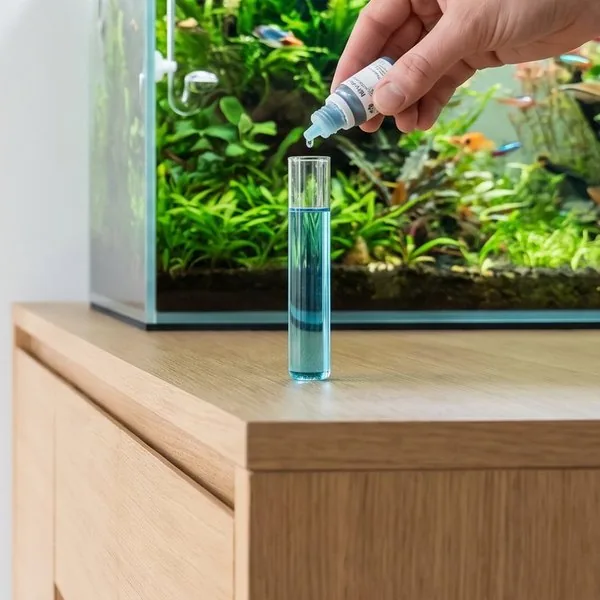
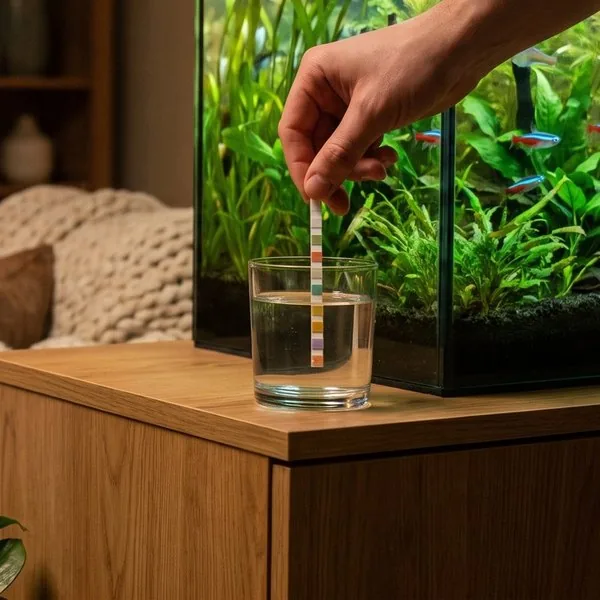 fastDrop testprecisely titrated
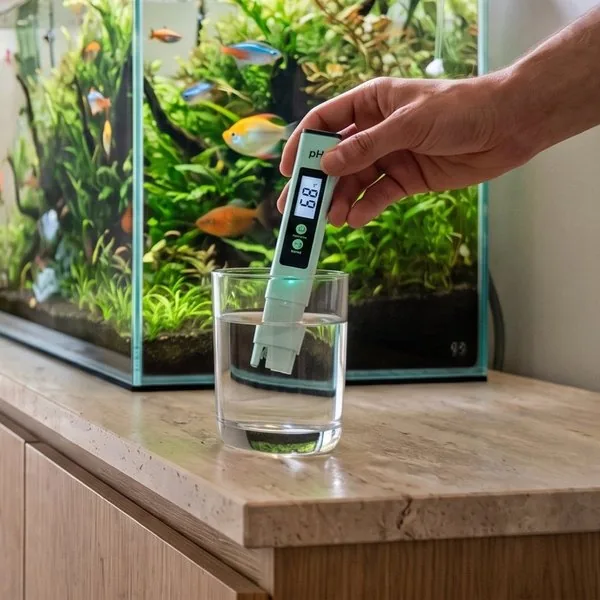
 accurateDigital meterpH · conductivity
 digital
For aquarium and pond water, there are three test methods: test strips for a quick overview, drop tests for precise single values and digital meters for pH and conductivity. The key values are pH, KH, GH, ammonium, nitrite and nitrate. Test an established tank about once a week, and check ammonium and nitrite daily while cycling.
Good to know
The key values at a glance
These values decide whether fish and plants thrive. The ideal range for each:
Test every time
too lowacidic — fish under stress
too highalkaline — ammonia turns more toxic
Tipwater change, keep KH stable
too lowpH tips easily (pH crash)
too highpH hard to lower
TipKH-Plus or water change
Fish & plants
too lowharmless, no lower limit
too hightoxic — especially at high pH
Tipwater change now, check filter
too lowharmless, no lower limit
too highhighly toxic to fish
Tipwater change, feed less
When needed
too lowharmless, no lower limit
too highfeeds algae, stresses fish
Tipchange water regularly, add plants
too lowtoo soft for many fish
too hightoo hard for soft-water species
Tipmatch to your fish stock
Guide
Understand water, test it right
From cycling to the garden pond – values for fish and plants.

Pure water — not just in the aquarium
From reverse osmosis to water testing: water expertise from a single source.
To smardy blueQuick answers
Common questions
In the aquarium, what counts are the pH value, the carbonate hardness (KH), the total hardness (GH) and the nitrogen values ammonium, nitrite and nitrate. Phosphate also plays a role. These values decide whether fish and plants thrive. A combination test shows you the most important parameters quickly and clearly at a glance.
Ammonium and nitrite are produced when food residue and waste break down. Both are toxic to fish, especially nitrite. In an established tank, bacteria break them down via the nitrogen cycle into less harmful nitrate. Values above zero indicate a young or disturbed tank and should be checked urgently.
The ideal pH value depends on the stock: many community aquariums sit well between 6,5 and 7,5, Lake Malawi cichlids prefer higher values, discus rather lower ones. What matters is a stable pH value without strong fluctuations. The carbonate hardness acts as a natural buffer and keeps the pH value constant within the desired range.
Total hardness (GH) describes all the hardness-forming minerals dissolved in the water, such as calcium and magnesium, and is important for fish and plants. Carbonate hardness (KH) is the portion that buffers the pH value and keeps it stable. The two values belong together: a sufficient KH prevents dangerous pH fluctuations in the aquarium.
Nitrate and phosphate build up through food, fertilizer and fish waste. They are nutrients and normal in moderation, but at high concentrations they are the main driver of algae. Regular partial water changes, moderate feeding and aquatic plants keep both values low and ensure clear, stable aquarium water without annoying algae blooms.
You should test an established aquarium roughly once a week, especially pH, KH and nitrate. When cycling a new tank, a daily check of ammonium and nitrite makes sense until the nitrogen cycle runs stably. A quick measurement is also worthwhile after adding new stock, changing the food or when the fish behave unusually.
Help or advice — feel free to get in touch
Phone: 0800 8727 739
Real people no hold queue — we’re here for you personally.
Mon–Fri 9:00–15:00 · free of charge
Email: info@smardy-blue.com
Drop us a line — we usually reply to every message personally within 24 hours.
Contact us
Still have a question? Through our contact form you’ll quickly find the right answer.