

Home › Digital meters › Salt tester
Category
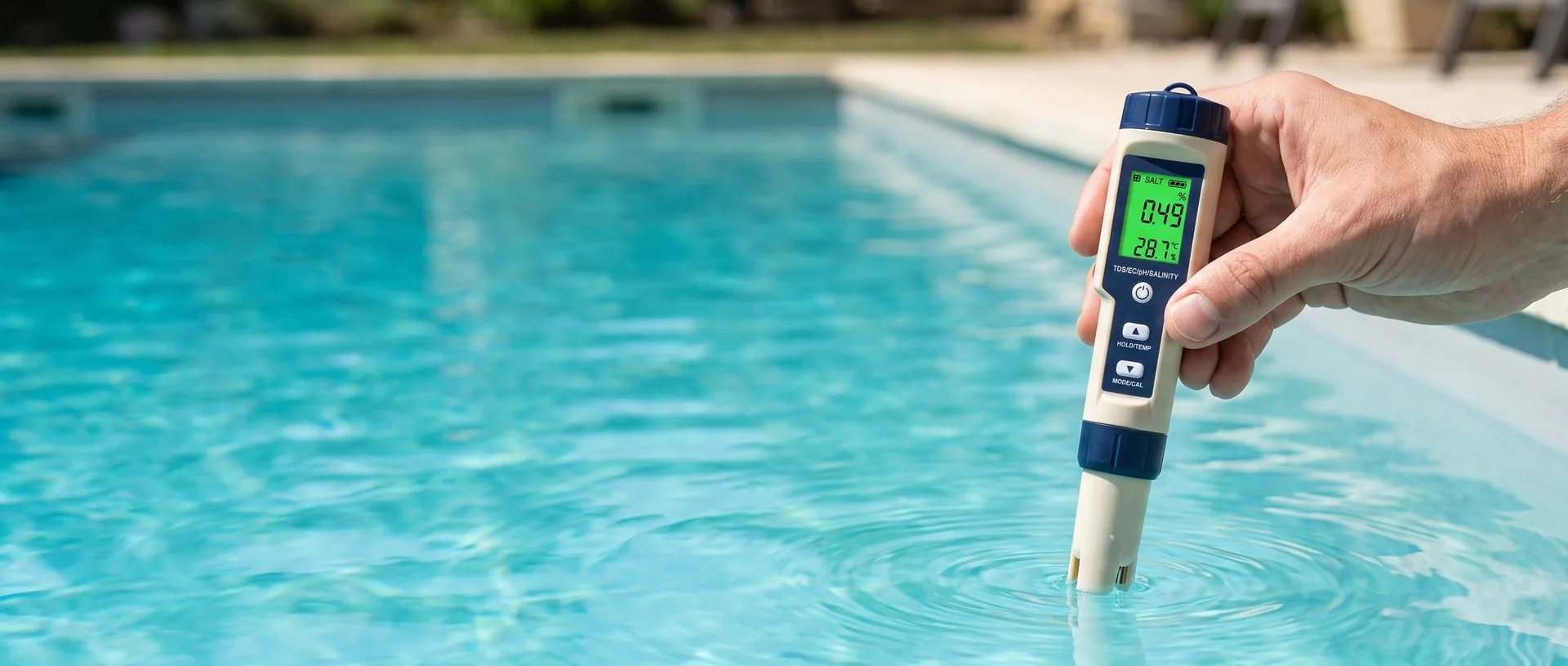
Pool salt tester: measure salinity digitally
Measure pH, TDS and salinity digitally — fast and without consumables.
Set the device to the target value beforehand using calibration solution.
Hold the electrode in the water and stir briefly.
Wait until the displayed value holds steady.
Read the digital value directly.
A digital salt tester measures the salinity of your saltwater pool: hold it in the water, and after a few seconds it shows the value in grams per litre. Most electrolysis systems work at around 3.0–4.0 g/l; your system's manual gives the exact target. Check the salinity every one to two weeks and after rain or topping up.
Good to know
What you measure digitally
The key values a digital meter gives you — and what they point to.
Key values
too lowsalt cell makes too little chlorine
too highsalty, promotes corrosion
Tipadd salt or replace some water

Pure water — not just in the pool
From reverse osmosis to water testing: water expertise from a single source.
To smardy blueQuick answers
Common questions
Saltwater pools generate their chlorine by electrolysis from dissolved salt. The easiest way to measure the salinity is with a digital salt tester that you hold in the water. After a few seconds, the display shows the value in grams per litre, so you can top up the salt in a targeted way when needed.
Most electrolysis systems work with a salinity of around 3,0 to 4,0 g/l. The exact target value is stated in your system's manual. Too little salt lowers chlorine production, so the water can tip out of balance; too much salt strains the cell and can attack the system's metal parts and cause them to corrode.
Salinity changes more slowly than pH or chlorine, but should still be checked regularly – roughly every one to two weeks, as well as after topping up with fresh water or after heavy rain. Rain and evaporation shift the concentration. Regular measurement ensures that your salt chlorinator reliably produces chlorine over the long term.
Digital salt testers are usually factory-calibrated and ready to use straight away. Even so, it's worth checking them occasionally against a reference solution to detect any deviation. Rinse the electrode after every measurement and keep the device clean and dry. That way the salt value it displays stays reliable and accurate for a long time.
A common cause is salinity that's too low: if it drops below the target value, the electrolysis can no longer produce enough chlorine. A calcified cell or an incorrect pH value can also be to blame. First measure the salinity, top it up if needed, and then check the pH value and the condition of the cell.
There are special salt test strips that provide a rough guide value. For saltwater pools, however, a digital salt tester is more practical and more accurate, because it displays the value directly in grams per litre. Since salinity is decisive for chlorine production, the more precise digital measurement is especially worthwhile here.
Help or advice — feel free to get in touch
Phone: 0800 8727 739
Real people no hold queue — we’re here for you personally.
Mon–Fri 9:00–15:00 · free of charge
Email: info@smardy-blue.com
Drop us a line — we usually reply to every message personally within 24 hours.
Contact us
Still have a question? Through our contact form you’ll quickly find the right answer.