

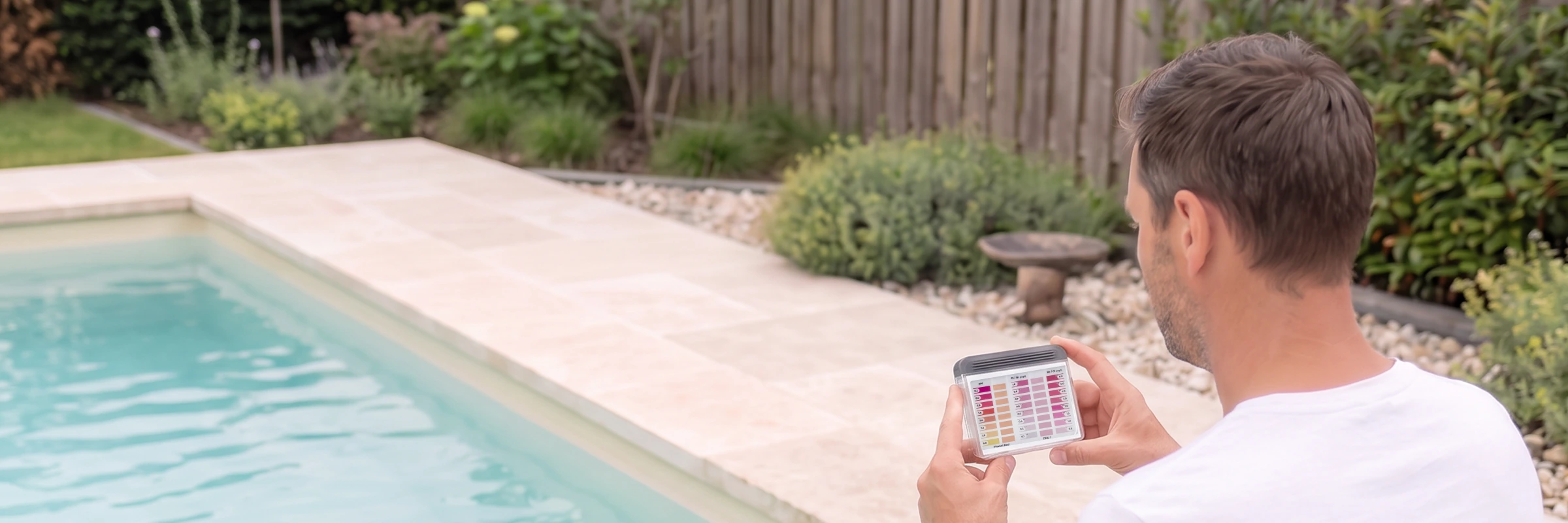
If the chlorine in your pool is too high, stop adding chlorine, take off the cover and let the filter run. Re-measure with a diluted sample; with very high levels, a partial water change or chlorine neutraliser helps. A major manufacturer says to swim again only once free chlorine is below 3 mg/l; normal is 0.3–0.6 mg/l.
Good to know
How much chlorine belongs in the pool?
Chlorine keeps pool water clear and free of algae – but only in the right amount. Too little chlorine lets the water turn, too much bleaches liners and swimwear and makes swimming unpleasant. What matters is what you measure: free chlorine, combined chlorine and the pH level.
Free, combined and total chlorine
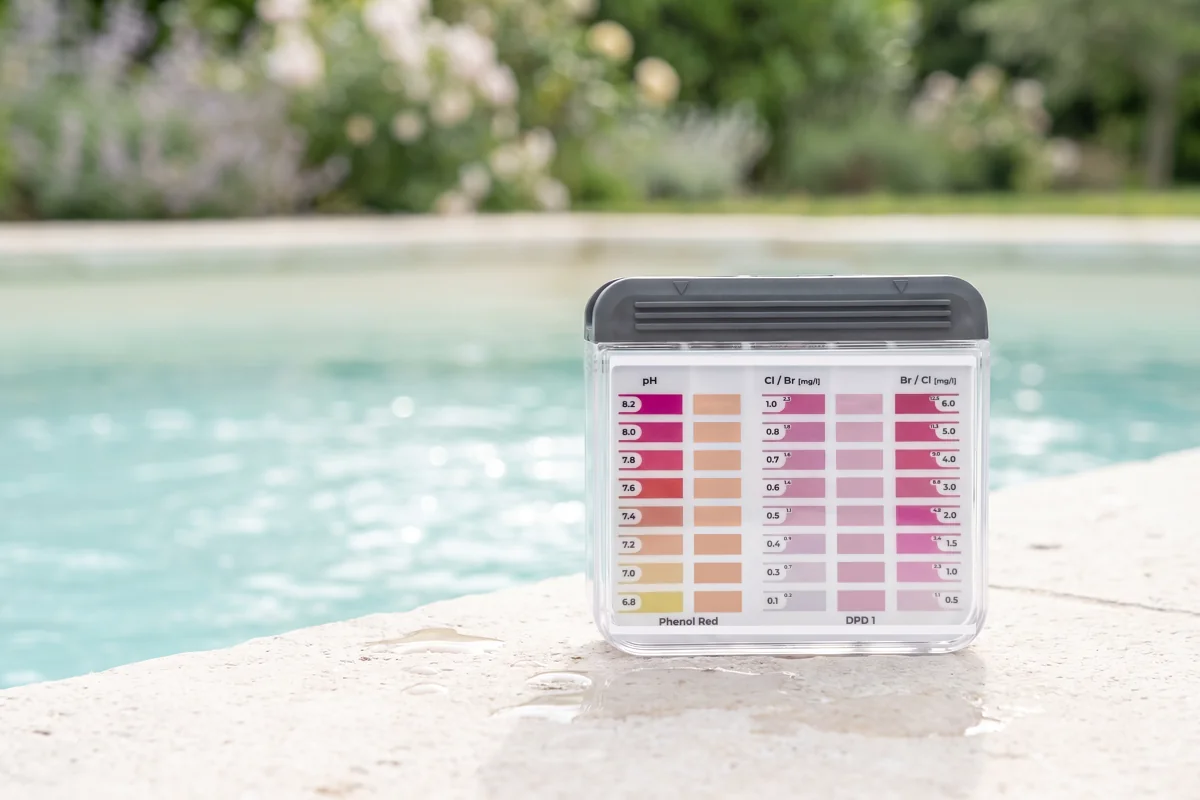
Free chlorine is the part that does the work in the water. For private pools the guide value is 0.3–0.6 mg/l – this range is given by manufacturers of pool care products and by the German Environment Agency’s recommendation for swimming pools.
Combined chlorine forms when chlorine reacts with dirt in the water. It hardly works any more and causes the typical chlorine smell. You measure it indirectly: total chlorine (DPD3) minus free chlorine (DPD1). Target: below 0.2 mg/l.

The pH level plays its part
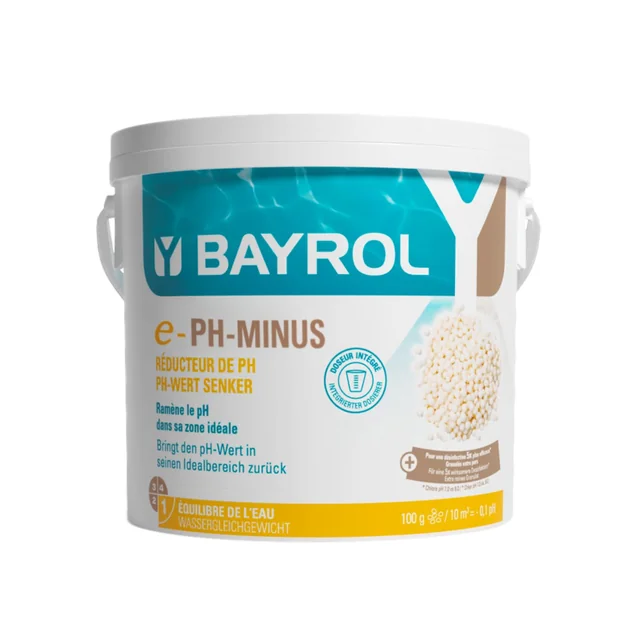
How well chlorine works depends on the pH level: the higher the pH level, the weaker the chlorine works. Manufacturers give 7.0–7.4 as the range in which chlorine is fully effective.
So always adjust the pH level first and only then add chlorine. If you keep adding more chlorine while the pH level is too high, you quickly end up with a chlorine level that is far too high.
Target values
The chlorine levels you should know
Measure free chlorine and the pH level 2–3× a week during the swimming season, and daily in hot weather or with lots of swimmers. Check combined chlorine when the water smells of chlorine.
0,3–0,6 mg/l
The range for normal swimming. Set your dosing to this permanently.
below 3 mg/l
A major manufacturer of pool care products gives this limit: only swim again once free chlorine is below it.
below 0.2 mg/l
Total chlorine minus free chlorine. If it is higher, the water smells of chlorine – even if there is hardly any free chlorine.
7,0–7,4
In this range chlorine is fully effective. Adjust it before you add chlorine.
A value out of range? The pool care advisor shows you the right action to take. Go to the Pool care advisor
Two approaches
Chlorine too high: wait or neutralise?
Free chlorine breaks down by itself – through sunlight, dirt in the water and time. A chlorine neutraliser is faster. Which way suits you depends on how high the level is and when you want to swim again.
Most common
Wait and dilute
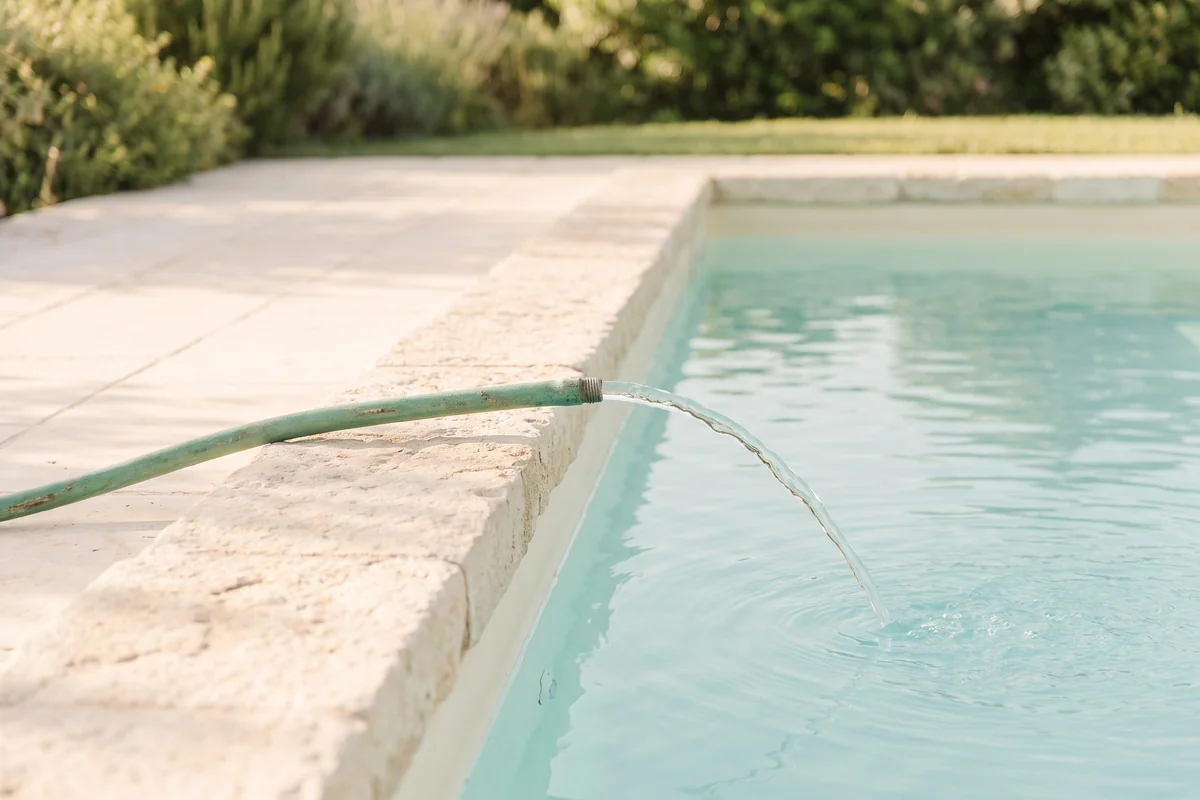
You stop adding chlorine, take off the cover and let the filter system run. With very high levels you also replace part of the water with fresh water.
Suitable if:
- the level is only slightly above the guide value
- you don’t need to swim for a few days
- you want to manage without extra products
When it needs to be quick
Chlorine neutraliser
A neutraliser based on sodium thiosulphate binds excess chlorine. You dose it in portions according to the label and measure again afterwards.
Suitable if:
- the level is well above 3 mg/l, for example after overdosing
- you want to swim again soon
- you want to drain pool water and first need to neutralise the remaining chlorine
Quick help
Chlorine far too high: step by step
Here’s what to do when the chlorine level is well above the guide value. The instructions for your care products and devices take priority.
- 1
Stop adding chlorine
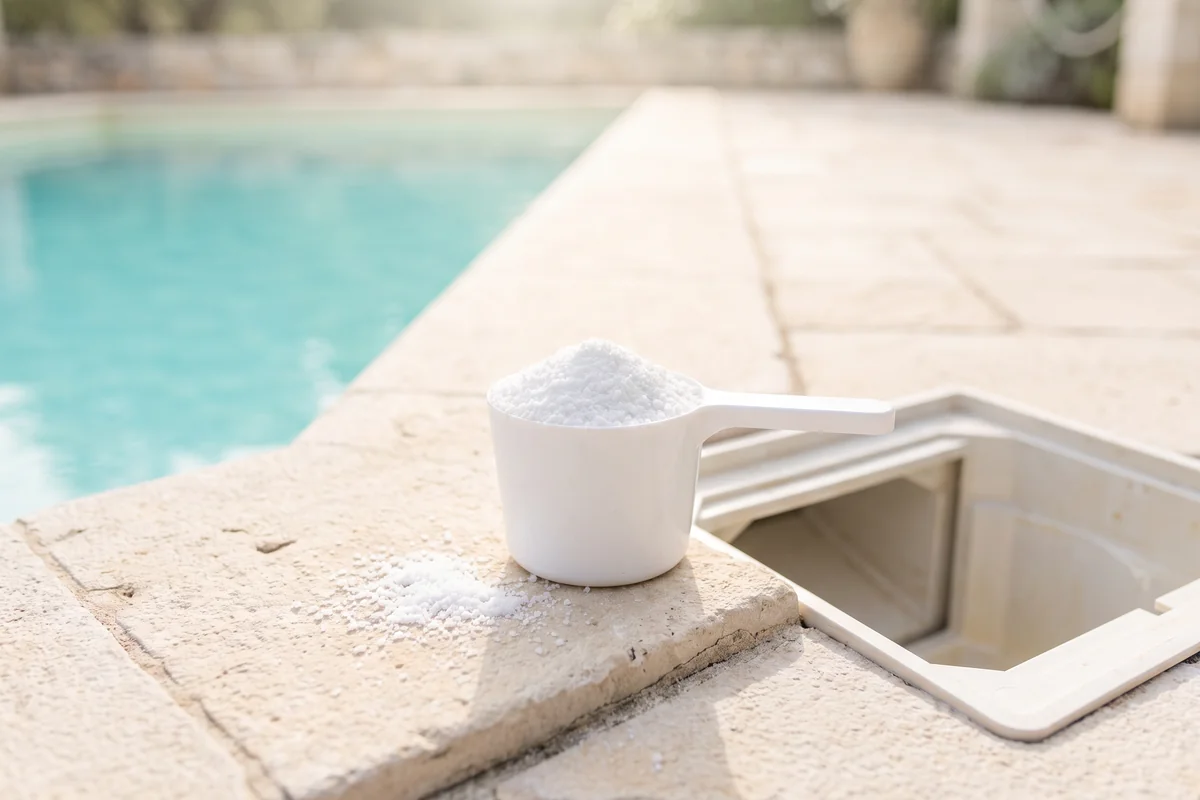
Remove tablets from the skimmer and floating chlorine dispenser, pause any dosing system or salt water chlorinator. Don’t swim until the level is right again.
- 2
Measure correctly
If the test shows 0 or the maximum value even though you’ve just added chlorine, dilute the sample with distilled water and multiply up.
- 3
Take off the cover
Sunlight breaks down free chlorine. Leave the pool uncovered as long as the level is too high.
- 4
Let the filter system run
Circulate the water so that everything is evenly distributed. One manufacturer gives the water temperature divided by 2 in hours as the minimum running time.
- 5
Replace part of the water
With very high levels, drain water and top up with fresh water. If you replace half, the chlorine level roughly halves.
- 6
Neutraliser according to the label
If it has to be quick: calculate the amount for your pool volume according to the label and add it in portions with the pump running, not into the skimmer.
- 7
Measure again
Measure free chlorine again after a few hours and the next day, and repeat if necessary. Then check the pH level and adjust it to 7.0–7.4.
- 8
Adjust the dosing
Once free chlorine is below 3 mg/l again, you can swim again according to the manufacturer. Set your dosing so that the level stays at 0.3–0.6 mg/l in future.
Test shows 0 – despite lots of chlorine?
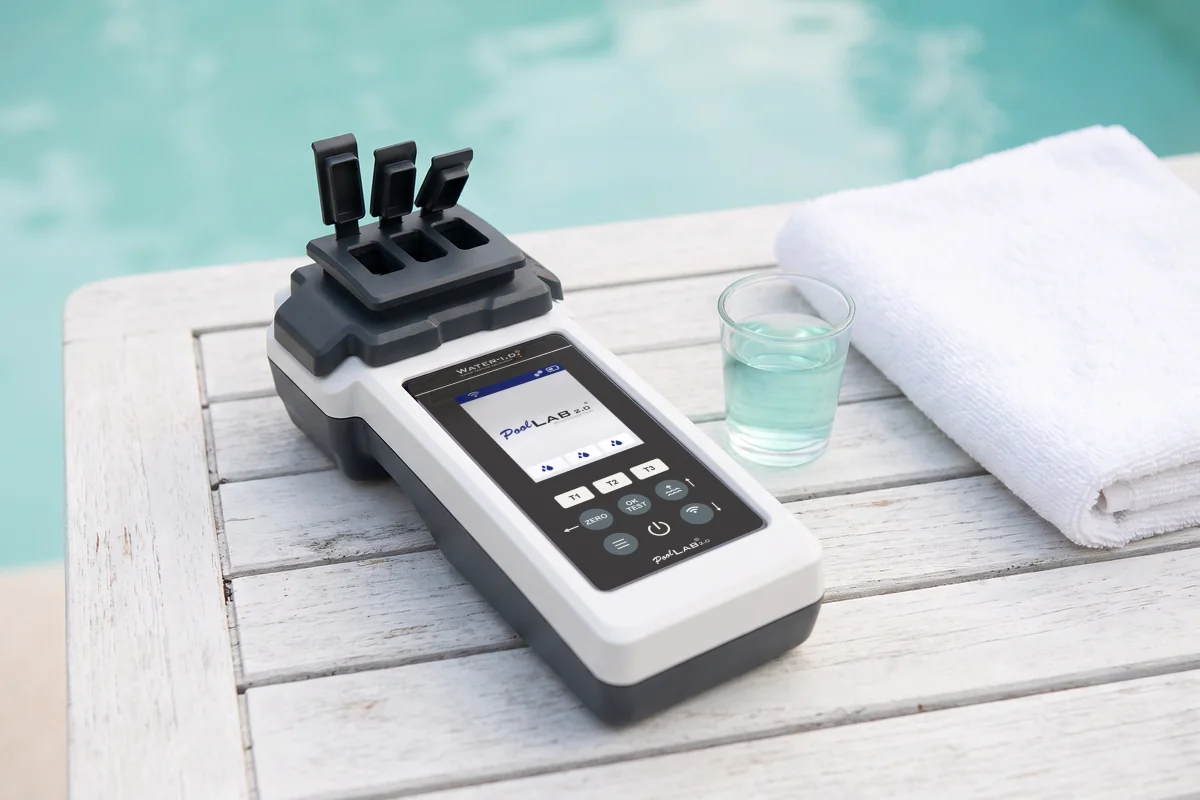
With a lot of chlorine, the dye in DPD tablets can bleach out. One manufacturer of measuring equipment writes: above 10 mg/l chlorine, tablet tests can show values within the measuring range all the way down to 0 mg/l. Many tests also end at 5 to 10 mg/l.
How to check the level:
- Dilute 1 + 1: Mix 5 ml pool water with 5 ml distilled water, measure and multiply the result × 2.
- Dilute 1 + 9: Mix 1 ml pool water with 9 ml distilled water, measure and multiply the result × 10.
- Chlorine only: Never measure the pH level diluted. With a lot of chlorine, the pH test can also give a false reading – measure it again after lowering the chlorine.
- Check for plausibility: Total chlorine can never be lower than free chlorine. If it is, the measurement is wrong.

Why does the pool smell of chlorine?
The pungent smell doesn’t come from free chlorine but from combined chlorine. It forms when chlorine reacts with dirt in the water.
So a strong smell doesn’t mean there is too much chlorine in the water – often there is actually too little free chlorine. Measure free and total chlorine before you add more or neutralise.
Where does too much chlorine come from?
- Shock chlorination: It deliberately raises chlorine far above the normal level. Afterwards it takes time to drop again.
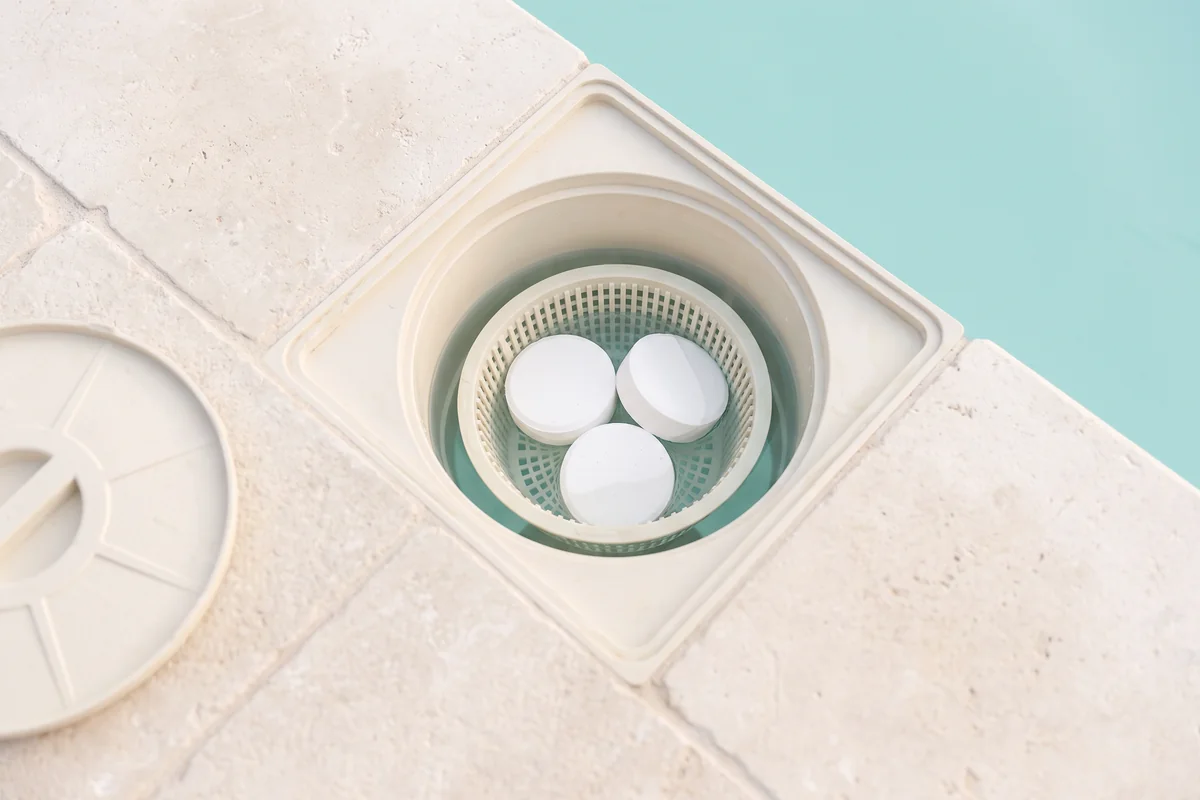
- Too many tablets: How quickly tablets dissolve in the skimmer or floating chlorine dispenser depends on pump running time and water temperature. In warm water it can quickly become too much.
- Pool covered for a long time: Under the cover there is no sunlight to break down chlorine.
- System set incorrectly: A dosing system or salt water chlorinator that produces or adds too much chlorine.
- Added more without measuring: If you simply add more because of a chlorine smell or cloudy water without measuring, it’s easy to overdose.
Cyanuric acid: when lots of chlorine does little
Long-lasting chlorine tablets and multi-action tablets usually contain cyanuric acid. It protects chlorine from being broken down by sunlight – which is why a chlorine level that is too high drops more slowly in stabilised water.
If cyanuric acid rises above about 50 mg/l, chlorine works more slowly and you need more of it. It can only be lowered with fresh water. So measure it from time to time – especially if you chlorinate a lot with tablets.
Common mistakes – and how to avoid them
- Blindly trusting a reading of 0: Right after adding chlorine the test can bleach out – measure diluted first, then add more.
- Adding neutraliser all at once: Too much of it lowers chlorine all the way to 0. Add it in portions and measure in between.
- Adding more because of the smell: A chlorine smell indicates combined chlorine. Measure first, then act.
- Forgetting the pH level: If the pH level is too high, chlorine works weakly and you keep adding more.
- Mixing chlorine products: Never put granules into a skimmer that contains chlorine tablets – manufacturers warn against this.
In short
Normal is 0.3–0.6 mg/l free chlorine at a pH level of 7.0–7.4. If chlorine is far too high: stop adding it, re-measure diluted, take off the cover, let the filter run and, if needed, change some of the water or add a neutraliser according to the label. According to the manufacturer, only swim again below 3 mg/l – and then set your dosing so that the level stays within the guide range.
Sources: instructions and data sheets from manufacturers of pool care products and measuring equipment, recommendation of the German Environment Agency (Umweltbundesamt) for swimming pools (values according to DIN 19643), Biocidal Products Regulation (EU) No 528/2012. As of: October 2026.
Products
What helps with chlorine in the pool
Our tests for chlorine, pH level and cyanuric acid – plus neutralisers, floating chlorine dispensers and chlorine products from other brands on Amazon.
Advertising: As an Amazon Associate we earn from qualifying purchases.
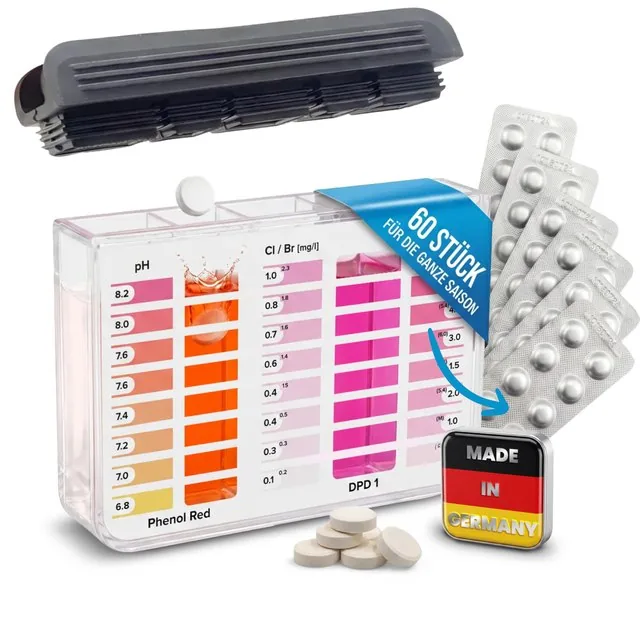
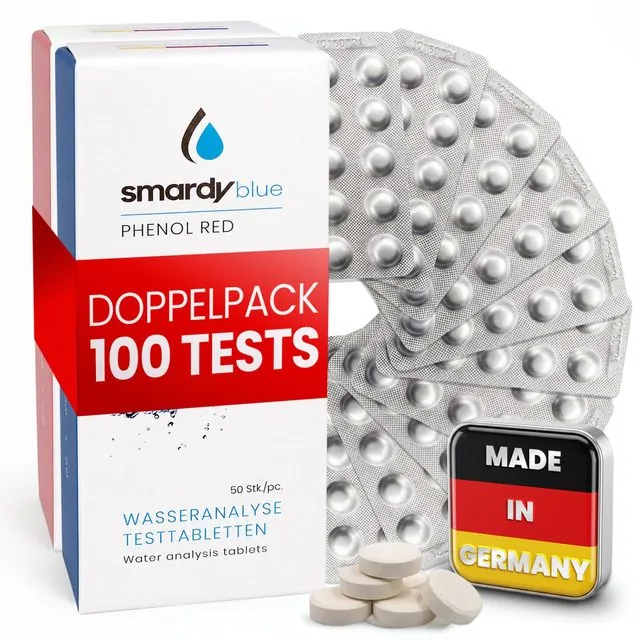
Measure correctly
You measure free chlorine and the pH level regularly, and combined chlorine and cyanuric acid as needed.
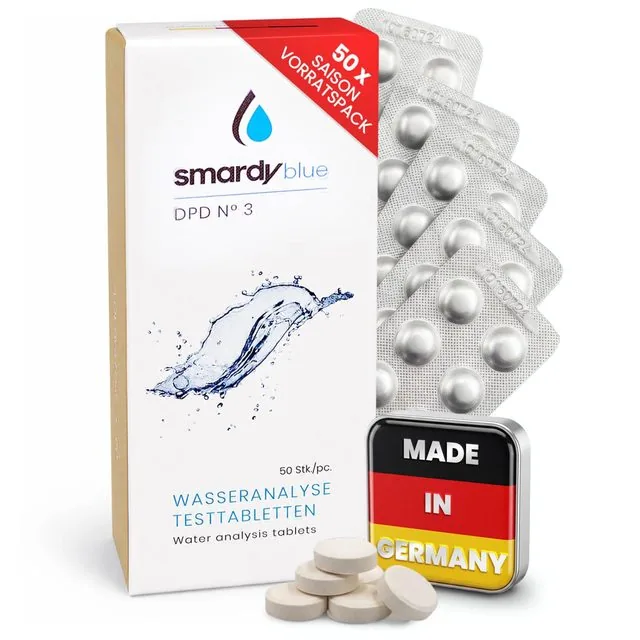
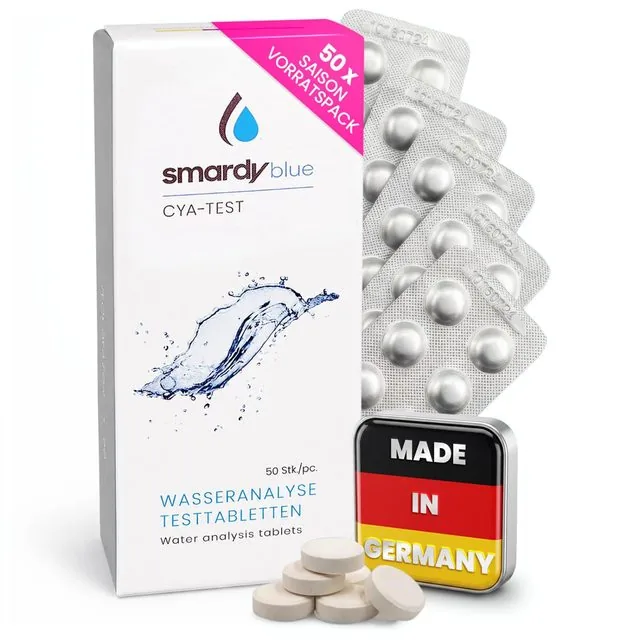
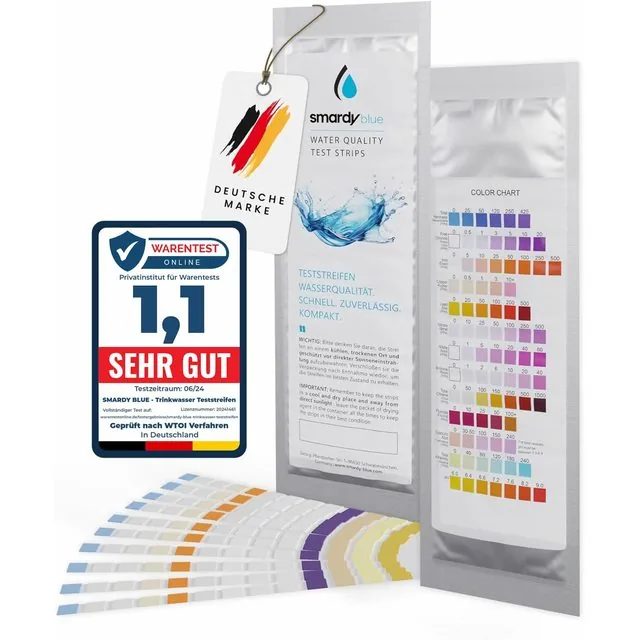
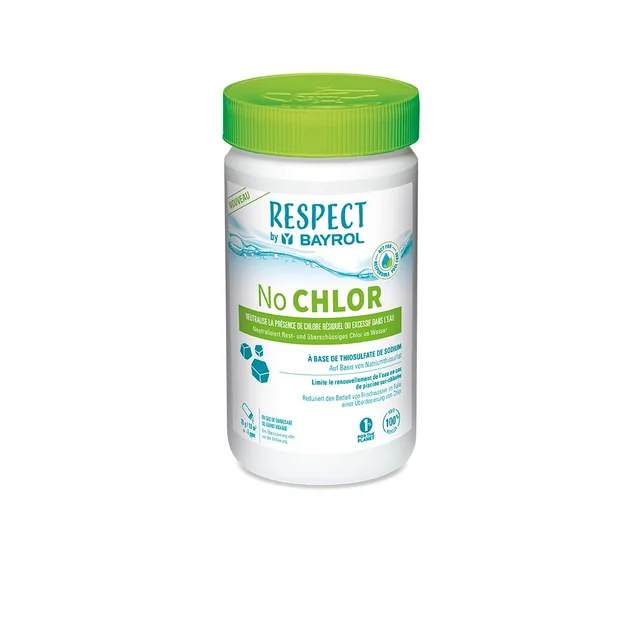
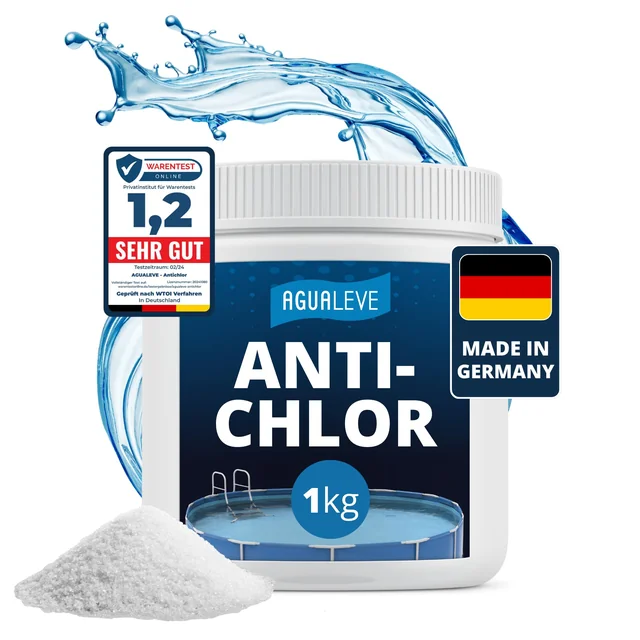
Lowering too much chlorine
A neutraliser lowers a chlorine level that is far too high faster than waiting. Dose according to the label and measure again afterwards.

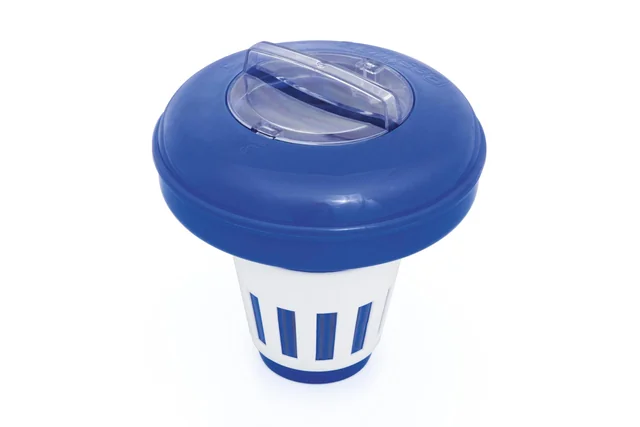
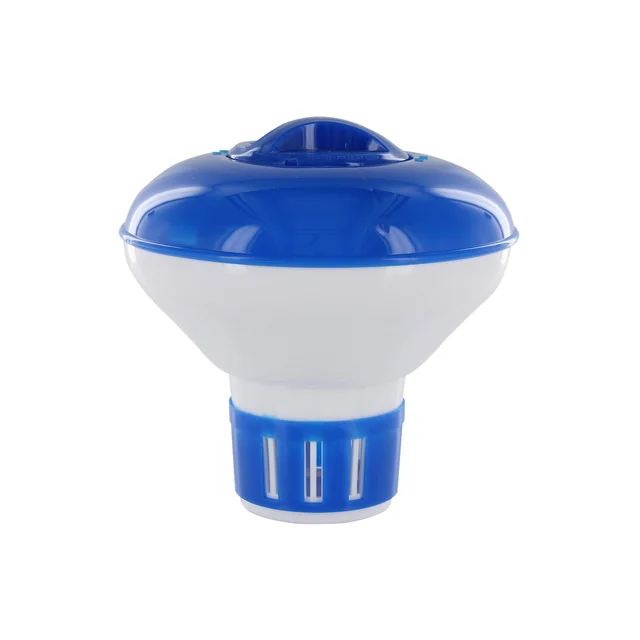
Dosing correctly in future
An adjustable floating chlorine dispenser releases tablets evenly. Chlorine tablets usually add cyanuric acid to the water – measure it as well from time to time.
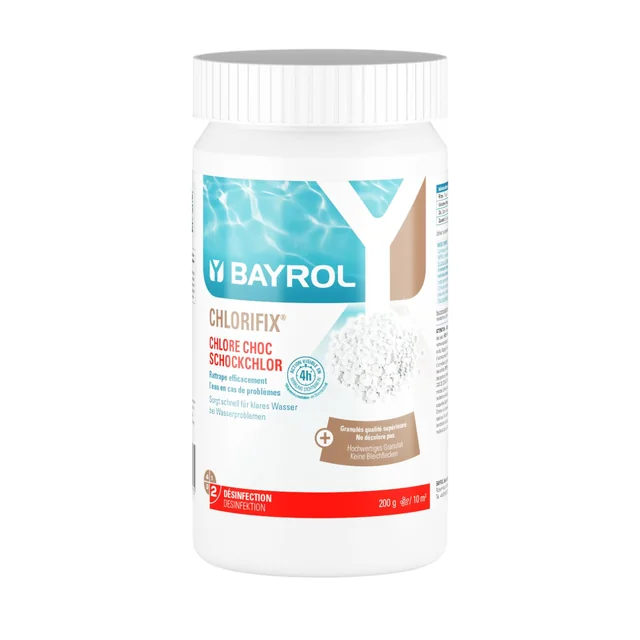
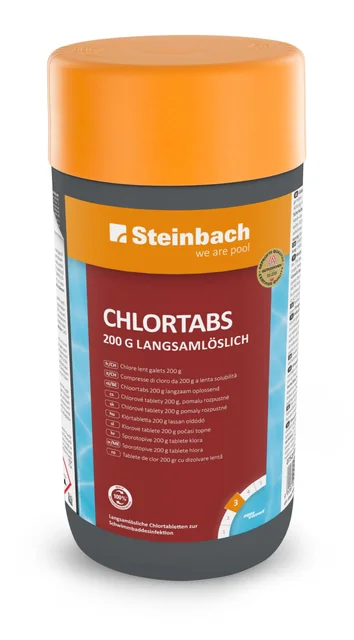
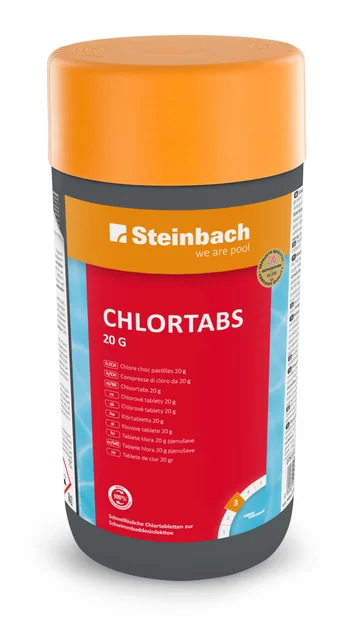
Prices are a non-binding guide and may vary; the price shown on Amazon at the time of purchase always applies.

Pure water — not just in the pool
From reverse osmosis to water testing: water expertise from a single source.
To smardy blueQuick answers
Frequently asked questions about chlorine in the pool
What should I do if the chlorine in the pool is far too high?
First stop adding chlorine: remove tablets from the skimmer and floating chlorine dispenser, and pause any dosing system or salt water chlorinator. Re-measure the level diluted, take off the cover and let the filter system run. With very high levels, a partial water change or a chlorine neutraliser according to the label helps. Then measure again.
When can I swim again after too much chlorine?
A major manufacturer of pool care products gives this limit: only swim again once free chlorine is below 3 mg/l. For normal swimming, 0.3–0.6 mg/l applies. Measure before swimming instead of going by feel.
How long does it take for too much chlorine to break down?
That depends on sunlight, the cover, water temperature and cyanuric acid. Retailers and manufacturers give very different times – from two to three days up to about ten days. With cyanuric acid in the water it takes longer. So rely on the measured value, not on time.
Why does my test show 0 even though I’ve just added chlorine?
With a lot of chlorine, the dye in DPD tests can bleach out – the test then shows too little or even 0. Dilute the sample with distilled water 1 + 1 or 1 + 9, measure again and multiply × 2 or × 10.
Why does my pool smell strongly of chlorine?
The smell comes from combined chlorine, which forms when chlorine reacts with dirt. Often there is actually too little free chlorine in the water. Measure free and total chlorine: the difference is the combined chlorine, target below 0.2 mg/l.
How much chlorine neutraliser do I need?
That’s on the label – amounts vary a lot from product to product. Calculate using your pool volume and the amount by which you want to lower the level, add the neutraliser in portions and measure again afterwards. Too much of it lowers chlorine all the way to 0.
How much chlorine normally belongs in the pool?
For normal swimming, 0.3–0.6 mg/l free chlorine at a pH level of 7.0–7.4 applies. Combined chlorine should be below 0.2 mg/l. Some manufacturers also give slightly higher values of up to about 1 mg/l for private pools.
Help or advice — feel free to get in touch
Phone: 0800 8727 739
Real people no hold queue — we’re here for you personally.
Mon–Fri 9:00–15:00 · free of charge
Email: info@smardy-blue.com
Drop us a line — we usually reply to every message personally within 24 hours.
Contact us
Still have a question? Through our contact form you’ll quickly find the right answer.