

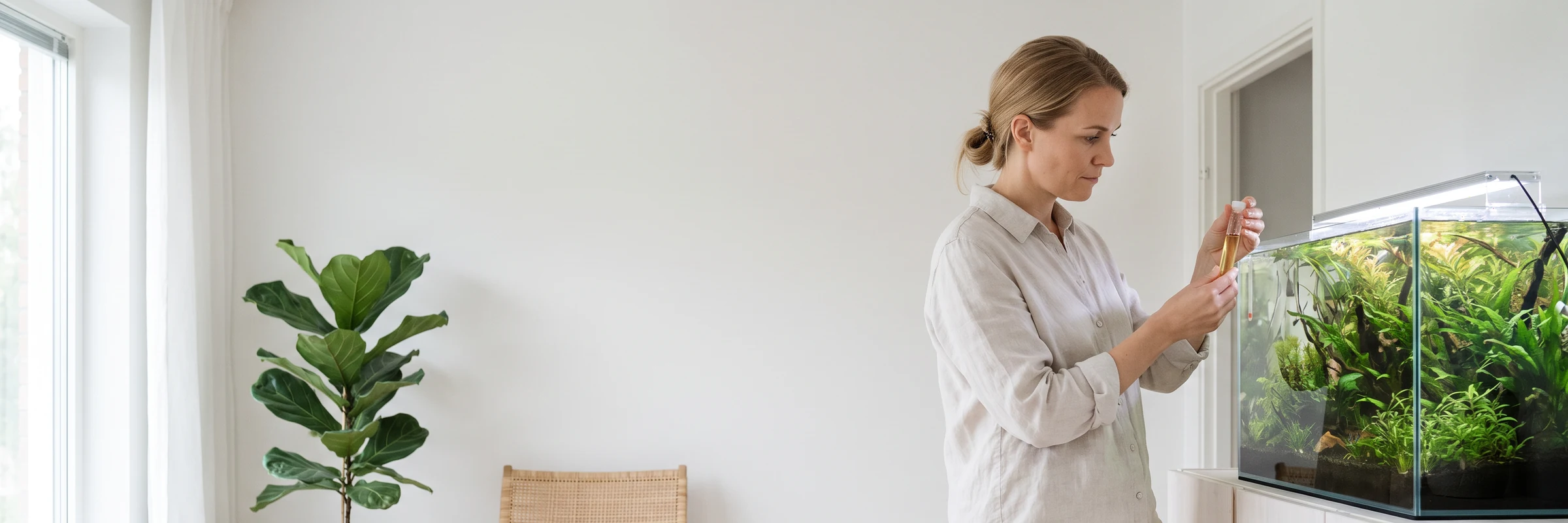
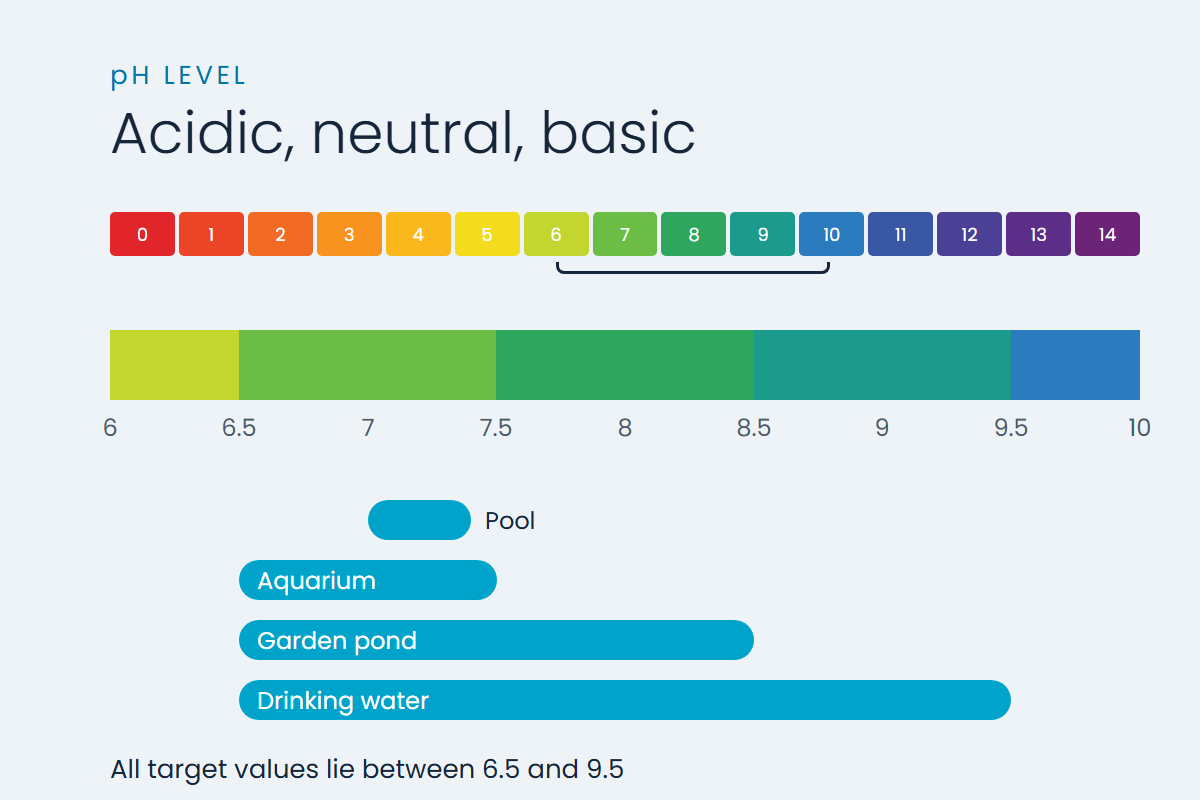
The pH level shows on a scale from 0 to 14 whether water is acidic, neutral or basic; 7 is neutral. The right range depends on the water: 7.0–7.4 in the pool, 6.5–7.5 for most community aquariums and 6.5–9.5 for drinking water in Germany. Adjust it with pH minus or pH plus in small steps.
Good to know
What the pH level tells you about your water
The pH level is the basic value of all water care. It shows whether your water is acidic, neutral or basic – and that determines how well everything else works.
Acidic, neutral, basic: the scale from 0 to 14
The pH level describes how many hydrogen ions are dissolved in the water. The scale runs from 0 to 14: at 7, water is neutral, below that acidic, above that basic – experts also call it alkaline.
- Below 7: acidic – for example vinegar or lemon juice.
- Exactly 7: neutral – neither acidic nor basic.
- Above 7: basic – for example soapy water.
Even small steps make a big difference
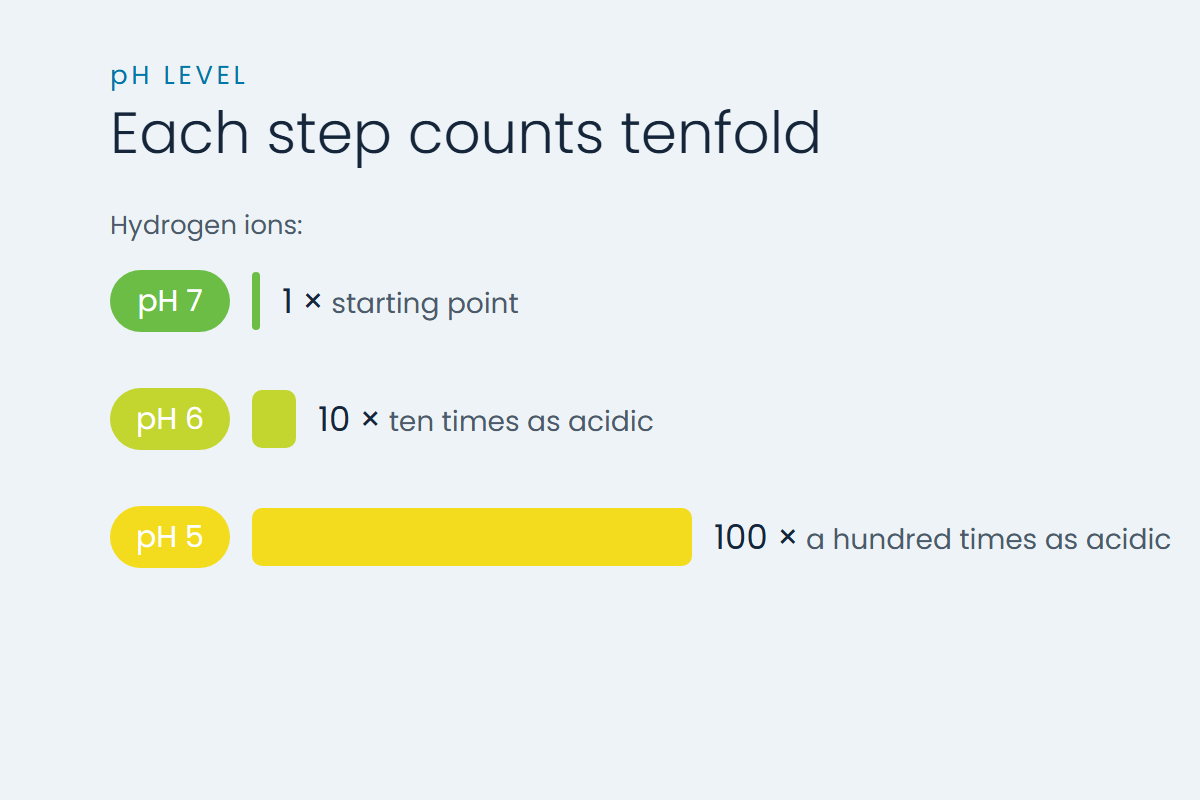
The pH scale is logarithmic: each whole step means ten times the amount of hydrogen ions. Water at pH 6 is ten times as acidic as water at pH 7, and at pH 5 it is already a hundred times as acidic.
That’s why even the difference between 7.2 and 7.8 matters in the pool – even though the numbers are close together.
Target values
Which pH value is right?
The right range depends on the water. The instructions for your test and your equipment always take priority.
7,0–7,4
In this range, chlorine works fully. If the value is higher, it works less well and limescale builds up more easily.
6.5–7.5
Suits most community tanks. Some fish species need softer or harder water.
6.5–8.5
Lower in the morning, higher in the evening. If the KH is right, the fluctuation over the day stays small.
6,5–9,5
Drinking water must stay within this range under the German Drinking Water Ordinance.
6,5–9,5
Applies if you drink the water. Acidic well water can attack metal pipes.
6.5–7.5
Guide value from the coffee industry. Carbonate hardness matters more here than the pH level.
7,0
At room temperature, pure water is exactly pH 7 – that’s the neutral point of the scale.
Want to know how the pH level relates to the other values? All water values explained
Consequences
What happens when the pH level is off
A wrong pH level often only shows once something is already going wrong. These are the typical consequences for each area.
Pool
Chlorine and limescale
- Too high: chlorine works less well
- Above pH 7.6 and 14 °dH: limescale forms
- Too low: metal parts get attacked
Aquarium
Ammonia and filter
- Too high: more toxic ammonia
- Below pH 6: filter bacteria barely work
- KH below 4 °dH: pH level fluctuates strongly
Pond
Fluctuation over the day
- Lots of algae: pH rises until evening
- KH below 4 °dH: below 6 in the morning, above 10 in the evening
- Too high: more toxic ammonia
Drinking water
Pipes
- Too acidic: can dissolve metals from pipes
- Outside 6.5–9.5: ask your supplier or a lab
- Your own well: check it yourself
Step by step
How to measure the pH level correctly
With these six steps, you get values you can rely on.
- 1
Take the sample correctly
Take the sample a little below the surface and not right at the inlet. In pools and hot tubs, let the pump run for a while first.
- 2
Always at the same time
The pH value in ponds and aquariums changes over the day. So always test at the same time, otherwise you are comparing apples and oranges.
- 3
Follow the instructions exactly
Only take the test strip out of the container right before testing and stick exactly to the waiting time. Read too early or too late, the value will be wrong.
- 4
Read in daylight
Compare the colour with the scale in daylight against a light background. Artificial light can distort the shade.
- 5
Not right after chlorinating
A lot of chlorine can distort pH readings with phenol red. So don’t measure the pH level right after shock chlorination.
- 6
Note down the values
Write down the date, time and values, plus the weather or special events. That way you can see whether a value is slowly drifting.
Pool: alkalinity first, then the pH level
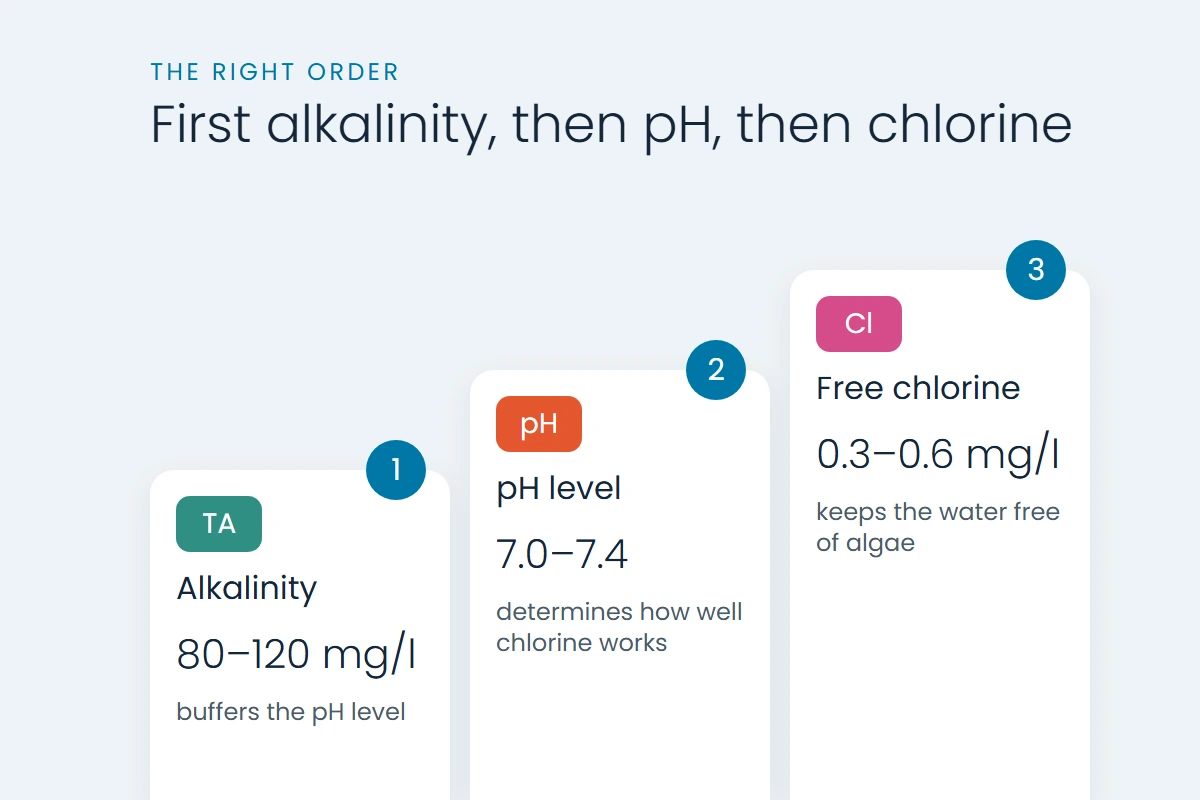
The values depend on each other. Alkalinity buffers the pH level: if it is too low, the pH jumps back and forth. And the pH level determines how well the chlorine works.
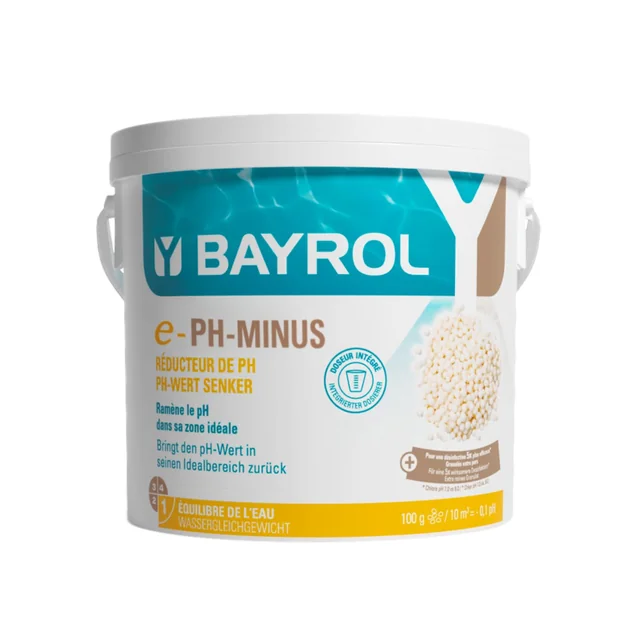
- pH level too high: Add pH minus in small steps as directed on the label, keep the pump running and measure again after a few hours.
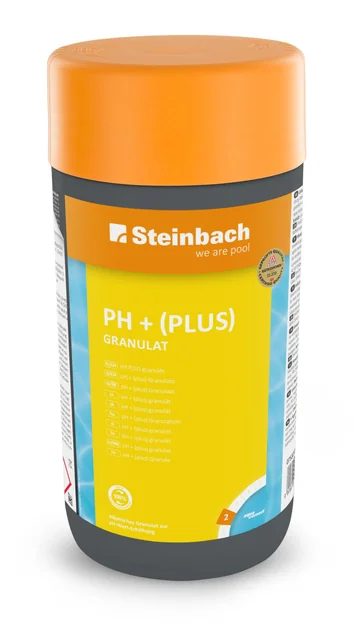
- pH level too low: Add pH plus in small steps in the same way and measure again.
- If the value keeps jumping: First raise the alkalinity to 80–120 mg/l, then adjust the pH level.

Pool: why the pH level slows down chlorine
How well chlorine works depends on the pH level: the higher the pH level, the weaker the chlorine works. Manufacturers give 7.0–7.4 as the range in which chlorine is fully effective.
So always adjust the pH level first and only then add chlorine. If you keep adding more chlorine while the pH level is too high, you quickly end up with a chlorine level that is far too high.
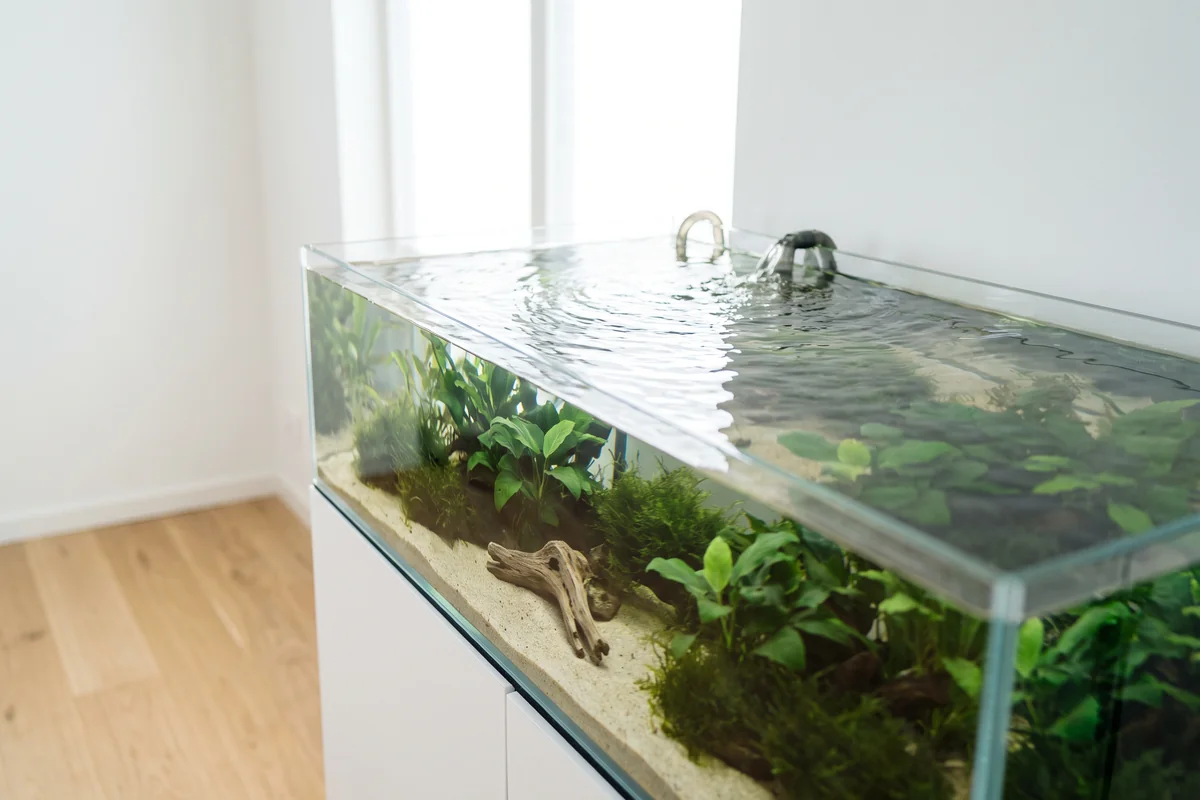
Aquarium: pH level, KH and ammonia
Ammonium and ammonia are in equilibrium in the water. The higher the pH and temperature, the more is present as toxic ammonia – above pH 7, the share rises noticeably. In soft, slightly acidic water, the same amount is less critical than in hard water with a high pH.
Carbonate hardness keeps the pH level stable: if the KH is below 4 °dH, the pH level fluctuates strongly. So set it to 4–8 °dH first and change the pH level in small steps rather than all at once.

Garden pond: the pH level fluctuates over the day
Algae and plants use up carbon dioxide during the day, which makes the pH level rise. At night it drops again. This fluctuation is normal.
If the KH is too low, this turns into ups and downs: with lots of algae, the pH level can drop below 6 in the morning and rise above 10 in the evening. So always measure at the same time of day and keep an eye on the KH.
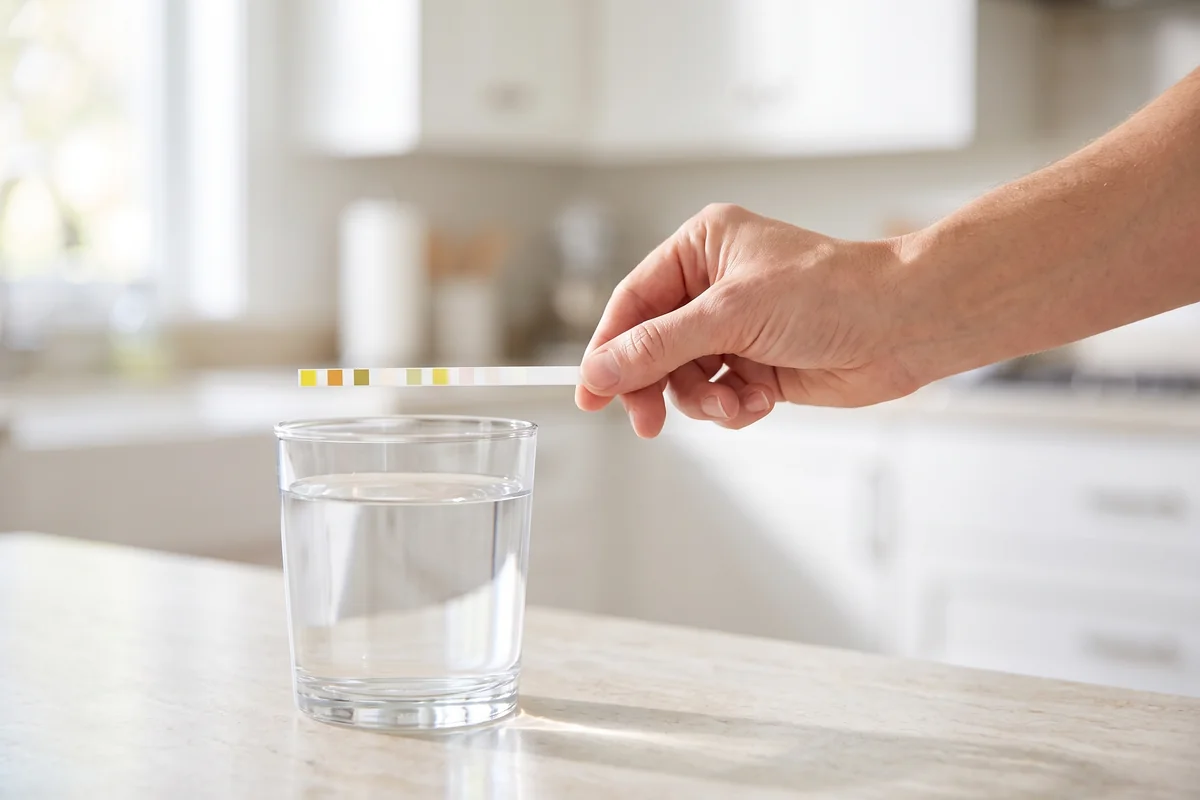
Drinking water and wells: what the pH level reveals
For drinking water, the German Drinking Water Ordinance requires a pH level of 6.5 to 9.5. Your water supplier ensures this up to the building service connection – you can find the current values in its drinking water analysis.
With your own well, you check it yourself. Acidic water can dissolve metals such as copper from the pipes. If your well water is below pH 6.5 and you want to drink it, have it tested in a lab and ask a specialist company about deacidification, for example with a limestone filter.
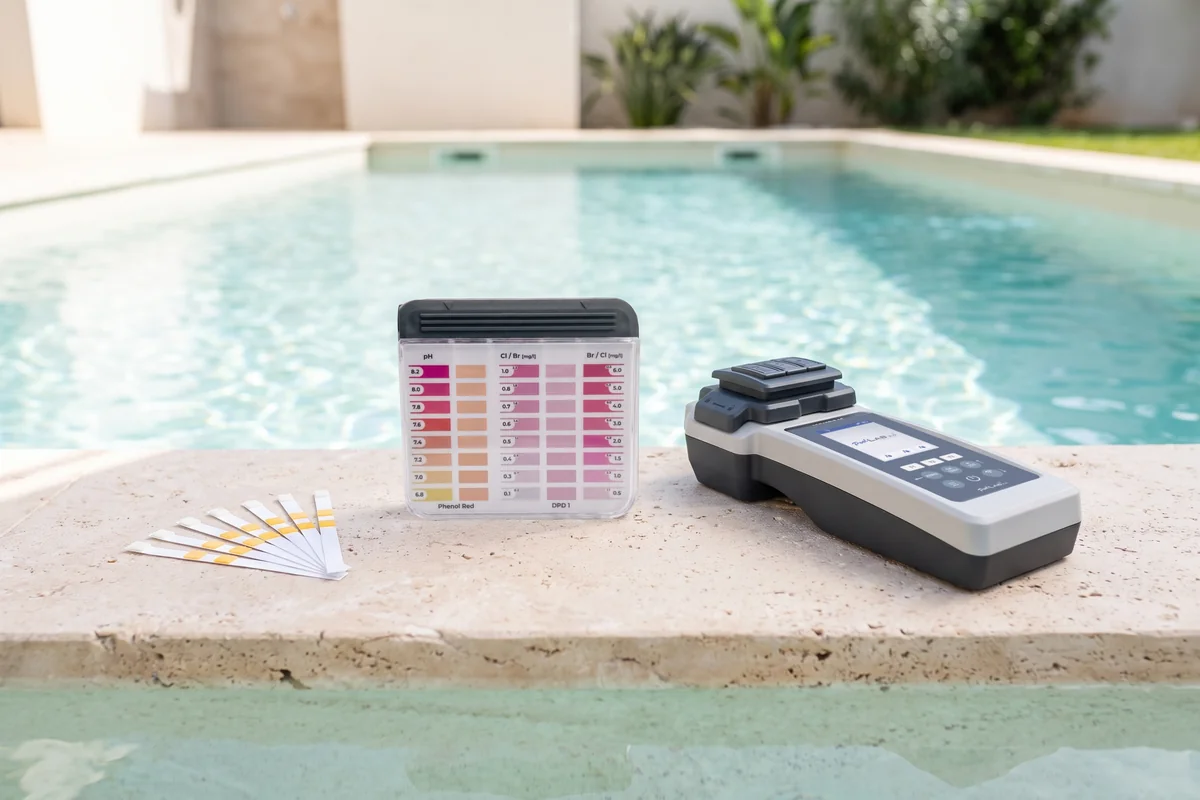
What to measure the pH level with
There are four ways to measure the pH level. Which one suits you depends on how often and how precisely you want to measure.
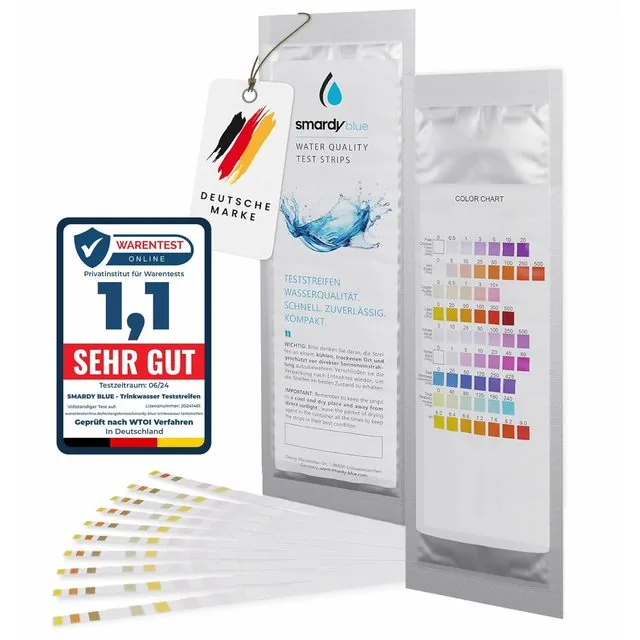
- Test strips: Dip, compare the colour, done – ideal for regular checks.
- Shake test: A tablet with phenol red colours the sample, and you read the value off the colour scale.
- Photometer: Measures the colouring electronically and shows the value as a number – no comparing colours by eye.
- pH meter: Measures with an electrode and needs regular calibration with buffer solutions.
In short
The pH level shows how acidic or basic your water is. In the pool you keep it at 7.0–7.4, in the aquarium usually at 6.5–7.5 and in the pond at 6.5–8.5; drinking water must stay within 6.5–9.5. Measure it before all other values, set the buffer – alkalinity or KH – to the right level and change the pH level in small steps.
Sources: German Drinking Water Ordinance 2023 (Annex 3), care instructions from pool, aquarium and pond manufacturers, information sheet on the pH level from the Straubing-Bogen District Office. As of: October 2026.
Products
Measuring and adjusting the pH level
Our tests for every area – plus pH increasers and pH reducers from other brands on Amazon.
Advertising: As an Amazon Associate we earn from qualifying purchases.
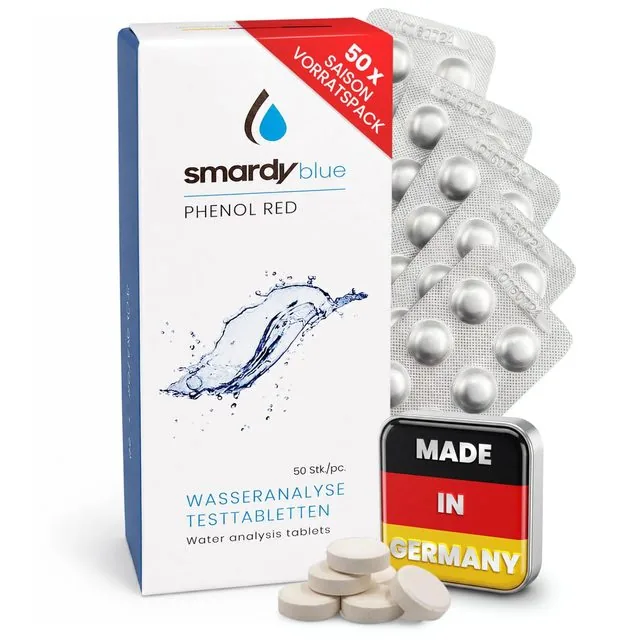
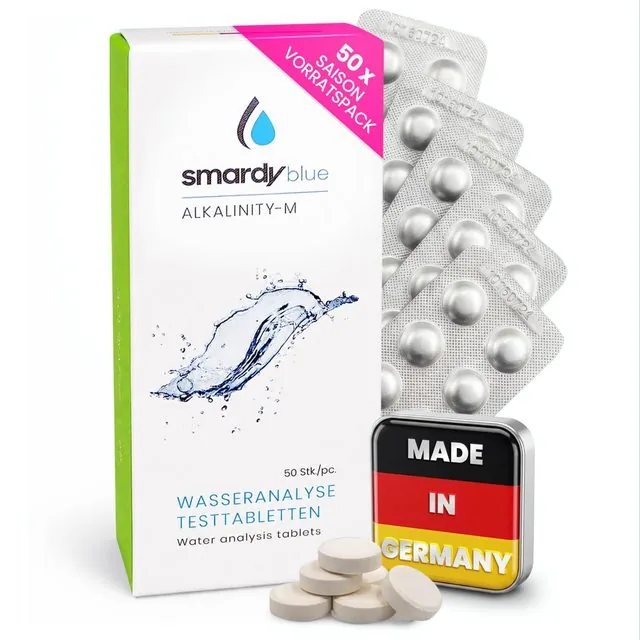
Pool and hot tub
Measure the pH level right at the pool – with test strips, a shake test or a photometer. Plus alkalinity, which buffers the pH level.

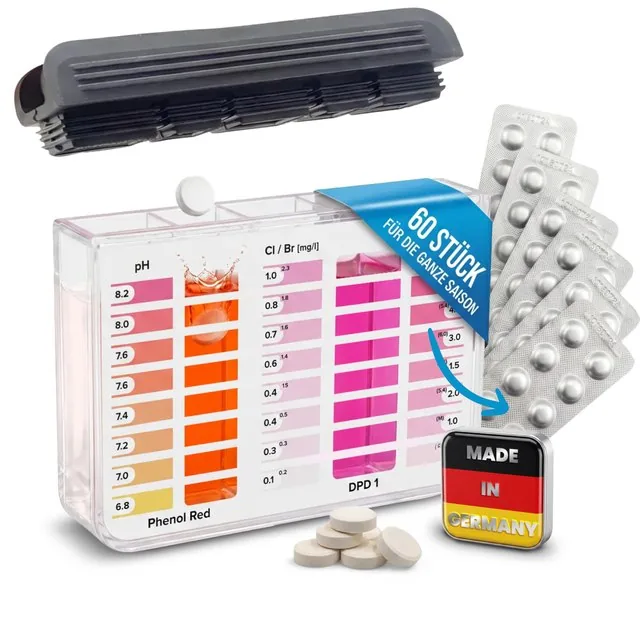
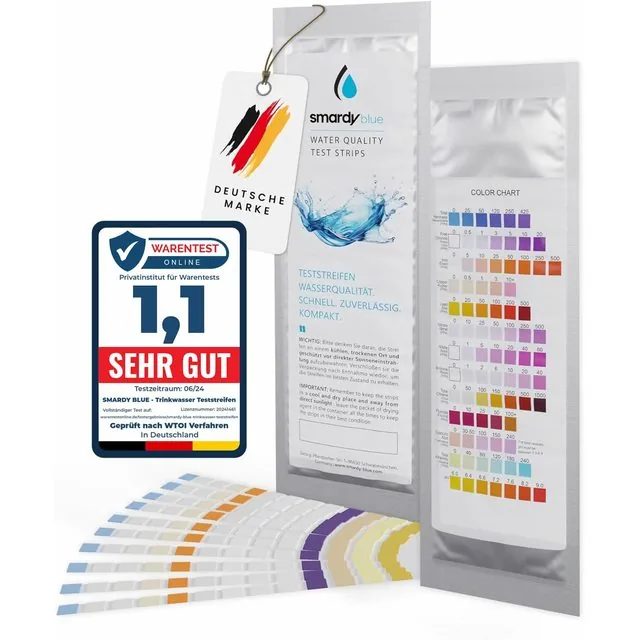
Aquarium and pond
pH level and KH on one strip – so you see straight away whether the buffer is right.
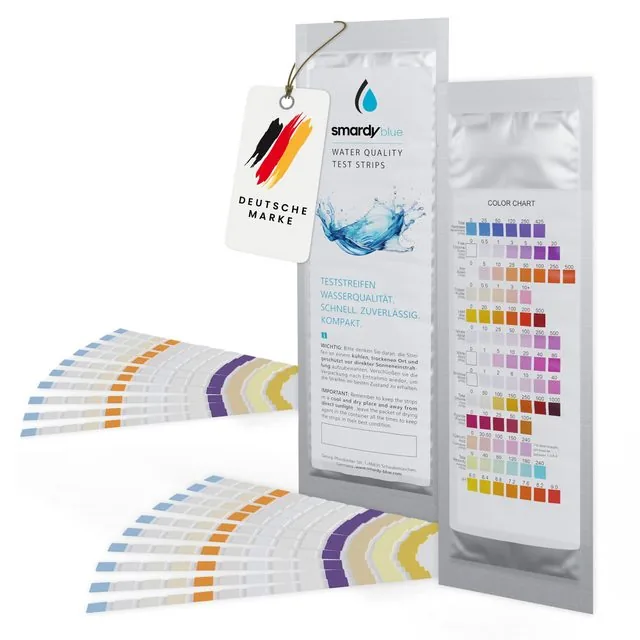
Drinking water and well
Test the pH level of your tap or well water together with nitrate, iron and hardness.
Adjust the pH level
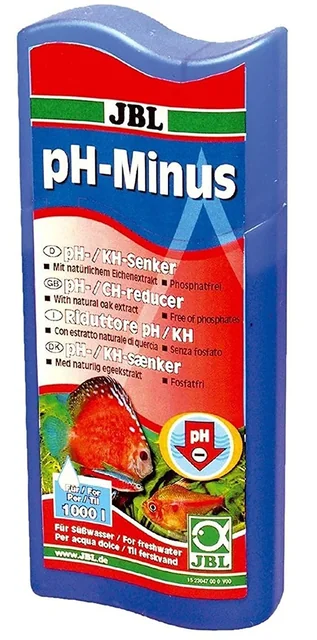
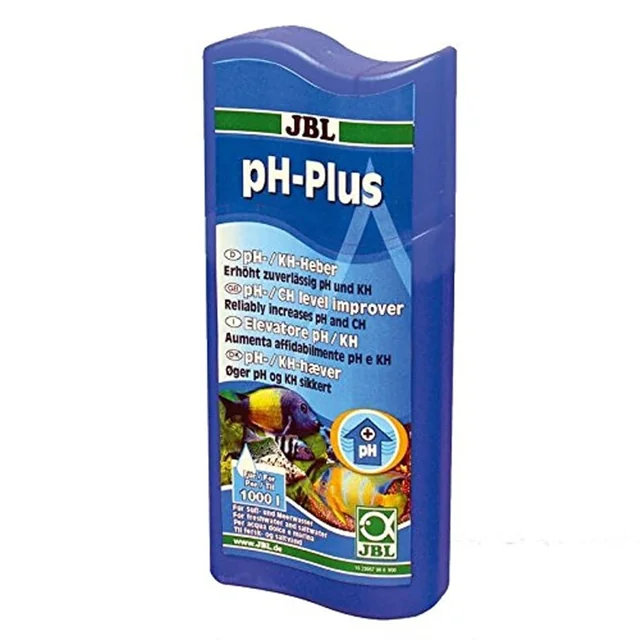
Care products from other brands on Amazon – always dose as directed on the label, in small steps, and measure again afterwards.
Prices are a non-binding guide and may vary; the price shown on Amazon at the time of purchase always applies.
Pool photometer: values as a number, not a colourPool tablet test kit: the shake test for pH and chlorinePool test strips: several values at a glance

Pure water — not just in the pool
From reverse osmosis to water testing: water expertise from a single source.
To smardy blueQuick answers
Frequently asked questions about the pH level
What does a pH level of 7 mean?
A pH level of 7 is neutral – the water is neither acidic nor basic. Below that it is acidic, above that basic. At room temperature, pure water is exactly 7.
Which pH value is ideal in the pool?
Between 7.0 and 7.4. In this range, chlorine works fully. If the value is higher, chlorine works less well, and above pH 7.6 limescale builds up more easily in hard water.
How do I lower or raise the pH level?
You lower a pH level that’s too high with pH minus and raise one that’s too low with pH plus – always as directed on the label and in small steps. In the pool, adjust the alkalinity first; in the aquarium and pond, the KH. Otherwise the value will drift off again straight away.
Why does my pH level keep fluctuating?
Usually the buffer is missing: in the pool, the alkalinity is too low; in the aquarium and pond, the carbonate hardness. In the pond, algae and plants also use up carbon dioxide during the day – the pH level rises until the evening and drops during the night.
Which pH level is right for the aquarium?
For most community tanks 6.5–7.5. Some fish species need softer or harder water – go by your fish stock. A stable KH of 4–8 °dH is important.
What pH level must drinking water have?
According to the German Drinking Water Ordinance, 6.5 to 9.5. Your water supplier ensures this up to the building service connection. With your own well, you check it yourself – acidic well water can dissolve metals from the pipes.
What do I measure the pH level with?
Fastest with test strips, at the pool with a shake test, as a number with a photometer or a digital pH meter. For regular checks, test strips are usually all you need.
Why do you always measure the pH level first?
Because the pH level determines how well other products work. In the pool, chlorine works less well when the pH level is too high; in the aquarium, more ammonium turns into toxic ammonia when the pH level is high. If the pH level is right, you can adjust the rest more precisely.
Help or advice — feel free to get in touch
Phone: 0800 8727 739
Real people no hold queue — we’re here for you personally.
Mon–Fri 9:00–15:00 · free of charge
Email: info@smardy-blue.com
Drop us a line — we usually reply to every message personally within 24 hours.
Contact us
Still have a question? Through our contact form you’ll quickly find the right answer.