

Home › Pool & spa › Photometer
Method
Pool photometer: values as a number, not a colour
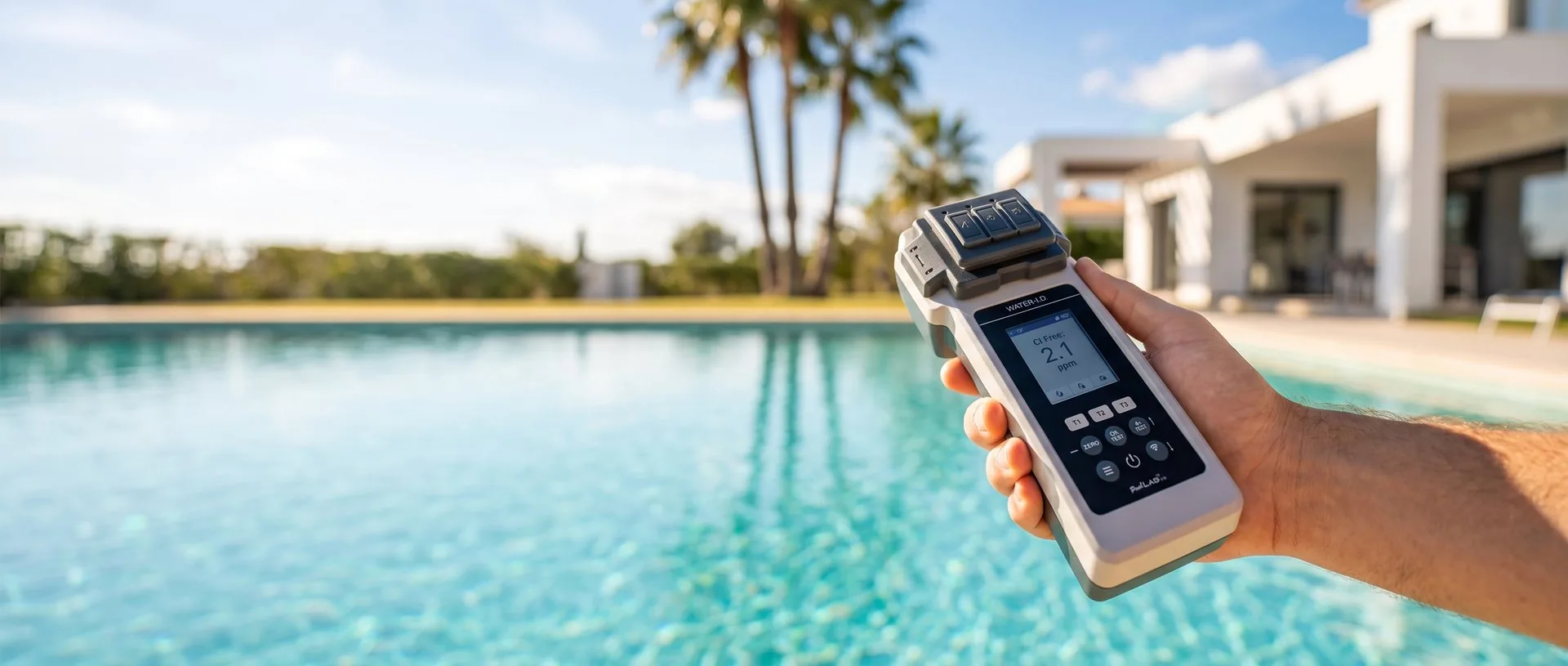
The photometer measures the colour electronically — exact to the decimal place.
Fill the measuring cuvette with pool water up to the mark.
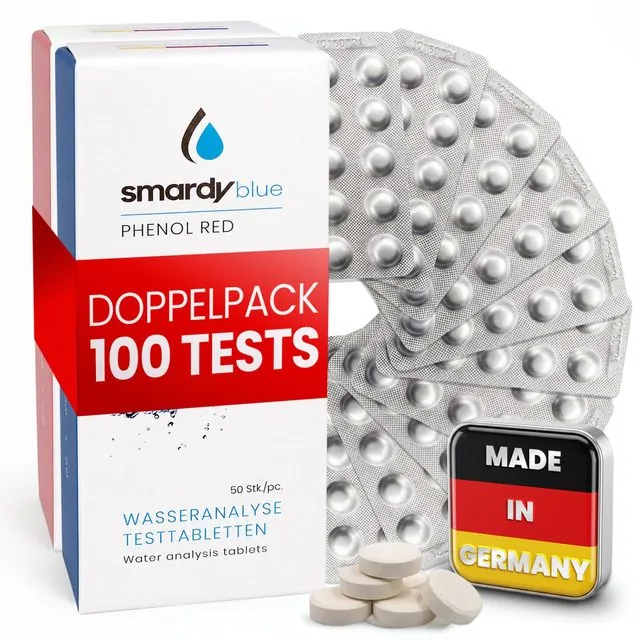
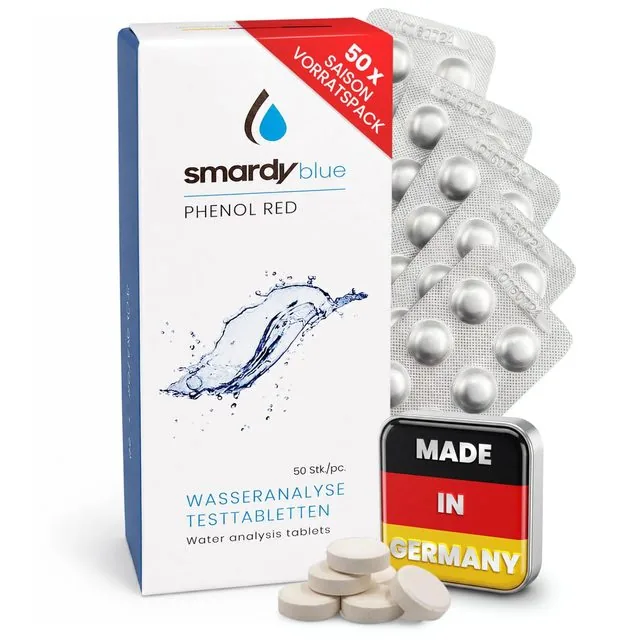
Add the matching reagent tablet, e.g. Phenol Red (pH).
Place the cuvette in the photometer and start the measurement.
The device shows the exact value digitally, no colour matching.
A pool photometer measures water values electronically: you dissolve a reagent tablet in the sample, the water changes colour and the device measures the colour intensity with light. The display shows a number instead of a colour step. With Phenol Red, DPD1, DPD3, cyanuric acid and alkalinity tablets, you cover the key pool values.
Reagent tablets
Find your tablets
Mix sets for the complete picture, or just the values you really need.


Prices are a non-binding guide and may vary; the price shown on Amazon at the time of purchase always applies.
Top up as needed
Individual reagents
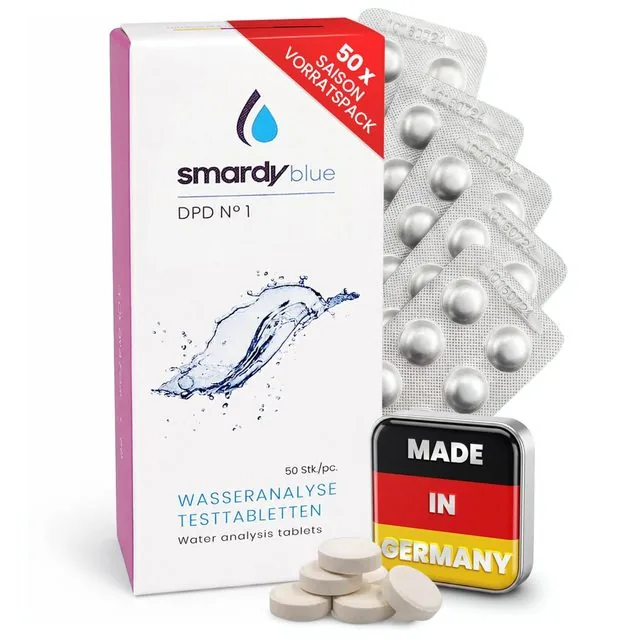
Reorder just the tablet that is running low — one for every value.
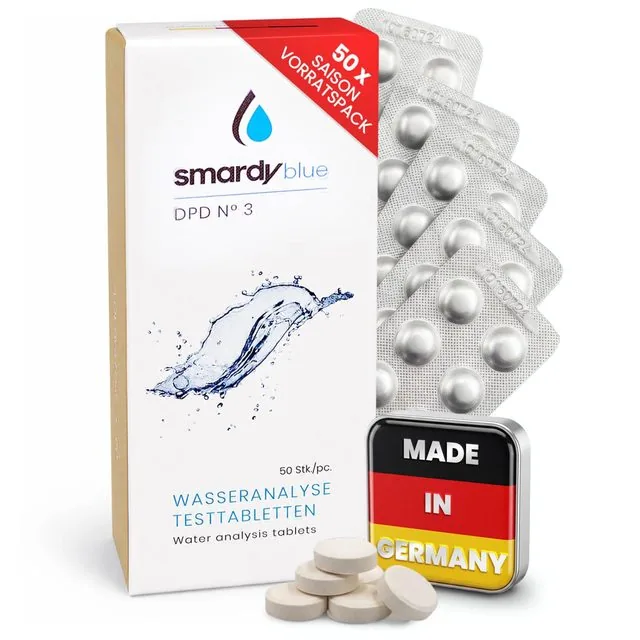
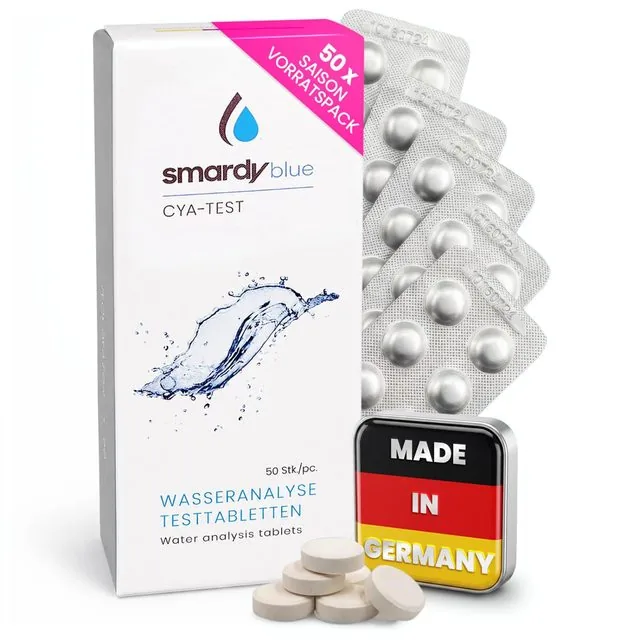

Prices are a non-binding guide and may vary; the price shown on Amazon at the time of purchase always applies.
Good to know
The values you can measure
With the right tablets, your photometer measures all the key pool values — precisely and repeatably.
Test every time
too lowcorrosive, irritates eyes & skin
too highcloudy water, scale, chlorine weaker
TippH minus lowers, pH plus raises
too lowdisinfection too weak, algae possible
too highodour, irritates skin & eyes
Tiptop up or reduce chlorine
Water balance
too lowpH swings a lot
too highcloudiness, pH hard to lower
Tipalkalinity plus or pH minus
too lowchlorine burns off fast
too highchlorine lock, no longer works
Tipstabiliser or replace water
When needed
too lowharmless, no lower limit
too highchlorine odour & eye irritation
Tipcarry out shock chlorination
pH level of water, simply explainedGo to the Pool care advisorHow to test pool water: values and frequency

Pure water — not just in the pool
From reverse osmosis to water testing: water expertise from a single source.
To smardy blueQuick answers
Common questions
A photometer measures water values electronically instead of by visual comparison. You dissolve a reagent tablet in the water sample, the water changes color, and the device determines the color intensity with a light measurement. A precise numerical value appears on the display. That's how you measure pH, chlorine and other values with particular precision.
Photometers are among the accurate measuring methods for home use, because they assess the colour of the sample objectively via a light sensor rather than by eye. This delivers exact numerical values instead of coarse colour steps. For demanding pools, aquariums or persistent water problems, a photometer is therefore a reliable choice.
Depending on the device and tablets, a photometer measures pH value, free and combined chlorine, cyanuric acid, alkalinity and other parameters. There are dedicated reagent tablets for each value. This lets you cover complete water care precisely and spot even small deviations early that a test strip would not reliably show.
For the basic values you use Phenol Red for pH value and DPD1 for free chlorine, DPD3 for total chlorine. For further values like cyanuric acid or alkalinity there are matching special tablets. Make sure you have fresh reagents that suit your device and a small supply, so you can always measure accurately.
A photometer is worthwhile if you value exact readings, measure frequently or want to tackle recurring problems such as algae or cloudy water in a targeted way. For small pools or tanks with only occasional checks, test strips or a shake test are often enough. Anyone who wants to control their water precisely benefits noticeably from the added precision.
Keep the measuring cuvette clean and free of fingerprints, rinse it after every measurement and dry it lint-free. Store the device in a dry place away from sunlight and replace the batteries in good time. Use only fresh tablets. This keeps your measurements accurate over the long term and your photometer reliably ready to use.
Help or advice — feel free to get in touch
Phone: 0800 8727 739
Real people no hold queue — we’re here for you personally.
Mon–Fri 9:00–15:00 · free of charge
Email: info@smardy-blue.com
Drop us a line — we usually reply to every message personally within 24 hours.
Contact us
Still have a question? Through our contact form you’ll quickly find the right answer.