


The key pool values are pH, free chlorine, total chlorine and total alkalinity, plus bromine, cyanuric acid or water hardness depending on your care system. Test 2–3 times a week in season, and more often in heat, with heavy use, after rain or after topping up. Test strips suit routine checks; shake testers and photometers give more precise values.
Good to know
The key values at a glance
Clear, well-maintained pool water comes down to a few core values. Test them regularly and you save chemicals, look after the equipment — and rarely need major corrections.

Why should you test your pool water?
Pool water can look crystal clear and still be out of balance. Sun, rain, heat, lots of bathers, sunscreen or freshly topped-up water often change the values faster than you would expect.
Testing regularly keeps pH, chlorine and alkalinity in view before problems arise — cloudy water, algae, a chlorine smell or irritated eyes and skin. It makes pool care predictable and cheaper, because you dose deliberately instead of by guesswork.
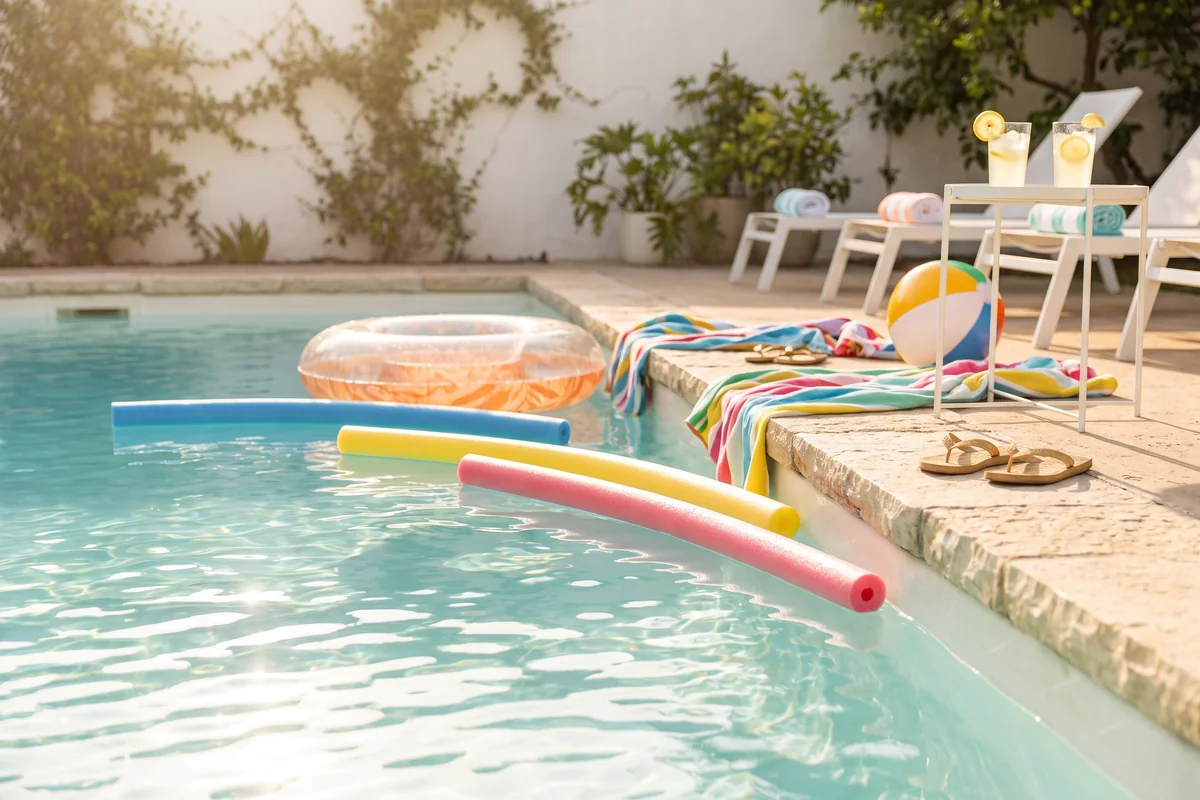
When is a water test especially worthwhile?
A test is particularly worthwhile in these situations:
- before the first swim after filling or at the start of the season
- in hot weather, strong sun or after thunderstorms and rain
- after lots of bathers, parties or intensive use
- when the water looks cloudy, smells or feels different
- after topping up water or a shock chlorination
- regularly to check pH, chlorine and alkalinity
- for whirlpools and spas, because warm water tips out of balance faster
Values at a glance
The values you should check
Tap a value: you'll see the ideal range on a scale, what matters – and the right test methods.
The pH value is the foundation of all water care: it determines how well chlorine works. If it is not correct, the water will irritate the eyes and skin and the disinfection will be ineffective.
How to test this value
Free chlorine is the actively disinfecting component. It disinfects the water and helps prevent algae - the real protection of your pool water.
How to test this value
Total chlorine is the sum of free and combined chlorine. The difference to free chlorine shows how much has already been used.
How to test this value
Combined chlorine is created when chlorine breaks down dirt (chloramines). It no longer disinfects, smells strongly and irritates eyes and skin.
How to test this value
Total alkalinity is the water's capacity to buffer acids. It keeps the pH value stable and is the basis for all other values.
How to test this value
Bromine is the lower-odor alternative to chlorine. It works reliably even with warm water and fluctuating pH - ideal for whirlpools and spas.
How to test this value
Cyanuric acid protects the chlorine in the outdoor pool from rapid degradation caused by UV light. Without it, the sun consumes the chlorine in hours.
How to test this value
The total hardness indicates how much lime is dissolved in the water. It protects the pool and technology - too soft has an aggressive effect, too hard causes limescale to form.
How to test this value
How often to test?
In summer 2–3× a week, daily with heavy bathing use or great heat. That way you spot fluctuations early, before the water tips over.
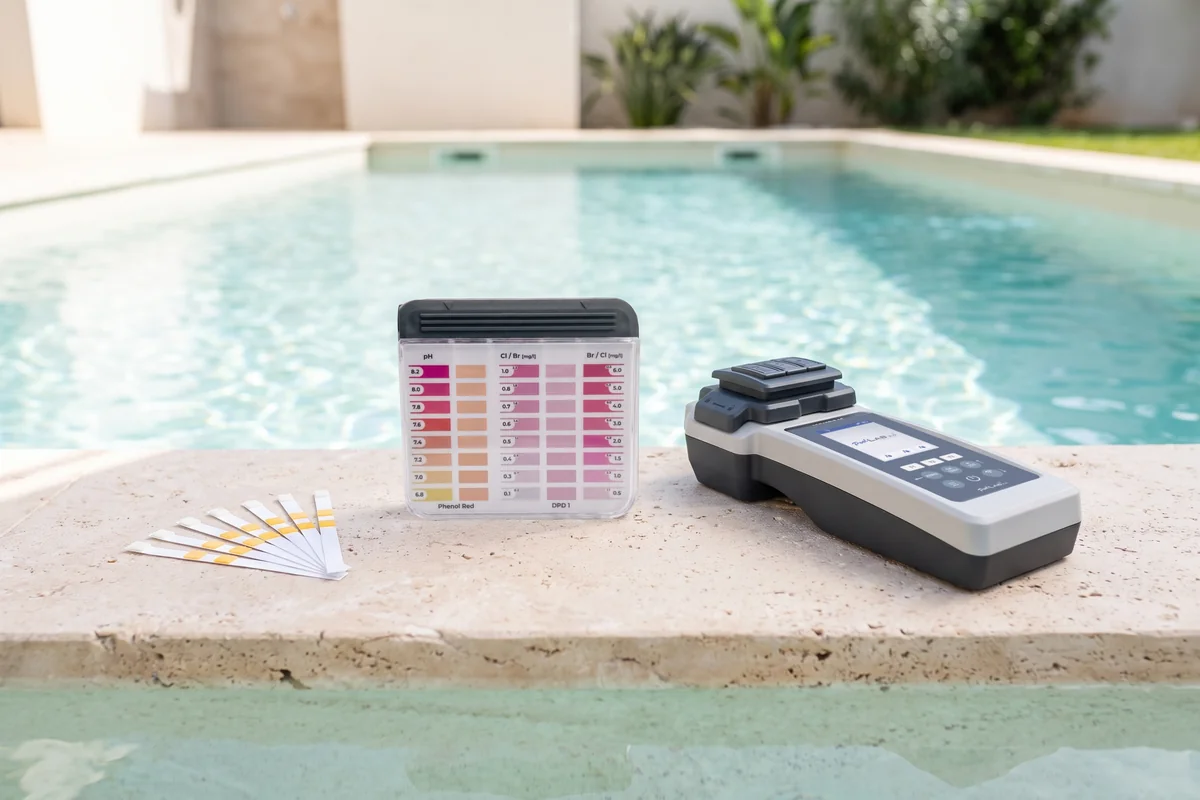
What to test with?
For everyday use, all you need are Test strips — dip, compare, done. A bit more precise for pH and chlorine is the Shake tester, very precisely the Photometer. The product finder shows you which method suits you.
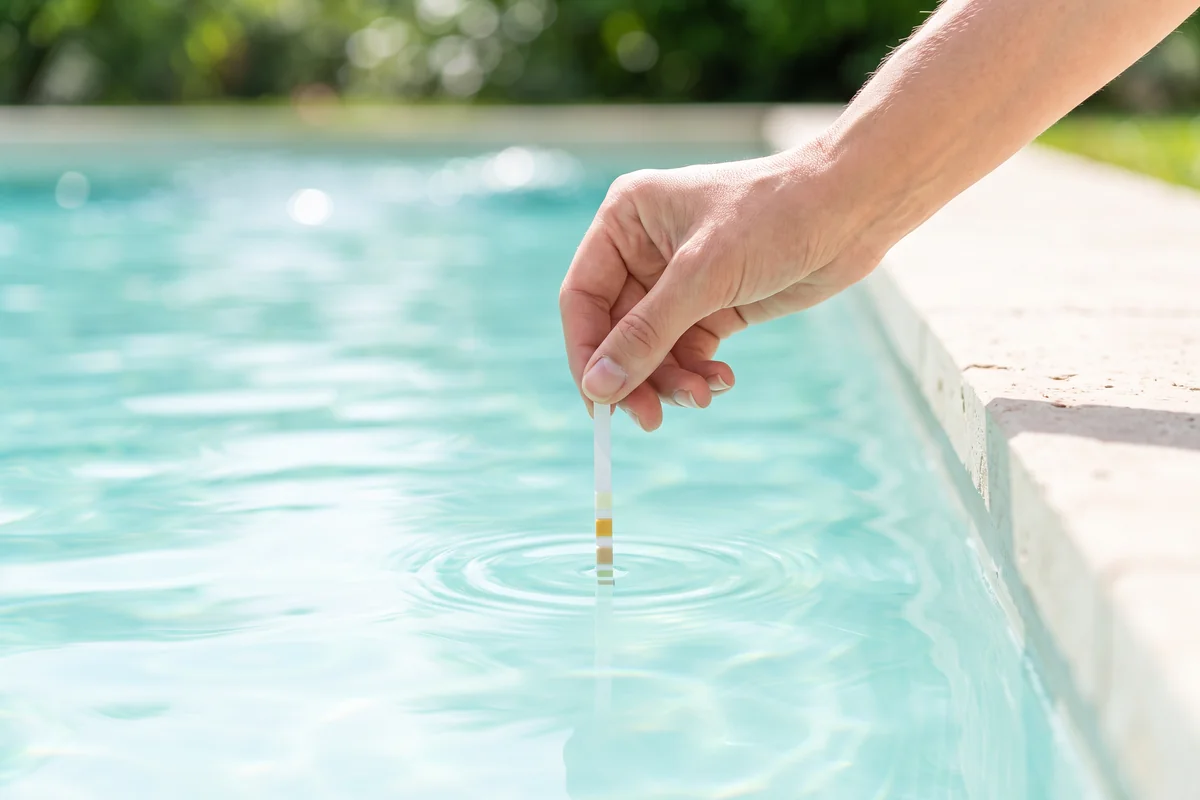
How to test your pool water correctly
- Take the test strip out of the tin only just before measuring and close it again tightly.
- Briefly dip the strip into the pool water as instructed — not right by the inlet or dosing nozzle.
- Do not touch the test pads with your fingers and keep to the stated waiting time.
- Compare the colour fields with the scale on the tin in good daylight.
- Interpret the values and, if needed, adjust the pH first, then chlorine and alkalinity.
- If results look off, test again and check your water care specifically.
pH level of water, simply explainedPool chlorine too high: measure, lower, dose right
In short
Always check the pH level first (7,0–7,4), then the free chlorine. If the pH isn’t right, even more chlorine barely helps.

Pure water — not just in the pool
From reverse osmosis to water testing: water expertise from a single source.
To smardy blueQuick answers
Frequently asked questions about testing pool water
How often should I test my pool water?
During the season 2–3 times a week, and more often in heat, heavy use, rain or after topping up. Check whirlpools and spas more frequently, because warm water goes out of balance faster.
Which pool water values matter most?
The most important are pH, free chlorine, total chlorine and total alkalinity. Depending on your care system, bromine, cyanuric acid and water hardness are added.
Why is pH so important in a pool?
The pH decides how well chlorine works and how pleasant the water feels. If it is too high or too low, you risk weaker disinfection, limescale or irritation of skin and eyes.
Why does my pool water turn cloudy despite chlorine?
Cloudy water despite chlorine often points to a wrong pH, too little effective free chlorine, unstable alkalinity or filter problems. A water test shows you which value to tackle first.
Are pool test strips accurate enough?
For quick orientation and routine everyday checks, test strips are ideal. If you want more precise values, use a shake tester or a photometer for accurate single measurements.
Which test suits whirlpools and spas?
For whirlpools and spas, test strips work well for quick checks — the key is frequent testing, since warm water and small volumes go off balance quickly. For more precise values, reach for a shake tester or photometer.
Help or advice — feel free to get in touch
Phone: 0800 8727 739
Real people no hold queue — we’re here for you personally.
Mon–Fri 9:00–15:00 · free of charge
Email: info@smardy-blue.com
Drop us a line — we usually reply to every message personally within 24 hours.
Contact us
Still have a question? Through our contact form you’ll quickly find the right answer.