

Home › Pool & spa › Shake test
Method
Pool tablet test kit: the shake test for pH and chlorine
The pool classic: pH and chlorine in under a minute.
Fill pool water to the mark into both chambers.
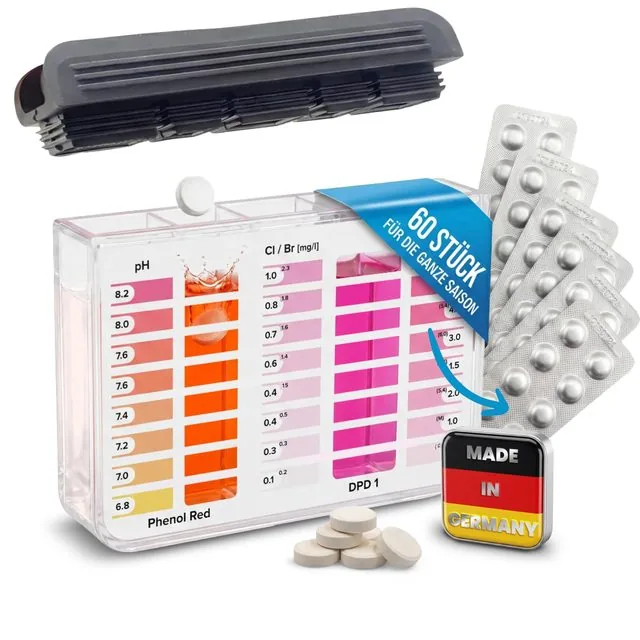
One tablet per chamber: Phenol Red (pH), DPD1 (chlorine).
Put the lid on and shake until the tablet dissolves.
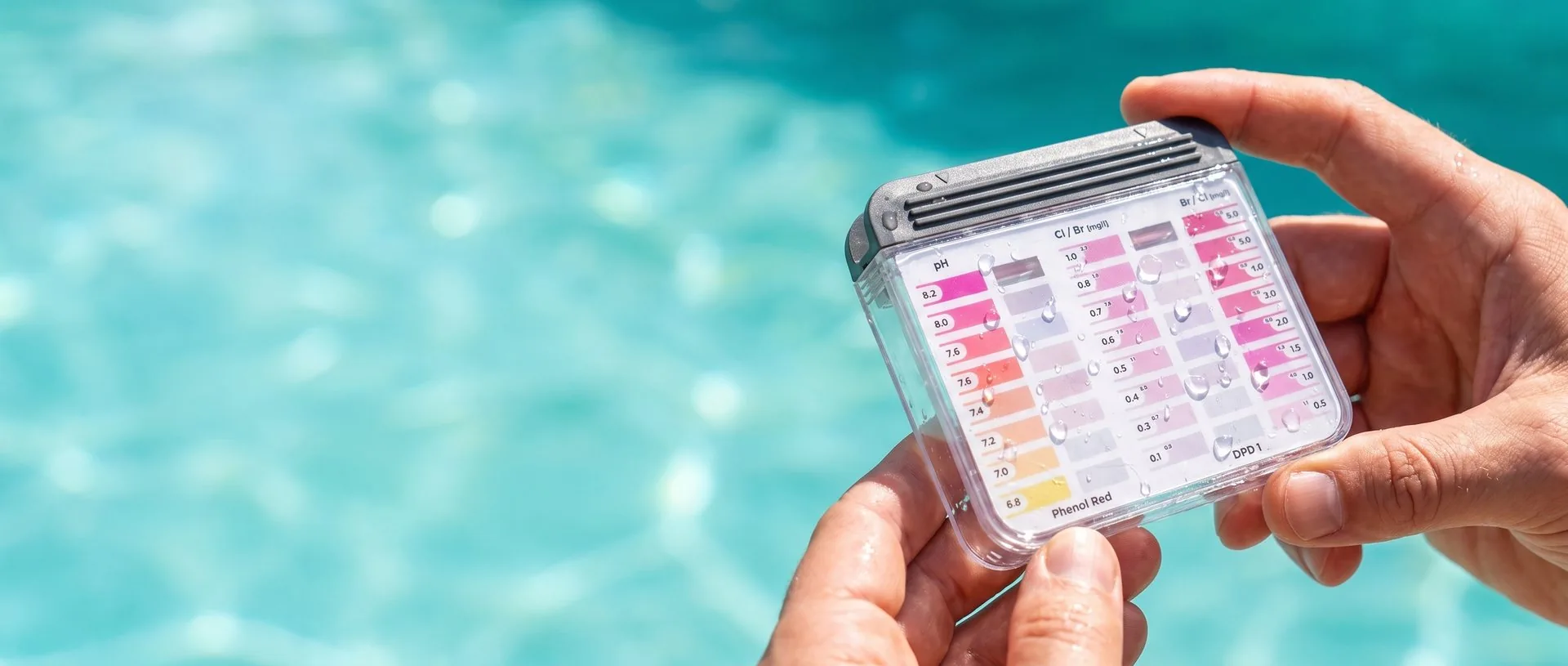
Compare the colour change with the scale on the device.
With the shake test, you fill the chambers with pool water, add one tablet to each – Phenol Red for pH and DPD1 for free chlorine – and shake until it dissolves. Then you compare the colour with the scale on the device. A test takes under a minute and is usually more accurate than test strips.
Device + tablets
Find your tablet test kit
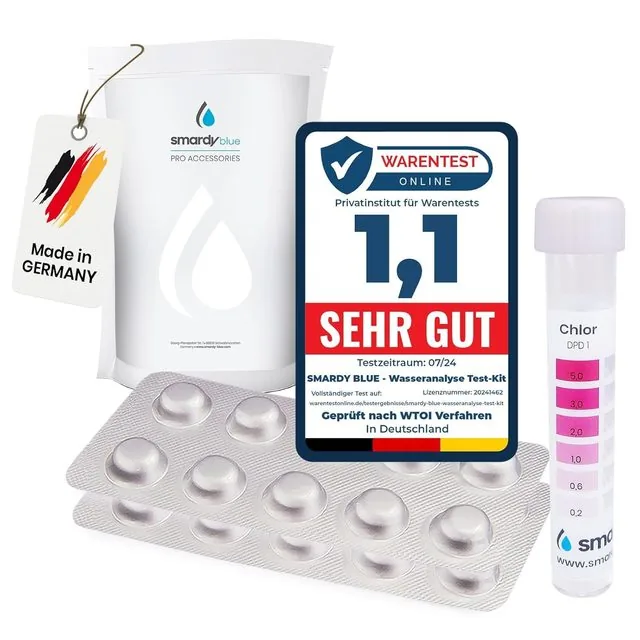
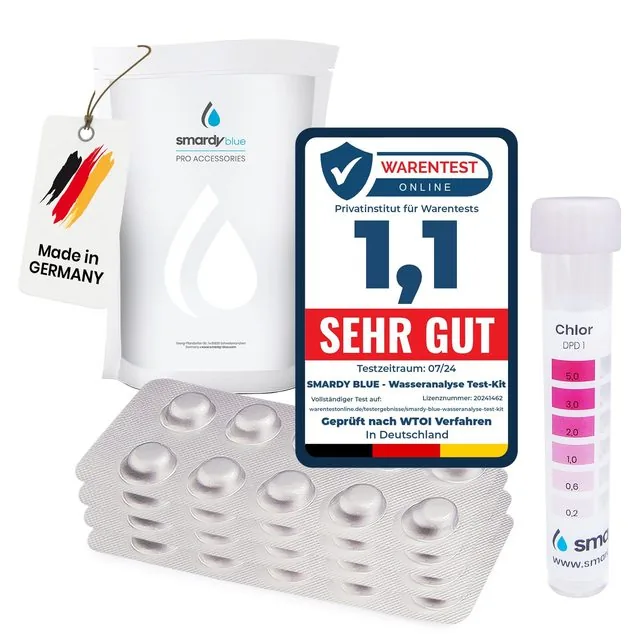
Every set includes the tester and matching starter tablets. Choose by supply and budget.
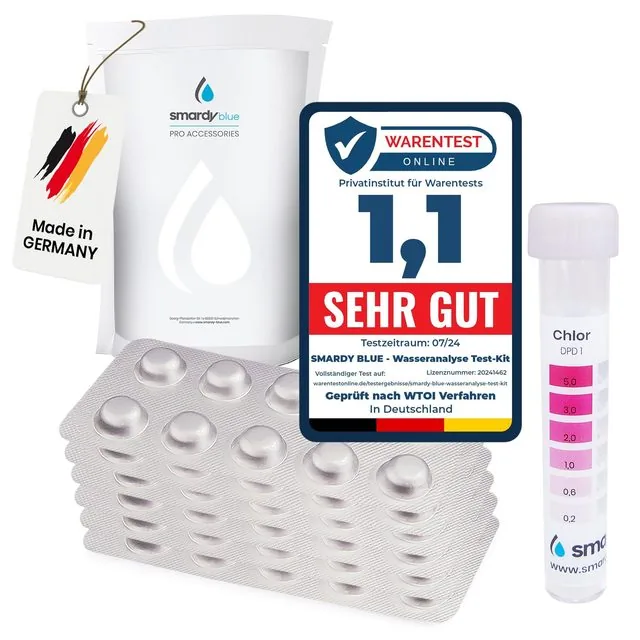
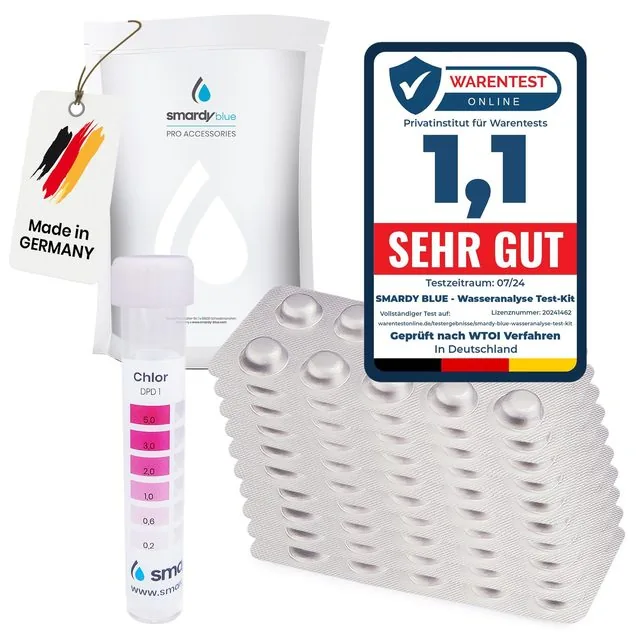
Prices are a non-binding guide and may vary; the price shown on Amazon at the time of purchase always applies.
Always to hand
Refill your tablets
Keep the tester, just buy more tablets — Phenol Red for pH, DPD1 for chlorine.
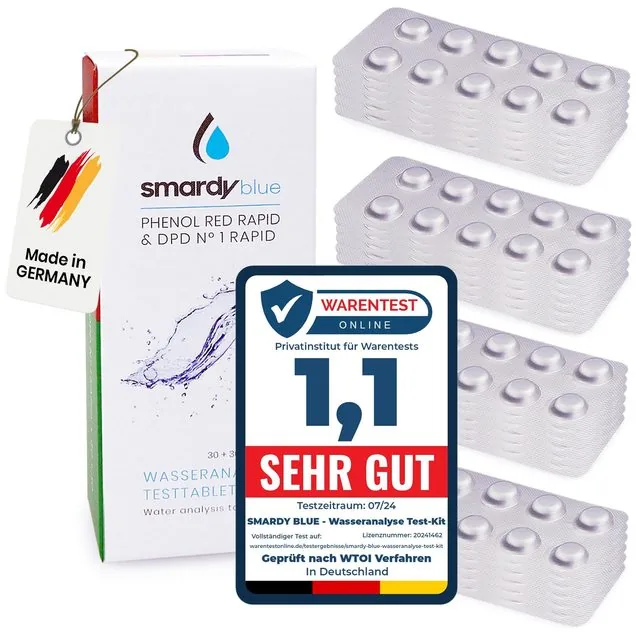
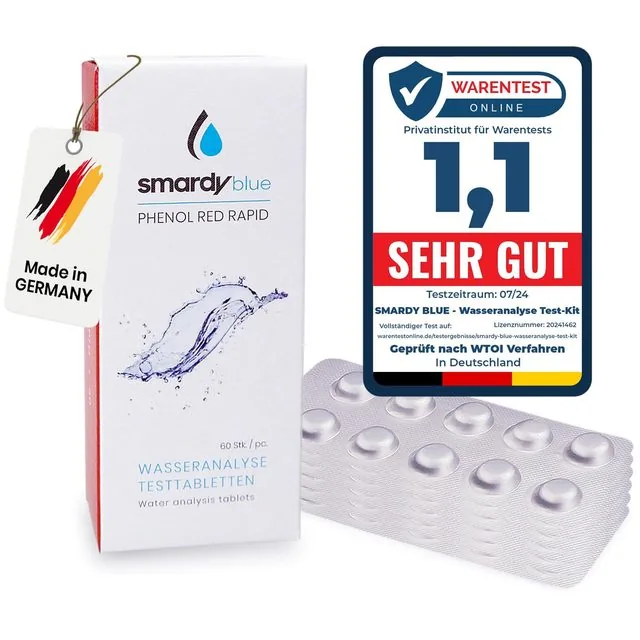
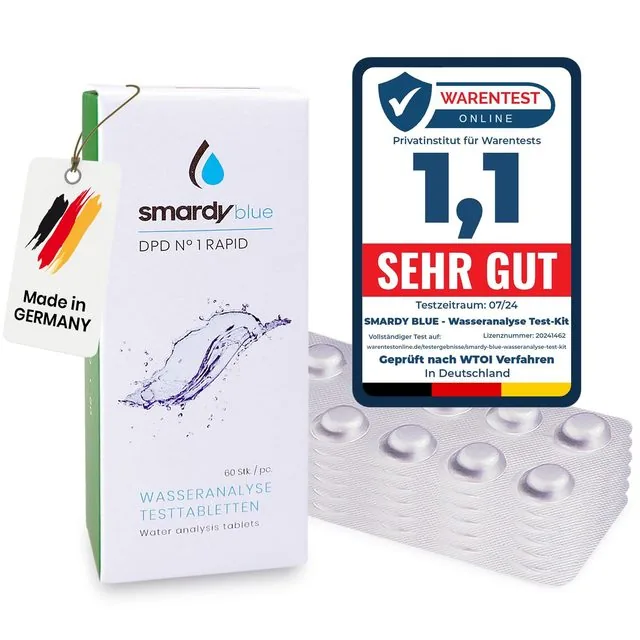
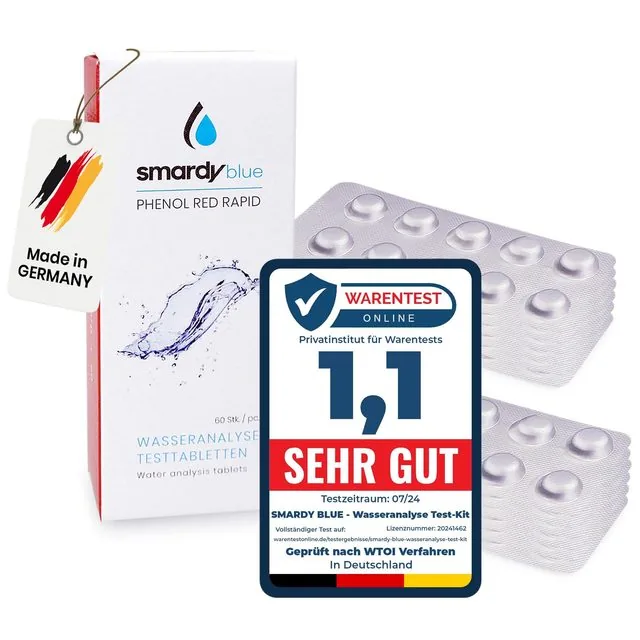

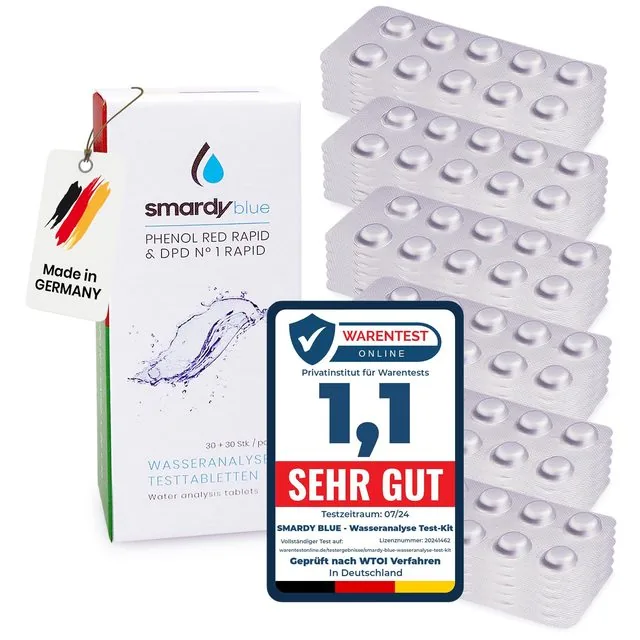
Prices are a non-binding guide and may vary; the price shown on Amazon at the time of purchase always applies.
Good to know
The values you can measure
The shake test shows you the two most important values for clear, well-maintained pool water.
Test every time · Disinfection pH level and free chlorine – bromine in hot tubs – 2–3× a week in summer
too lowcorrosive, irritates eyes & skin
too highcloudy water, scale, chlorine weaker
TippH minus lowers, pH plus raises
too lowdisinfection too weak, algae possible
too highodour, irritates skin & eyes
Tiptop up or reduce chlorine
too lowdisinfection too weak
too highodour, irritates
Tiptop up or reduce bromine
Water balance · when needed Alkalinity keeps the pH level stable, total chlorine shows combined chlorine
too lowpH swings a lot
too highcloudiness, pH hard to lower
Tipalkalinity plus or pH minus
too lowharmless, no lower limit
too highchlorine odour & eye irritation
Tipcarry out shock chlorination
pH level of water, simply explainedGo to the Pool care advisorPool photometer: values as a number, not a colourPool test strips: several values at a glance

Pure water — not just in the pool
From reverse osmosis to water testing: water expertise from a single source.
To smardy blueQuick answers
Common questions
With the shake test, you drop a reagent tablet into a chamber filled with pool water and shake until it dissolves. The water changes colour, and the depth of colour indicates the value. You compare it with the colour scale on the device. This lets you determine the pH value and chlorine more accurately than with test strips.
Yes, shake tests with tablets are usually more accurate than test strips, because the colour reaction in the water sample is clearer and easier to compare. They are a good middle ground between the quick test strips and the highly precise photometer, and are well suited to the regular, reliable monitoring of pool water.
For pH value and free chlorine, Phenol Red and DPD1 tablets are standard. For total chlorine, DPD3 is added, and alkalinity has its own tablet. Make sure the tablets are compatible with your device, and keep a small supply on hand so you can measure at any time. Reagent tablets are available individually or as a set.
For a well-maintained pool, it's usually enough to check the pH value and chlorine two to three times a week. With heavy use, heat or after rain, more frequent checks are worthwhile. Measuring regularly with the shake test helps you keep values stable and dose chemicals purposefully rather than on a hunch.
Rinse the measuring chamber thoroughly with clear water after each use so that no reagent residue distorts the next measurement. Then dry it or leave it to air-dry. Try not to touch the inner surfaces and store the device clean and dry. That keeps the color comparisons reliable over a long time.
Shake tests are designed for the typical pool values, pH and chlorine. For drinking water, other values are decisive, such as hardness, nitrate or lead, and there are dedicated test strips for these. They are therefore better suited to checking tap or well water; for legally sound results, a laboratory analysis is the right choice.
Help or advice — feel free to get in touch
Phone: 0800 8727 739
Real people no hold queue — we’re here for you personally.
Mon–Fri 9:00–15:00 · free of charge
Email: info@smardy-blue.com
Drop us a line — we usually reply to every message personally within 24 hours.
Contact us
Still have a question? Through our contact form you’ll quickly find the right answer.