

After measuring
Well water advisor: what unusual values mean
You’ve tested your well water – now the advisor tells you, for every unusual value, what it means, what you can do and which product is right.

The well water advisor explains unusual readings: choose the value that stands out, such as iron, manganese, nitrate, pH or hardness, or a problem like germs or brown water, and see the limit, what it means and what you can do. If you drink your well water, have a lab check it for germs at least once a year.
All values & measures at a glance
Every value with its limit, meaning and action – plus the typical problems with well water.
IronLimit 0.2 mg/lCommon in groundwater. Iron only becomes visible on contact with air – as yellowish-brown cloudiness and rust-brown stains.
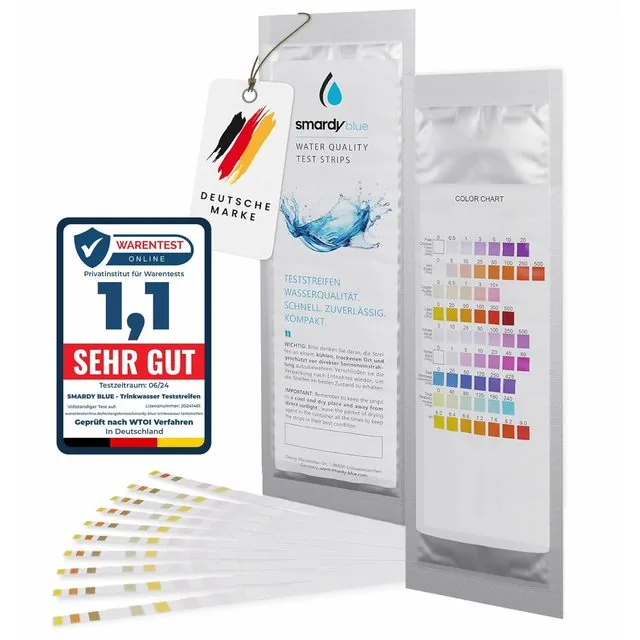
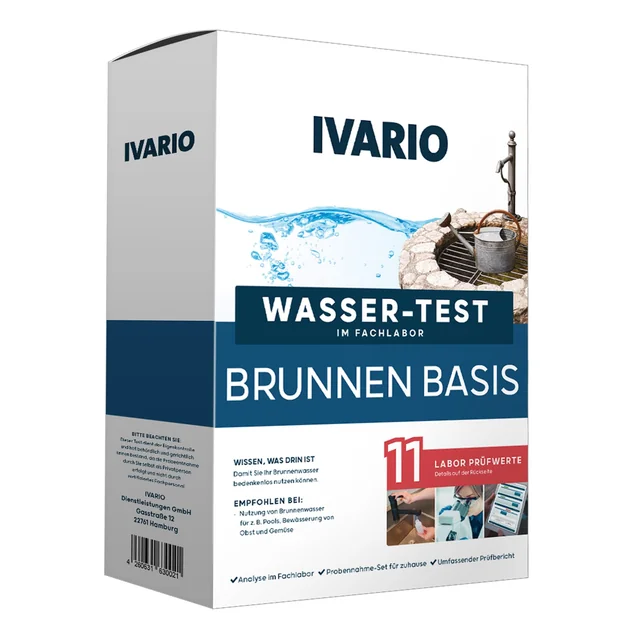

ManganeseLimit 0.05 mg/lOften occurs together with iron. Test strips don’t detect manganese – a laboratory can clarify this.
NitrateLimit 50 mg/lUsually comes from fertilising and agriculture and is often elevated in wells.
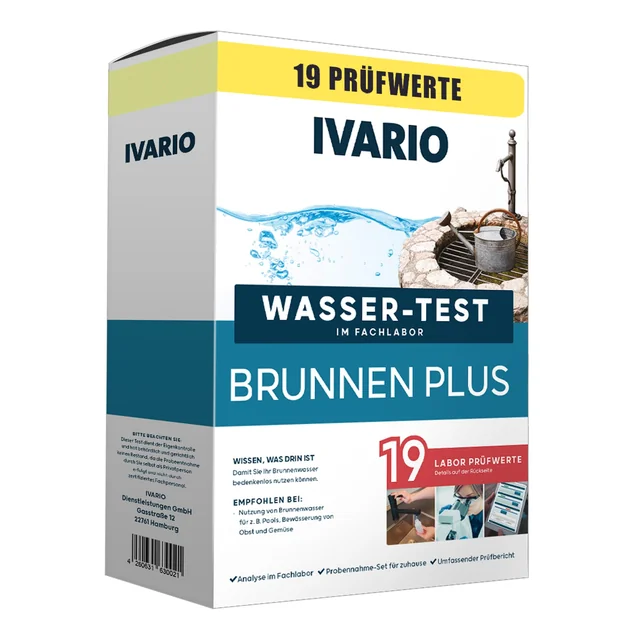
NitriteLimit 0.5 mg/lAn intermediate step in the breakdown of nitrogen – a positive result points to fresh contamination.
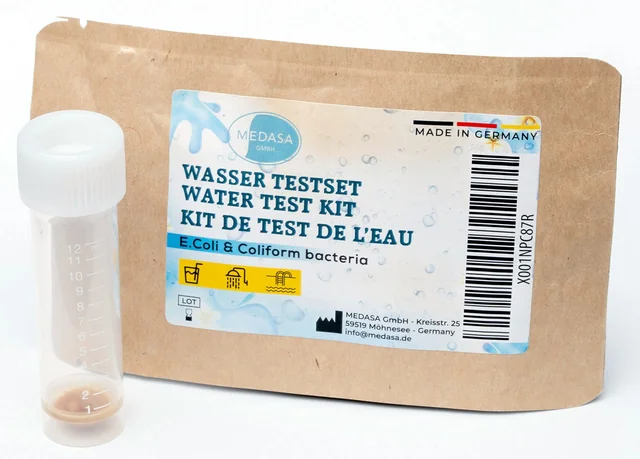
pH levelPermitted 6.5–9.5Usually unremarkable in wells – but very low values make the water aggressive towards metal.
Water hardnessMedium 8.4–14 °dHWell water is often hard. There is no limit – it’s all about limescale.
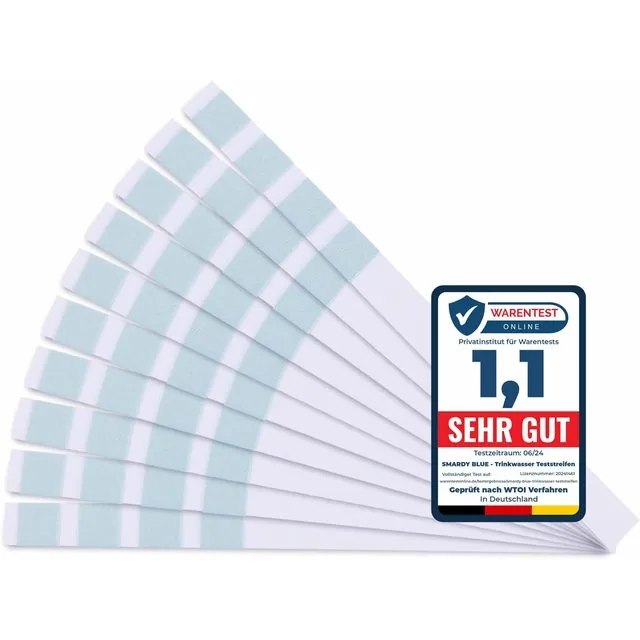
No product needed – the action is enough.
CopperLimit 2.0 mg/lCopper rarely comes from the well itself, but from pipes – especially at a low pH level.
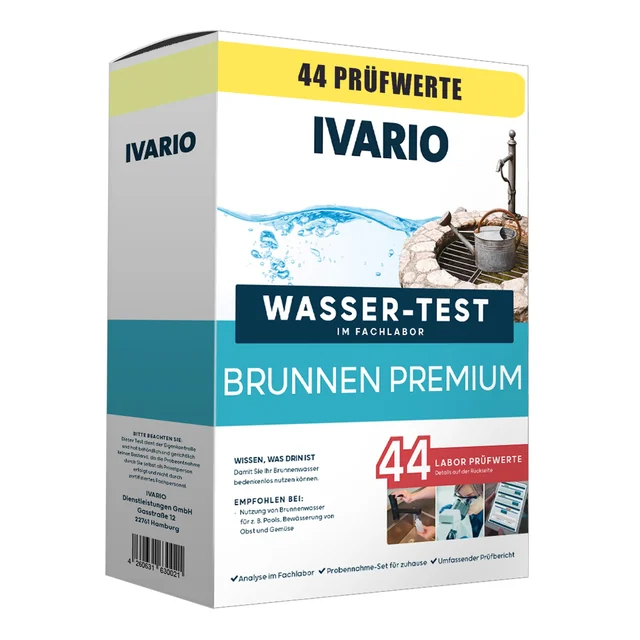
Germs detectedE. coli and coliform bacteria must not be present in drinking water (limit 0 in 100 ml).
Rust-brown waterThe water comes out of the tap clear and turns yellow to brown on contact with air.
Sand or cloudinessFine particles from the well wear out the pump and seals.
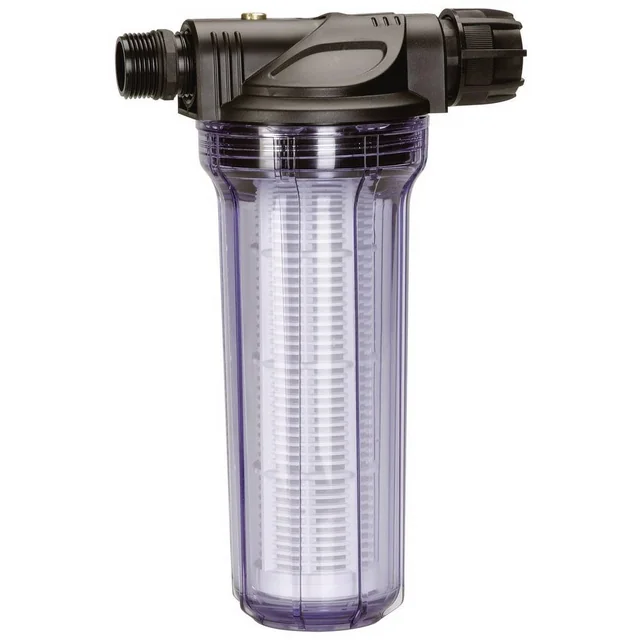


Rotten egg smellThat’s hydrogen sulphide. It forms in oxygen-poor groundwater – even small amounts are clearly noticeable by smell.
Filling the pool with well waterWell water often brings iron and hardness with it – testing before filling saves trouble.
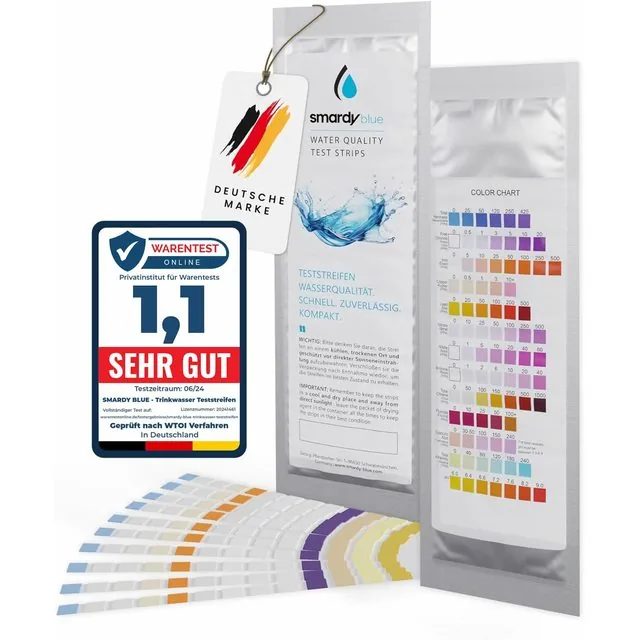

Sources:
- German Drinking Water Ordinance 2023 (§§ 11, 29, Annexes 1–3)
- German Environment Agency guide on private wells
- State of Upper Austria (Land Oberösterreich): information sheet “Aggressive Wässer”
- Information sheets from district and state authorities
- Manufacturer details
Last updated:
Help or advice — feel free to get in touch
Phone: 0800 8727 739
Real people no hold queue — we’re here for you personally.
Mon–Fri 9:00–15:00 · free of charge
Email: info@smardy-blue.com
Drop us a line — we usually reply to every message personally within 24 hours.
Contact us
Still have a question? Through our contact form you’ll quickly find the right answer.