


No supplier monitors water from your own well – you are responsible yourself. Test strips show pH, hardness, nitrate, nitrite and iron in about a minute, but not germs, manganese, arsenic or uranium. If you drink the water, report the system to the drinking water monitoring office and have a lab check it for germs at least once a year.
Good to know
You test your well water yourself
Your water supplier checks tap water. For water from your own well or a spring, you are responsible yourself – nobody tests it automatically. What you should test depends on what you use it for.
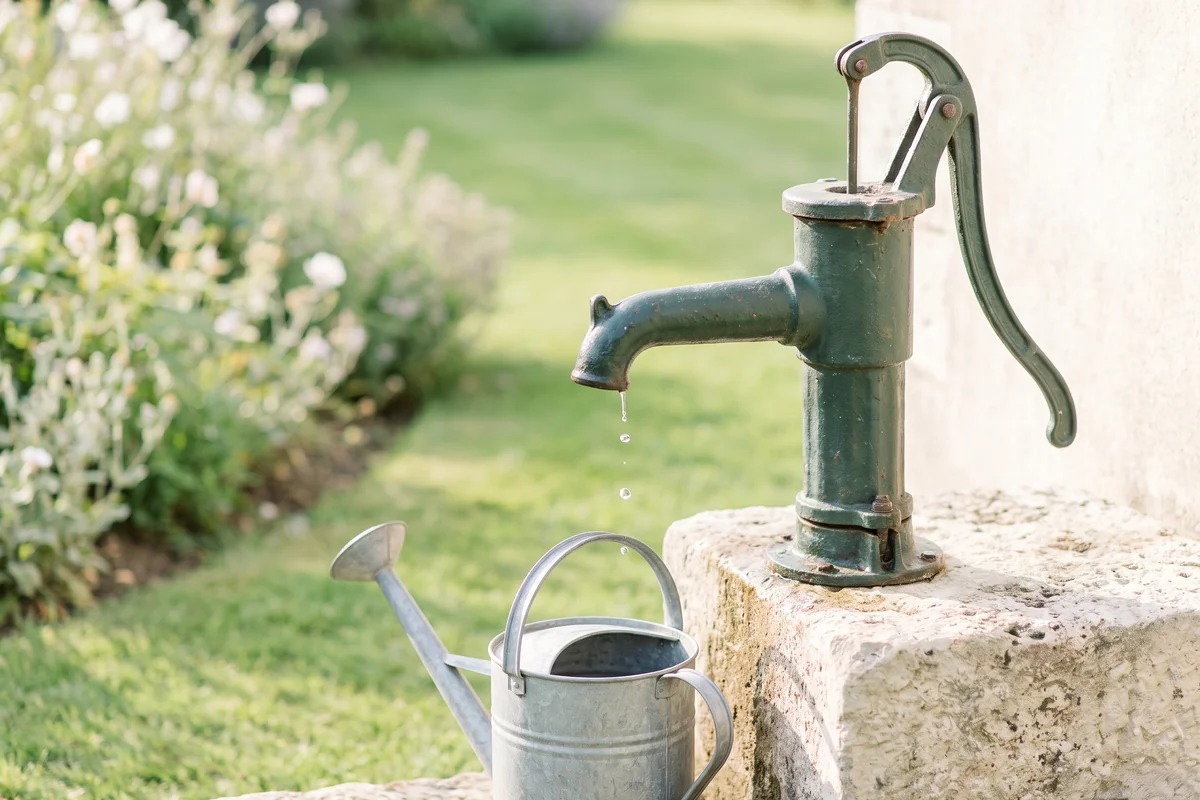
Watering, pool, animals or drinking?
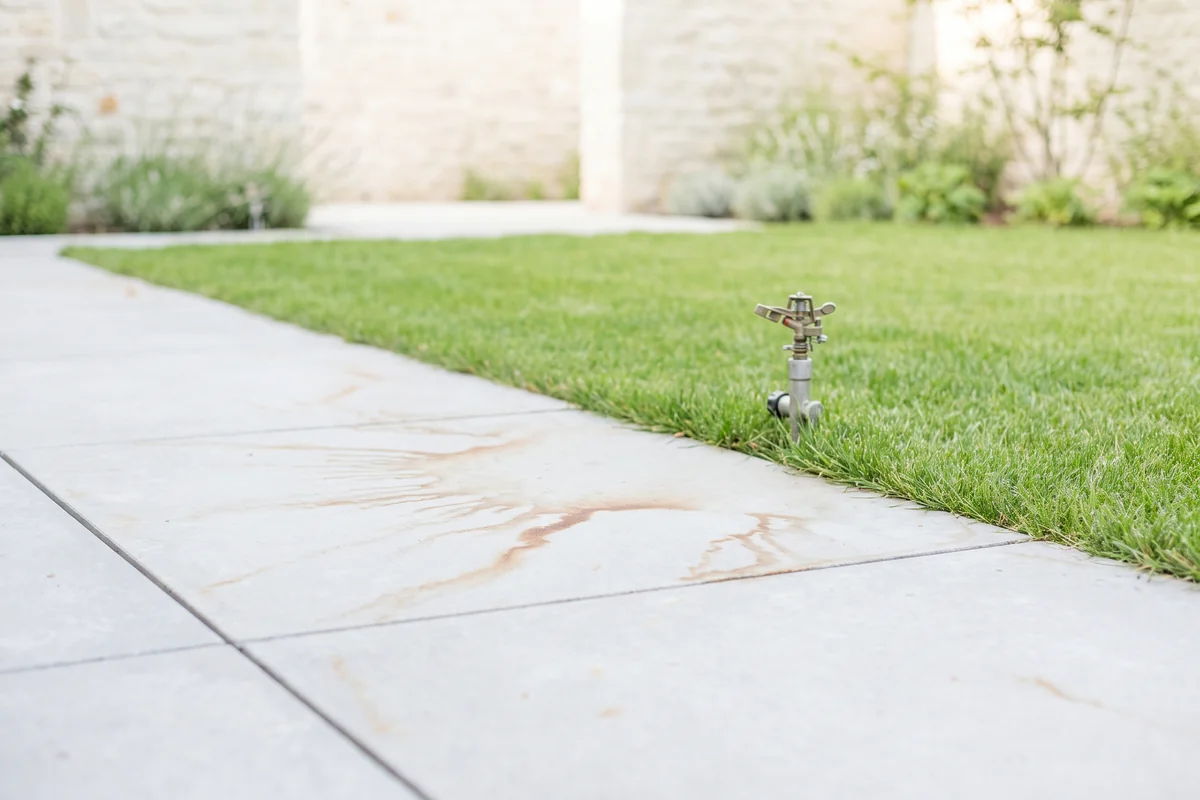
- Irrigation water: In the garden, iron, pH level and hardness matter most. A lot of iron leaves rust-brown stains on paving, walls and leaves.
- Pool: Measure iron, hardness and pH level before filling. Check with your municipality first – filling with well water isn’t allowed everywhere.
- Animals: There are separate guide values for drinking water for animals. Nitrate, iron and germs are part of the basic check.
- Drinking and cooking: Then the German Drinking Water Ordinance applies with all its limits – and you can’t do without a lab analysis.
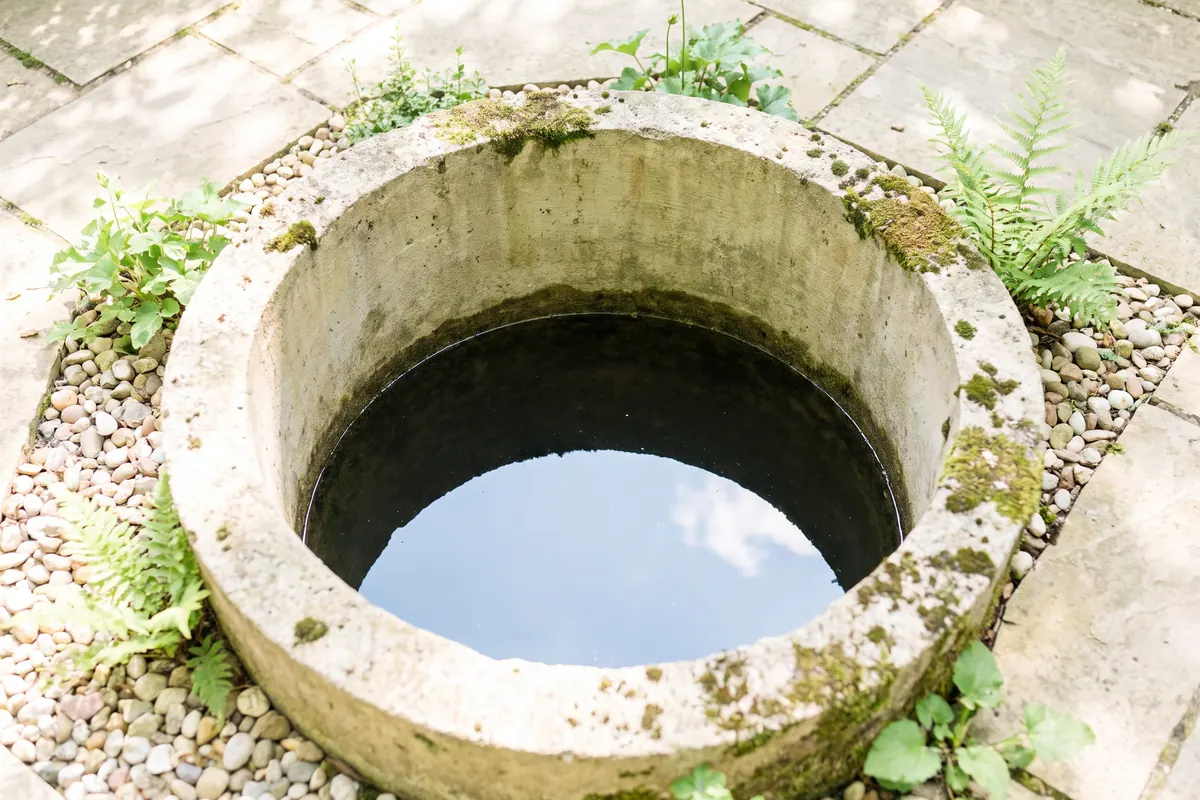
What can be in well water
Some things come from the ground: iron and manganese are common in groundwater, often along with a lot of limescale. Depending on the region, arsenic or uranium also occur.
Others come from above: nitrate from fertilising, pesticides from agriculture and germs when surface water or wastewater gets into the well – for example after heavy rain or flooding. According to the German Environment Agency, drilled wells are less often contaminated with germs but often contain more nitrate, iron and manganese.
Values at a glance
The values you should check
Tap a value: you'll see the limit or range on a scale, what matters – and the right test methods.
E. coli and coliform germs must not be present in drinking water - proof means: do not drink for the time being.
How to test this value
Nitrate comes from fertilisation and agriculture; the limit is 50 mg/l.
How to test this value
Nitrite indicates fresh contamination or contamination.
How to test this value
Iron is common in groundwater; causes discoloration, cloudiness and deposits.
How to test this value
Manganese often occurs together with iron; causes black deposits and deposits.
How to test this value
The water hardness in groundwater is usually high; important for technique, taste and limescale tendency.
How to test this value
The pH value: very low values make the water corrosive to pipes.
How to test this value
Ammonium can indicate contamination from wastewater or fertilizer.
How to test this value
Test yourself or lab?
What you can test with what
Test strips give you a quick first overview. For germs and substances with very low limits, you need a lab.
Test strips
Quick overview
- pH level and water hardness
- Nitrate and nitrite
- Iron, copper and lead as a first impression
- Result in about one minute
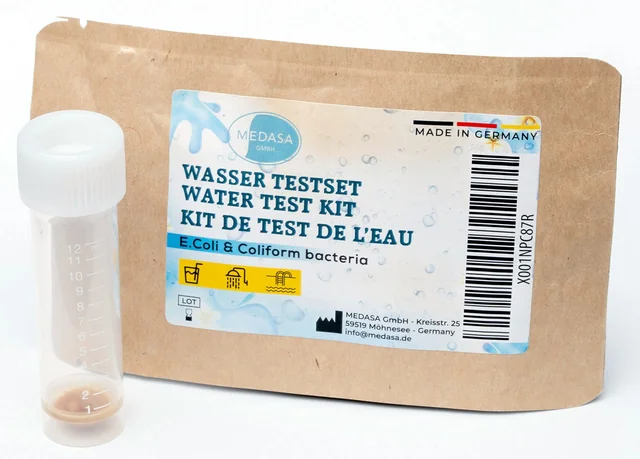
Rapid germ test
First indication
- Detects coliform bacteria and E. coli
- Result after 24 to 48 hours
- Does not replace a lab analysis
laboratory
Reliable findings
- Germs: E. coli, enterococci, coliform bacteria
- Manganese, ammonium, arsenic and uranium
- Pesticides
- Required if you drink the water
Step by step
How to take the sample correctly
A result is only as good as the sample. The instructions of your test or lab always take precedence.
- 1
Choose the right spot
Take the sample where you actually use the water – for example at the kitchen tap or the garden connection.
- 2
Let the water run
Let the water run for 2–3 minutes or until it is consistently cool. That way you measure fresh well water and not what was standing in the pipe.
- 3
Use a clean container
For test strips, a clean glass is enough. For germs, only use the lab’s sterile bottle and don’t touch the inside.
- 4
Prepare the tap
For a germ sample, unscrew the aerator and clean the spout, for example with 70 % alcohol. The lab instructions tell you exactly how.
- 5
Keep it cool for the lab
Store the sample cool and dark and send it off on the same day if possible. How long it may be in transit is stated in the lab’s instructions.
- 6
Note the result
Write down the date, values and the weather of the past few days. That way you’ll see later whether your well water is changing.
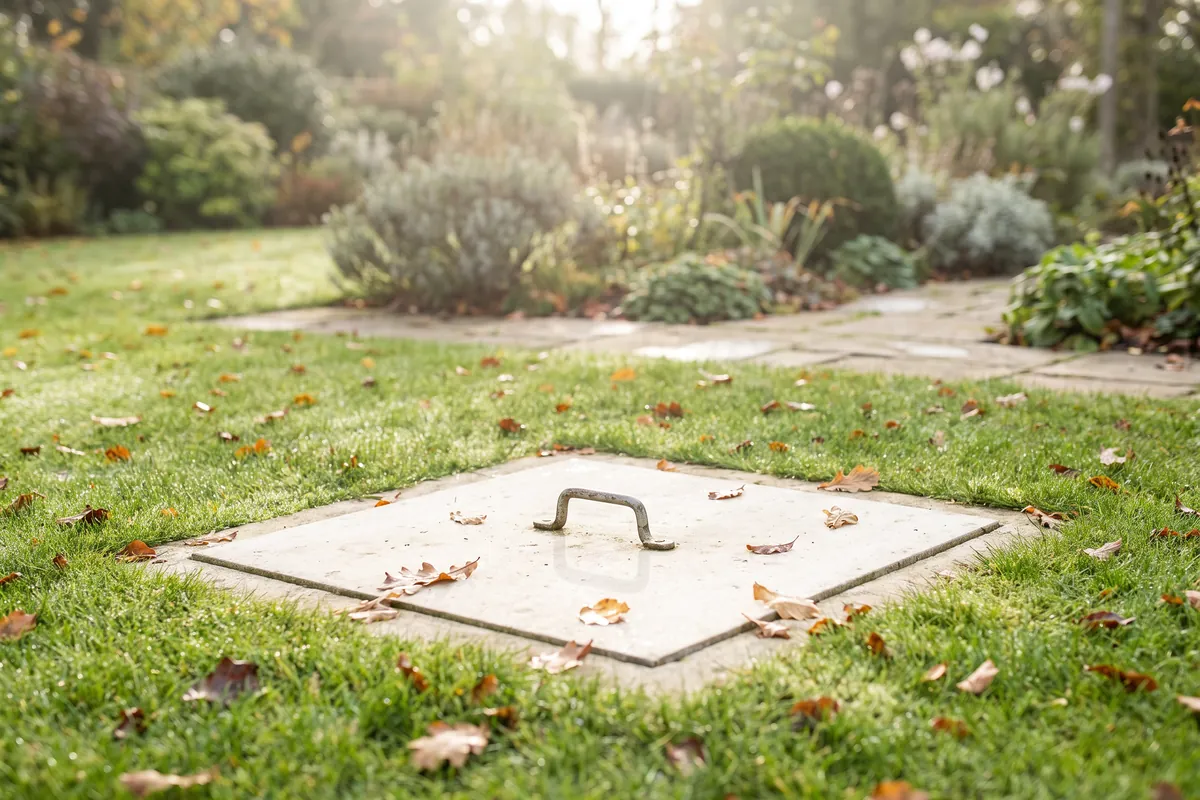
When you should test
- before using a new well for the first time or after a long period of non-use
- at least once a year if you drink the water
- after heavy rain, flooding or snowmelt
- when taste, smell, colour or turbidity change
- if there is fertilising, livestock or a septic tank nearby
- before you fill the pool with well water
The well itself deserves a look too: is the cover tight, is there no water standing at the wellhead? The German Environment Agency recommends inspecting the system about every three months and after heavy rain.
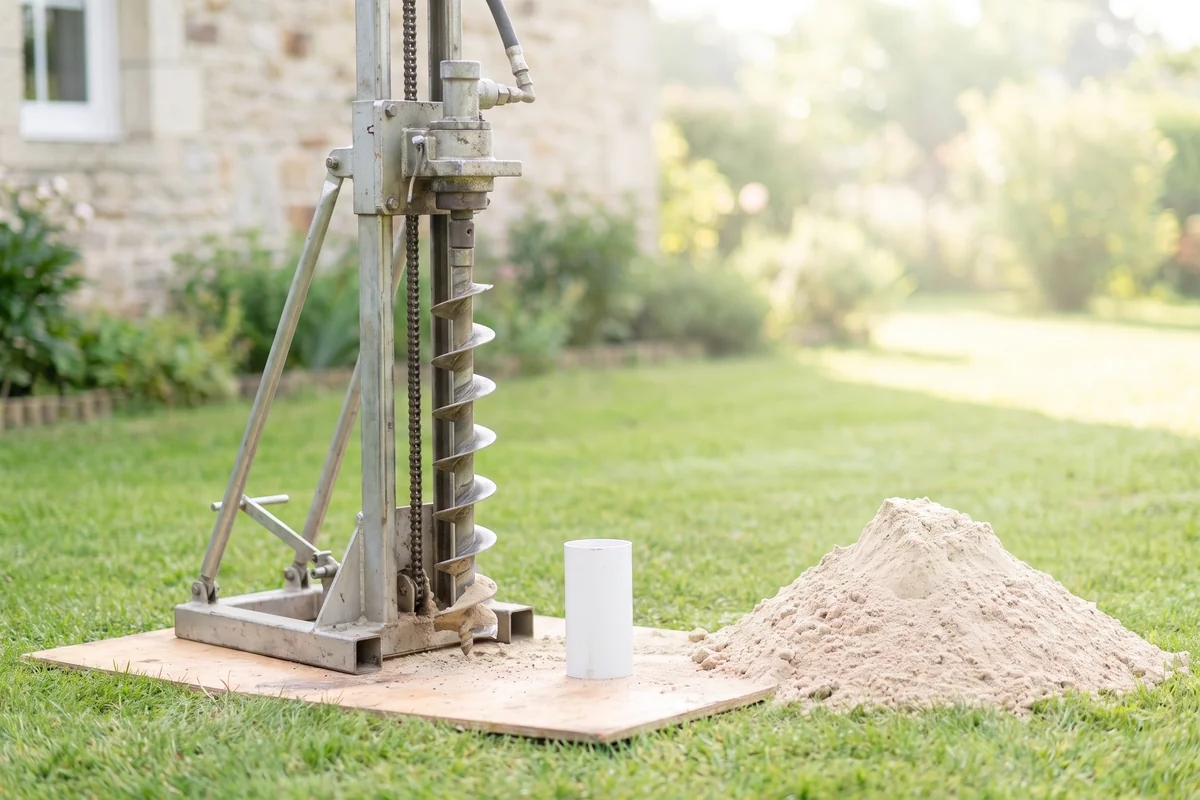
Rules for your well
- Drilling a well: You report a borehole that may reach groundwater to the local water authority one month before you start. The German federal states regulate the details differently – best to ask beforehand.
- Drinking water from the well: If you use well water in the house for drinking or cooking, it counts as a private water supply system. You report it to the drinking water monitoring office of your district or city at least four weeks before putting it into operation.
- Annual testing: For a private water supply, the German Drinking Water Ordinance requires testing for germs at least once a year. The authority decides which other values are added – at least every five years.
- Well water for the toilet or washing machine: You also report such a system in the house to the drinking water monitoring office four weeks in advance.
- Separate pipes: Well water may only be connected to the drinking water pipe via a safety device. You permanently label pipes and taps as non-drinking water.
This information does not replace legal advice. The local water authority and the drinking water monitoring office of your district or city have the final say.
Unusual values – what now?
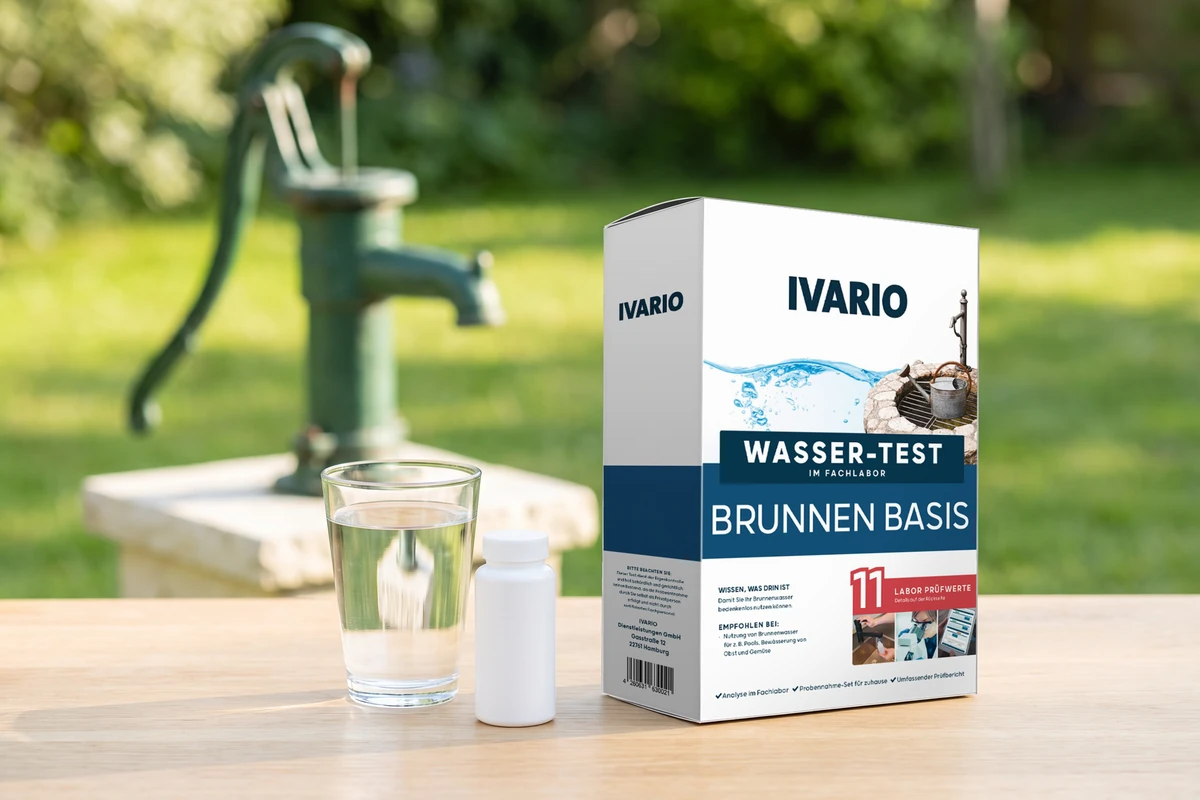
- Germs detected: Don’t drink the water for now. Boiling works against germs, but not against nitrate or metals. Look for the cause – often the wellhead is leaking or surface water is running in.
- Nitrate or nitrite elevated: Confirm with a second test and have it measured in the lab. If nitrate is above 50 mg/l, the water does not comply with the German Drinking Water Ordinance.
- Iron or manganese elevated: For drinking water, the limits are 0.2 mg/l iron and 0.05 mg/l manganese. For irrigation water, a German state agricultural institute gives up to 1.5 mg/l as a guide. A specialist company can advise you on treatment in the house.
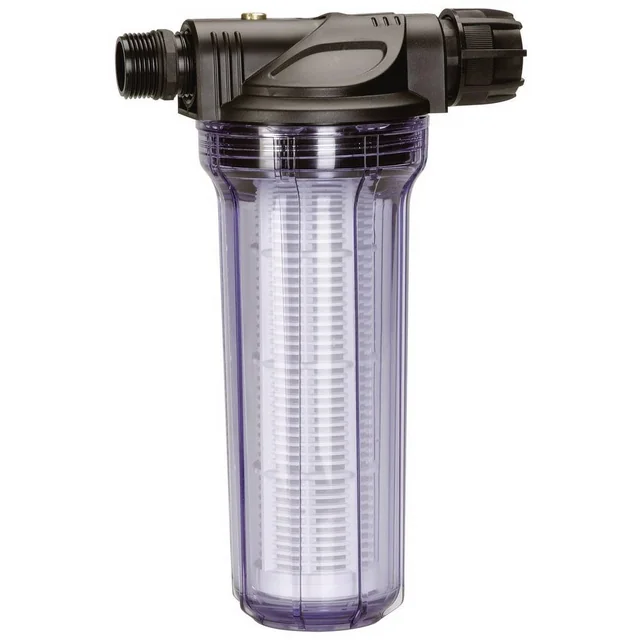
- Sand in the water: A pre-filter in front of the pump holds back sand and protects the pump and pipes.
Well water for pool and garden
Well water is often cool, hard and rich in iron. Measure iron, hardness and pH level before filling the pool. A manufacturer of metal removers describes that iron and copper lead to cloudiness and deposits in the pool – and that the pH level should be 7.0–7.4 before treatment.
In the garden, too much iron shows up as rust-brown stains on slabs, walls and leaves. If so, try not to water over paving and façades.
In short
You test your well water yourself. Test strips show you pH level, hardness, nitrate and iron in about one minute. If you want to drink the water, you need a lab – at least once a year and always after heavy rain, flooding or a change in the water.
Sources: German Drinking Water Ordinance 2023 (§§ 2, 11–13, 29, Annexes 1–3), German Federal Water Act (§§ 46, 49), German Environment Agency guide on private wells, information sheets from district and water authorities, manufacturer information. As of: October 2026.
Products
What you need for your well water
Our test strips for a quick overview – plus lab tests, a rapid germ test and well accessories from other brands on Amazon.
Advertising: As an Amazon Associate we earn from qualifying purchases.
Test it yourself
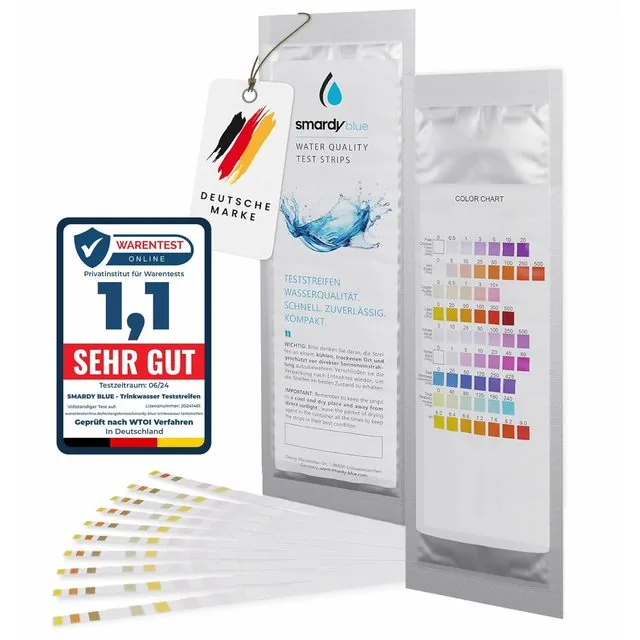
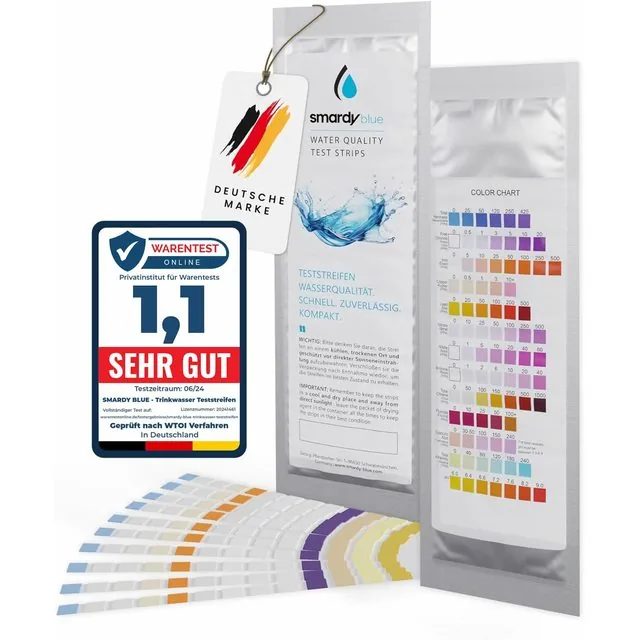
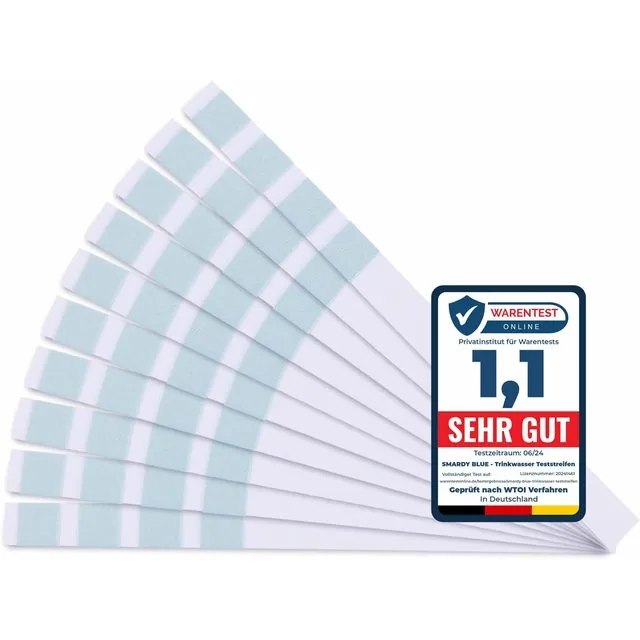
Our test strips show you pH level, hardness, nitrate, nitrite and iron in about one minute.
Lab and germs
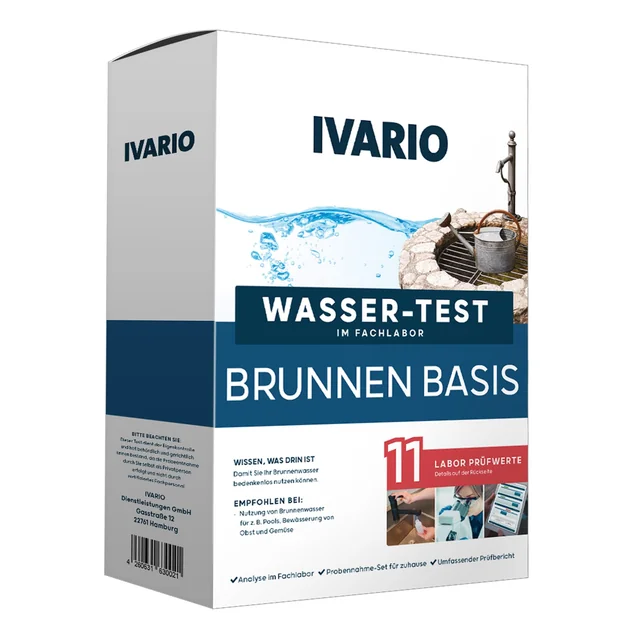
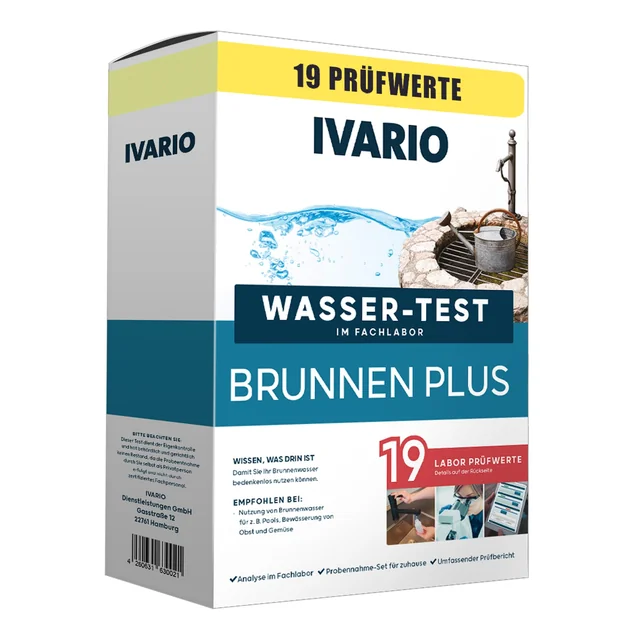
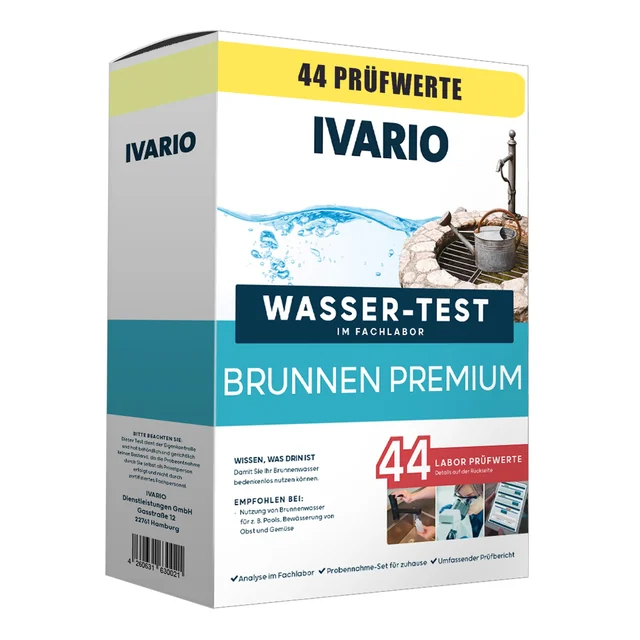
A lab determines germs, manganese, arsenic or uranium. A rapid test gives you a first indication in advance.
Well and pump
A pre-filter holds back sand, a foot valve with strainer protects the suction line.


Pool with well water
Measure before filling – if there’s a lot of iron, a metal remover helps.

Prices are a non-binding guide and may vary; the price shown on Amazon at the time of purchase always applies.

Pure water — not just in the pool
From reverse osmosis to water testing: water expertise from a single source.
To smardy blueQuick answers
Frequently asked questions about testing well water
Can I simply drink well water?
Only if it has been tested. Well water is not publicly monitored. If you want to use it in the house for drinking or cooking, you report the system to the drinking water monitoring office of your district or city and have a lab test it for germs at least once a year.
How often should I test my well water?
If you drink it, at least once a year in the lab. Additionally after heavy rain or flooding, after a long period of non-use and if the taste, smell or colour changes. For irrigation water, a check with test strips at the start of the season is usually enough.
Which well water values matter most?
Germs (E. coli, coliform bacteria) and nitrate. Iron, manganese, hardness and pH level also matter for equipment and taste. Depending on the region, arsenic, uranium or pesticides are added – only a lab measures those.
Are test strips enough for well water?
For a quick overview, yes: they show pH level, hardness, nitrate, nitrite and iron in about one minute. They don’t detect germs, manganese, arsenic or uranium. If you want to drink the water, a lab test is a must.
Do I have to register my garden well?
You report a borehole that may reach groundwater to the local water authority one month in advance. The German federal states regulate the details differently. If you use the water in the house, you also report it to the drinking water monitoring office.
Can I fill my pool with well water?
Each municipality decides that for itself – best to ask beforehand. Measure iron, hardness and pH level before filling: metals from the well can cause cloudiness and deposits in the pool.
Why is my well water turning brown?
Usually dissolved iron is behind it, often together with manganese. In contact with air it turns into rust and stains water, pool and paving. With test strips you can quickly see how much iron is in it; for manganese you need a lab.
Help or advice — feel free to get in touch
Phone: 0800 8727 739
Real people no hold queue — we’re here for you personally.
Mon–Fri 9:00–15:00 · free of charge
Email: info@smardy-blue.com
Drop us a line — we usually reply to every message personally within 24 hours.
Contact us
Still have a question? Through our contact form you’ll quickly find the right answer.