

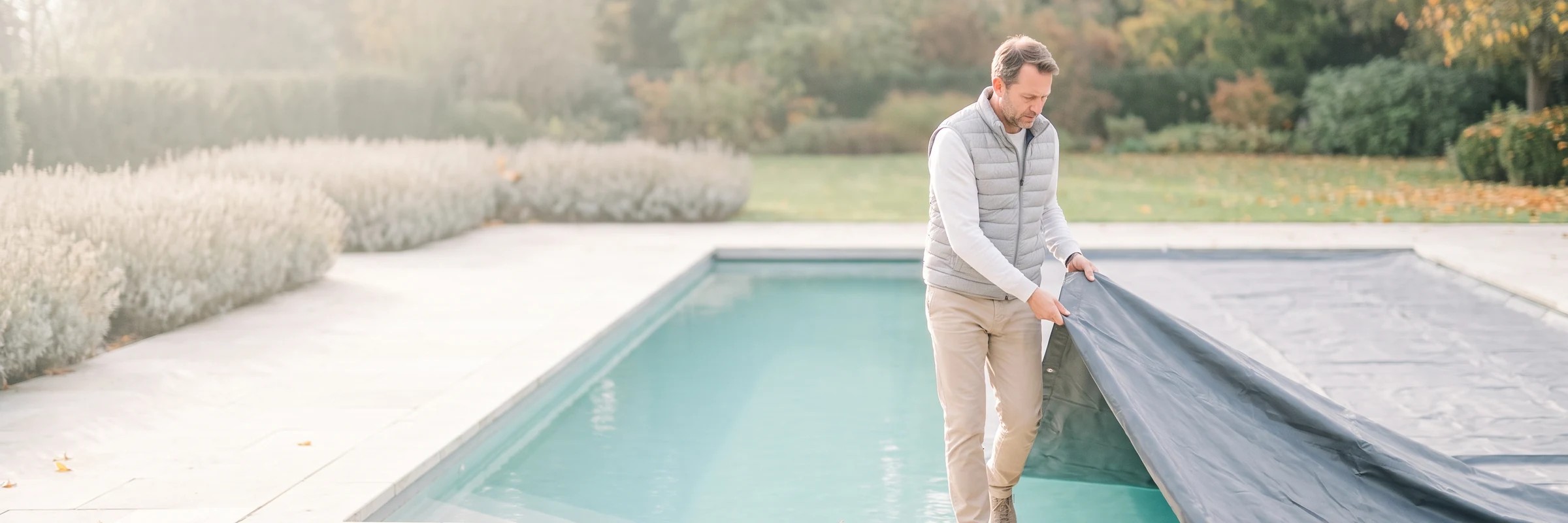
Winterise your pool once the water is consistently colder than 12 to 15 °C. Before covering, adjust alkalinity to 80–120 mg/l, then pH to 7.0–7.4 and free chlorine to 0.3–0.6 mg/l. For in-ground pools, only lower the water level, and drain the pipes, pump and filter before the first frost.
Good to know
How to get your pool through the winter in good shape
If you winterise carefully in autumn, you’ll save yourself a lot of work in spring: the water stays clearer, and the pool and equipment don’t suffer frost damage. Three things matter – the right timing, suitable water values and sealing the pipes and pool against frost.
When is the right time?
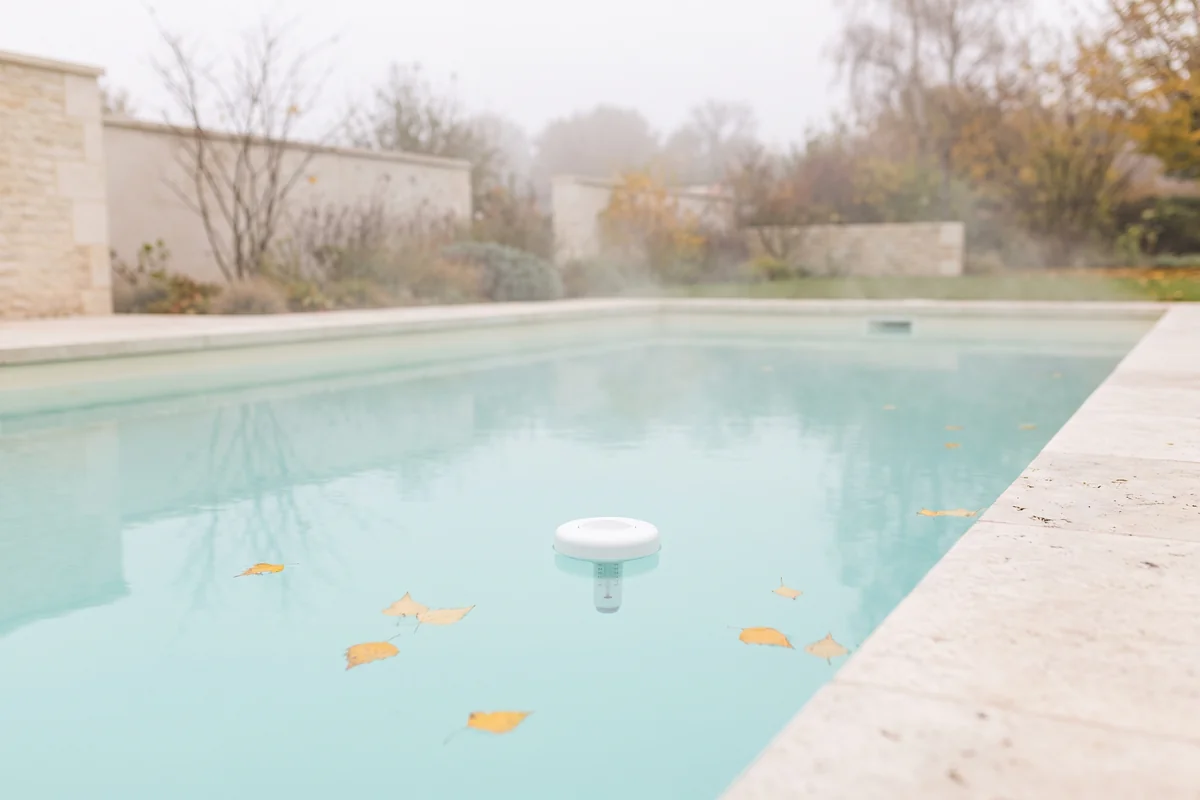
It’s worth winterising once the water is consistently colder than 12 to 15 °C – manufacturers of pool care products give thresholds in this range. Algae then grow much more slowly.
If you winterise too early, algae can grow in the still-warm water under the cover. The pipes, pump and filter must be drained before the first frost at the latest.
Pre-winter values
The values to check before winterising
Test a few days before covering the pool and adjust the values in this order: first the alkalinity, then the pH level and finally the chlorine. Make a note of the values – that way, in spring you’ll see how your water has changed.
80–120 mg/l
Buffers the pH level. If it’s right, the pH level also stays more stable over the winter.
7,0–7,4
Manufacturers of winterising chemicals require this range before you add the product.
0,3–0,6 mg/l
Manufacturers differ on whether shock chlorination is needed beforehand. Test the free chlorine and follow the instructions for your winterising chemical.
8–14 °dH
With some winterising chemicals, the dose depends on the water hardness. Hard water also makes limescale build up more easily.
A value out of range? The pool care advisor shows you the right action to take. Go to the Pool care advisor
Two approaches
Active or passive winterising?
For most private pools, passive winterising is the usual approach. Active winterising is only worthwhile if the pipes and equipment are frost-proof.
Most common
Passive winterising
You lower the water level, drain the pipes, pump and filter, and cover the pool. The filter system stays off until spring.
Suitable if:
- the pipes aren’t installed frost-free
- the equipment is outdoors or in an unheated room
- you want as little work as possible over the winter
With frost-proof equipment
Active winterising
The pool stays full and the filter system keeps running – a major manufacturer of pool care products specifies at least 4 hours a day, and round the clock when there’s frost. A frost protection device switches the pump on permanently when it’s cold.
Suitable if:
- the equipment and pipes are installed frost-free, for example in an equipment pit
- you can check on the pool and test the water regularly
- you factor in the electricity for running the filter
Instructions
Step by step: how to get your pool ready for winter
This sequence applies to the passive winterising of an in-ground or steel-wall pool. The instructions from your pool, filter and winterising chemical manufacturers take priority.
- 1
Clean thoroughly
Skim off leaves, vacuum the floor, brush the walls and waterline, and empty the skimmer basket and pump strainer.
- 2
Test and adjust the values
Test the alkalinity, pH level, chlorine and water hardness, and adjust them in this order.
- 3
Chlorine as instructed
Depending on the instructions for your winterising chemical, carry out shock chlorination or keep the free chlorine in the range of 0.3–0.6 mg/l.
- 4
Clean the filter
Backwash and rinse the sand filter thoroughly; remove and clean cartridge filters.
- 5
Add winterising chemical
Dose according to the label – with some products, the amount depends on the water hardness – and distribute evenly around the pool.
- 6
Lower the water level
At least 10 cm below the lowest fitting, such as the return jet or skimmer, unless your pool manufacturer specifies otherwise. Don’t empty the pool.
- 7
Drain the equipment
Let the pipes drain or blow them out, empty the pump and filter tank, set the multiport valve to the winter position, and drain the heat pump and solar absorber completely. Store the measuring electrodes of a dosing system or salt chlorinator moist and frost-free.
- 8
Seal and cover
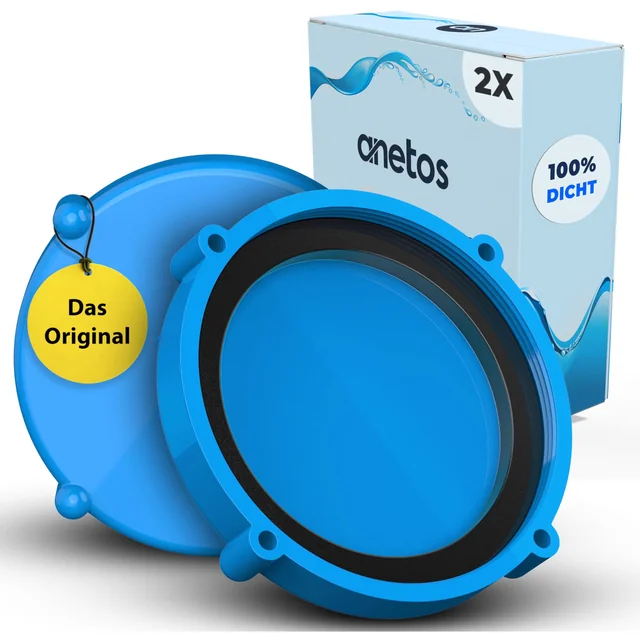
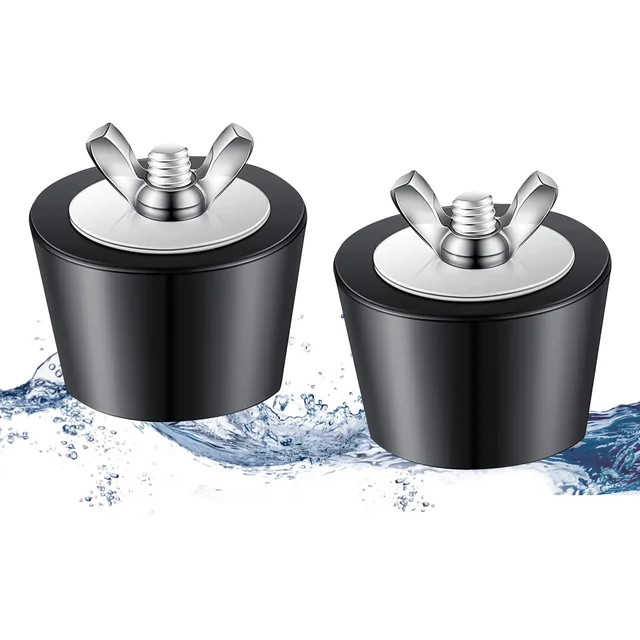
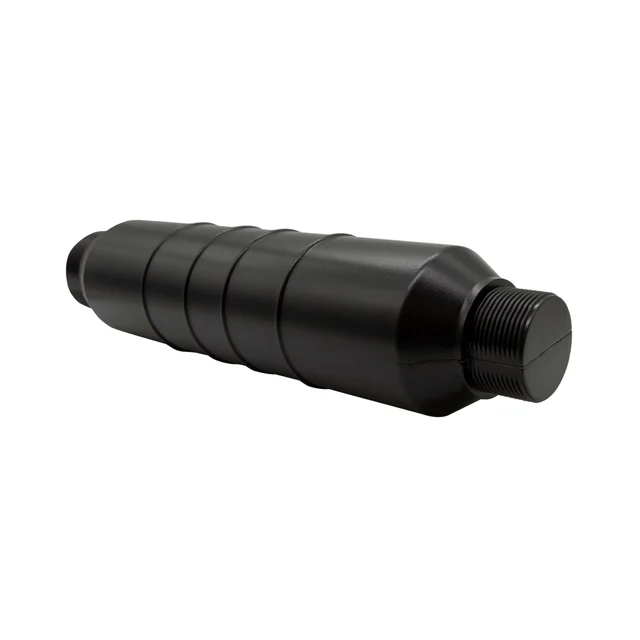
Seal the pipes and return jets with winterising plugs, protect the skimmer with a skimmer ice compensator (gizzmo), put in ice compensators or air pillows, and fasten the cover.
Winterising chemical: yes or no?
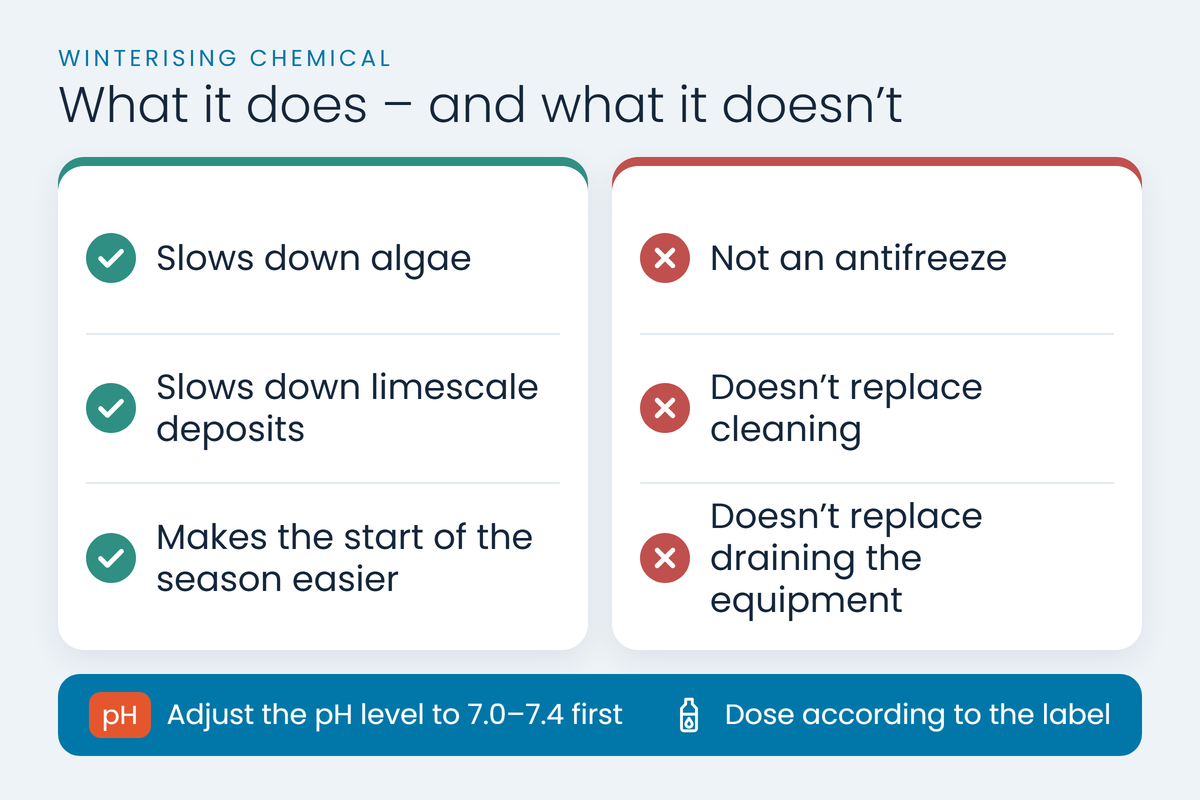
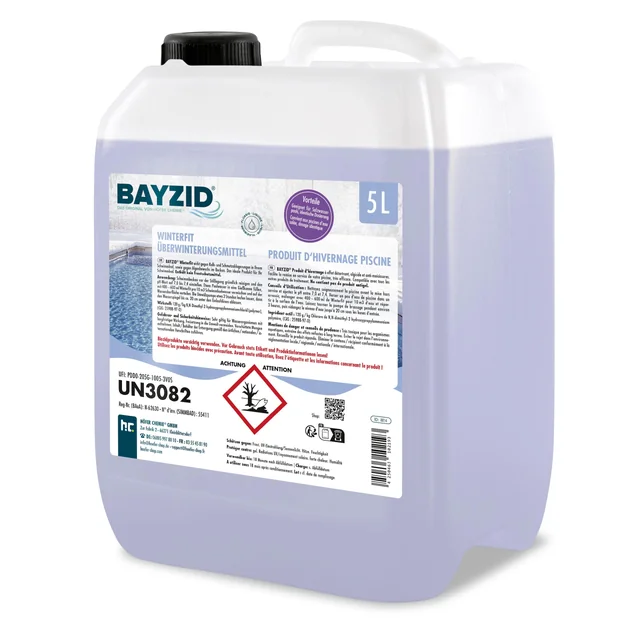
A winterising chemical (winterising concentrate) slows down algae and limescale deposits over the cold months and makes the start of the season easier. It isn’t an antifreeze and doesn’t replace cleaning or draining the equipment.
It’s especially useful for passive winterising, when the water sits for months without circulating. Adjust the pH level to 7.0–7.4 first and dose according to the label. Winterising chemicals are usually biocidal products.
Use biocides safely. Always read the label and product information before use.
Frame and quick-up pools: take down or leave up?
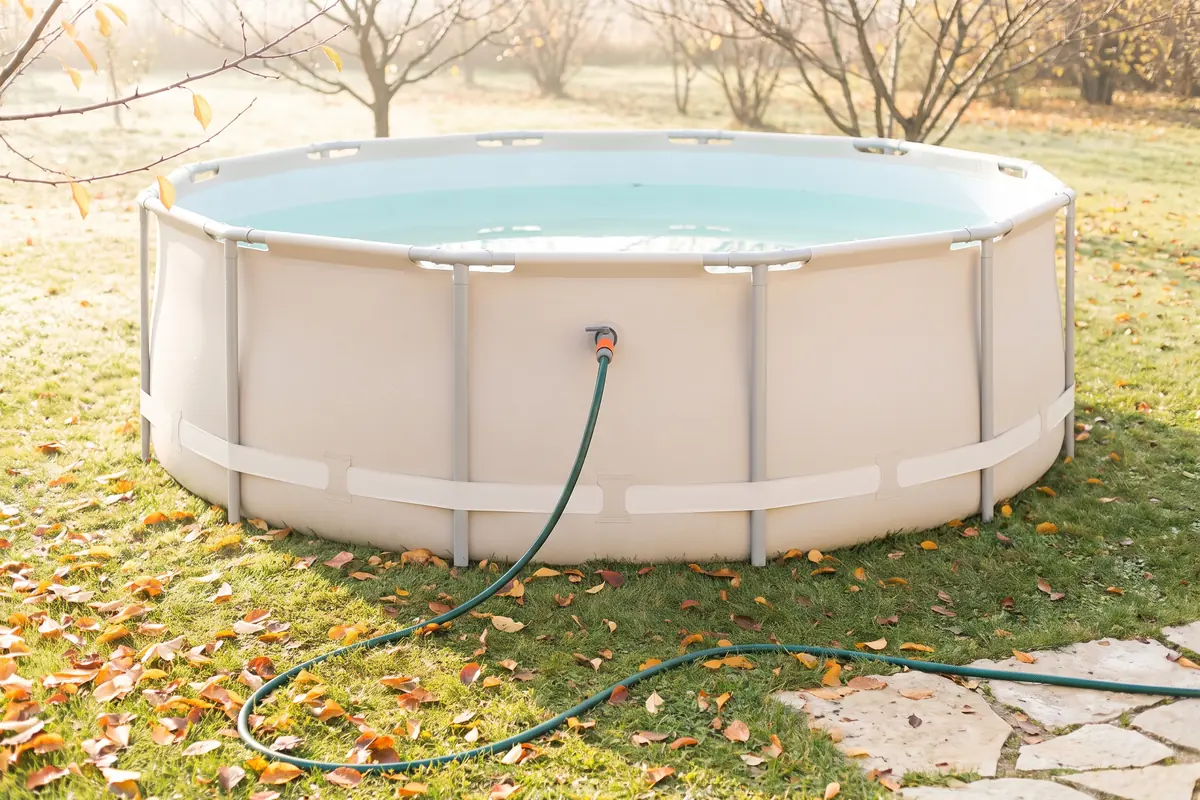
The instructions of major above-ground pool manufacturers require the pool to be taken down before winter – some as soon as it gets colder than 5 °C: drain the water, clean the liner, let it dry completely and store it frost-free. A little talc stops the liner from sticking together in storage.
For some models, manufacturers explicitly allow the pool to stay up all year round. In that case, their instructions apply, for example: water level at least 10 cm below the outlet, seal the connections with winterising plugs, put in an air pillow and leave the cover on all winter.
In pool forums, many people say they leave their frame pool up, filled and covered. Check first what your manufacturer allows – and always seal the connections against frost.
Cover and ice pressure
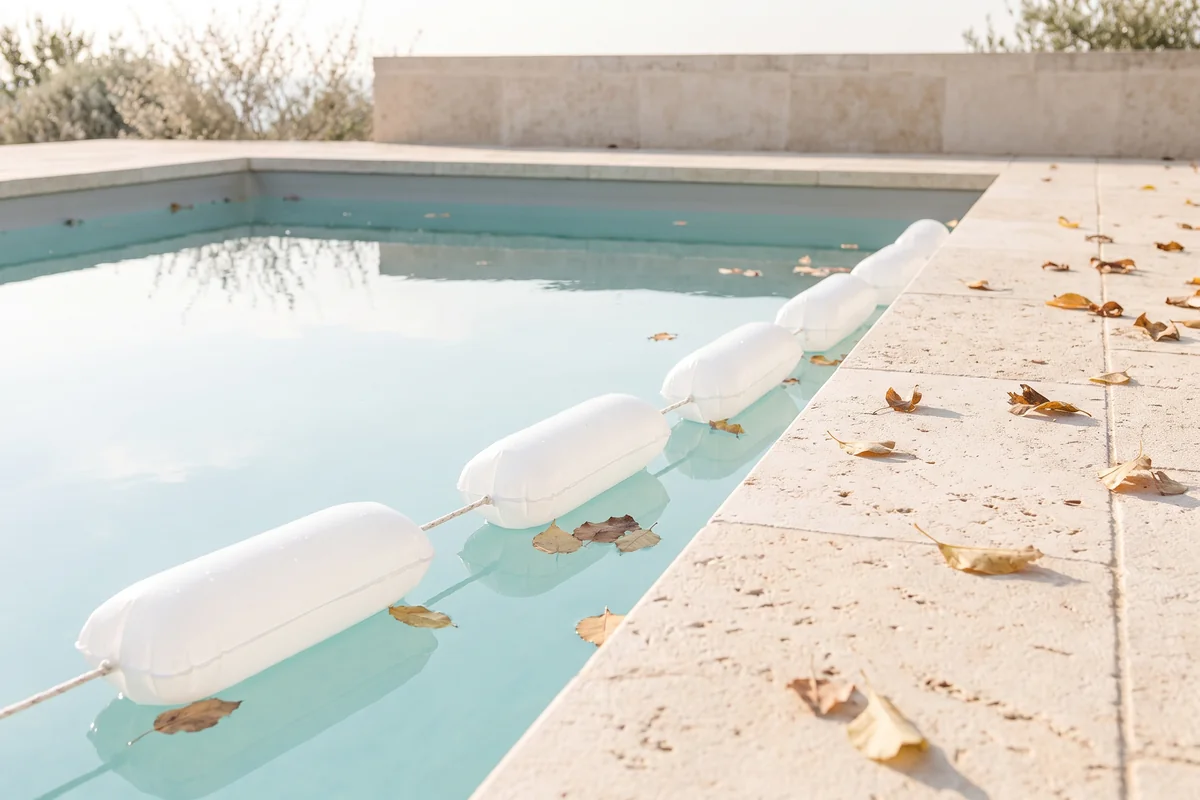
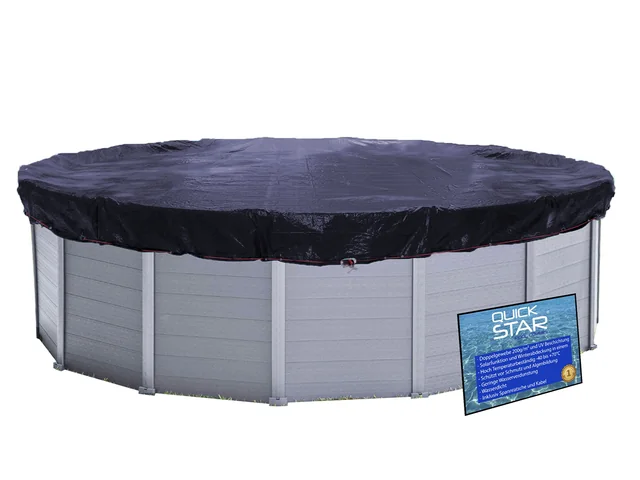
A winter cover keeps out leaves, dirt and light – algae hardly grow in the dark. Choose one that’s larger than the pool and fasten it securely. It isn’t a walk-on safety cover.
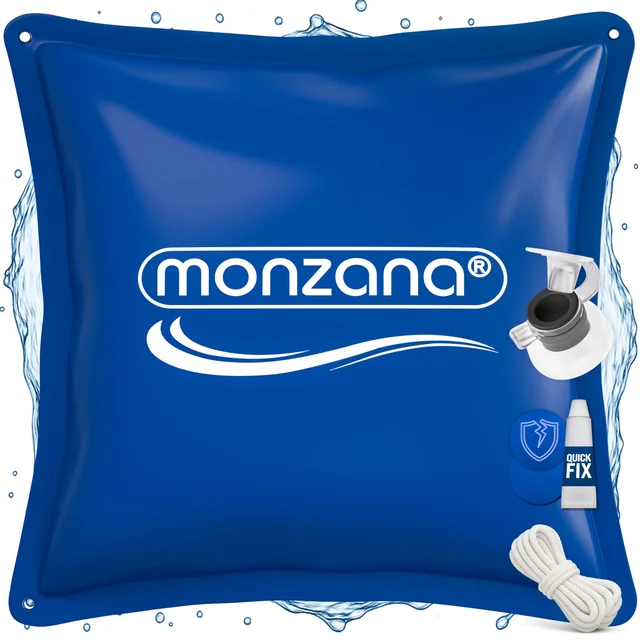
Ice compensators float on the water and are squeezed together as it freezes – this reduces the pressure of the ice on the walls. Air pillows make the cover bulge upwards so that rain and snow run off.
Regularly pump water off the cover and clear away snow, otherwise the load becomes too heavy.
Checking on the pool in winter
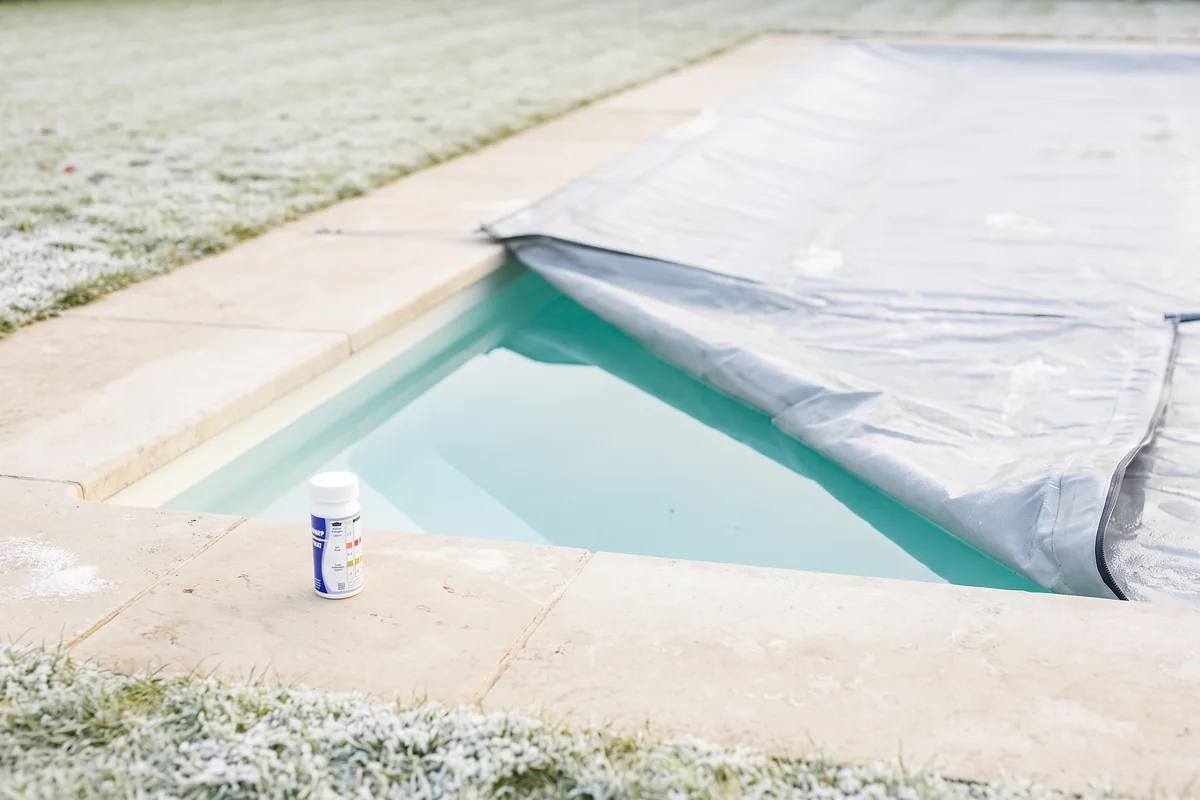
Check on the pool regularly, especially after storms, heavy rain or snow:
- Water level: don’t let it rise above the return jets, pump out water if needed.
- Cover: remove water, snow and leaves, check the fastenings.
- Values: in mild weather, test the pH level and chlorine – that way you’ll notice early if the water starts to turn.
In spring, reopen your pool in good time, before the water warms up – and test the values first.
Common mistakes – and how to avoid them
- Emptying the pool completely: The walls and liner lose their support, rising groundwater can lift an empty pool, and empty above-ground pools can be blown away.
- Covering too early: Algae grow in the still-warm water under the cover.
- Water left in the pipes: It freezes and can damage pipes, fittings and the pump.
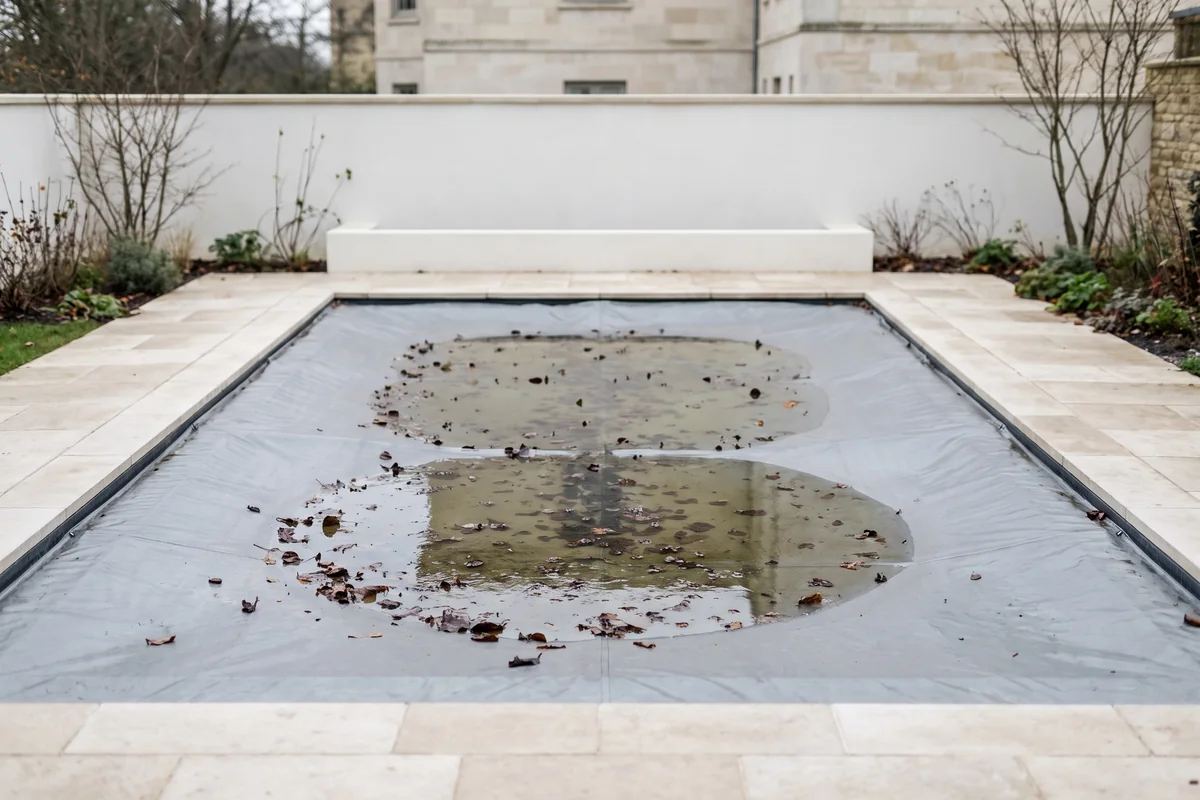
- Not checking the cover: Rainwater and snow pull it into the pool.
- Dosing without testing: Only a test shows whether shock chlorination is needed and how much winterising chemical is right.
- Storing measuring electrodes dry: pH and redox electrodes should be kept moist and frost-free in their protective cap.
In short
Winterise once the water is consistently colder than 12 to 15 °C: clean, test and adjust the alkalinity, pH level (7.0–7.4), chlorine and hardness, add the winterising chemical according to the label, lower the water level, drain the equipment and seal everything against frost. Check the cover and water level regularly over the winter – and test first thing in spring.
Sources: manuals and data sheets from manufacturers of pool care products, filter systems and above-ground pools; Biocidal Products Regulation (EU) No 528/2012. As of: October 2026.
Products
What you need to winterise your pool
Our tests for the pre-winter values – plus suitable accessories from other brands on Amazon.
Advertising: As an Amazon Associate we earn from qualifying purchases.
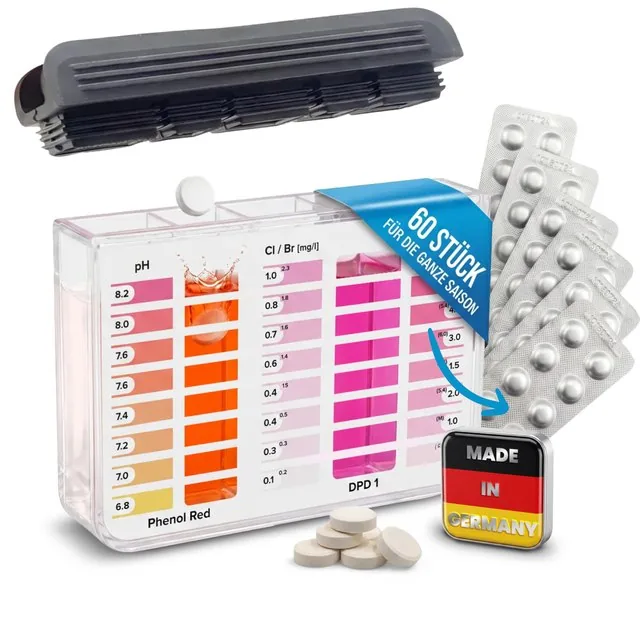
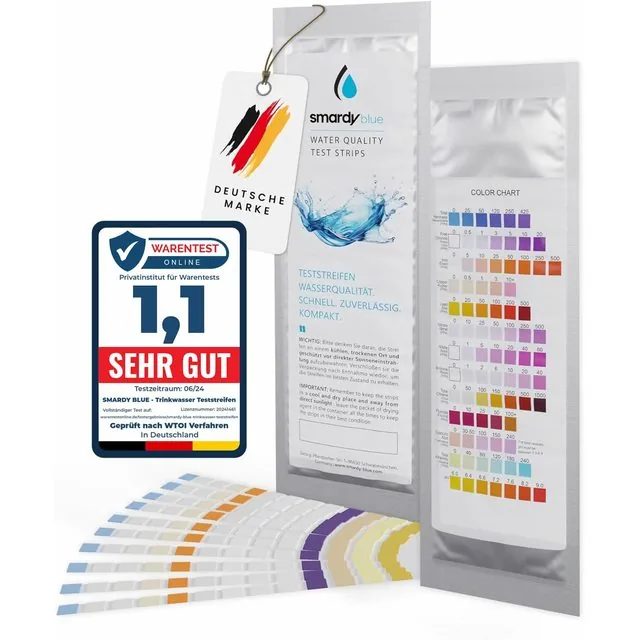
Test and adjust
Before covering the pool, test and adjust the alkalinity, pH level, chlorine and water hardness.

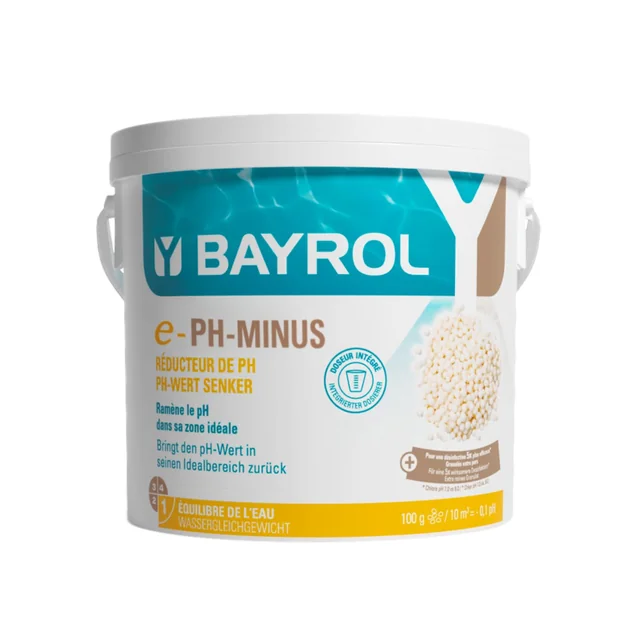
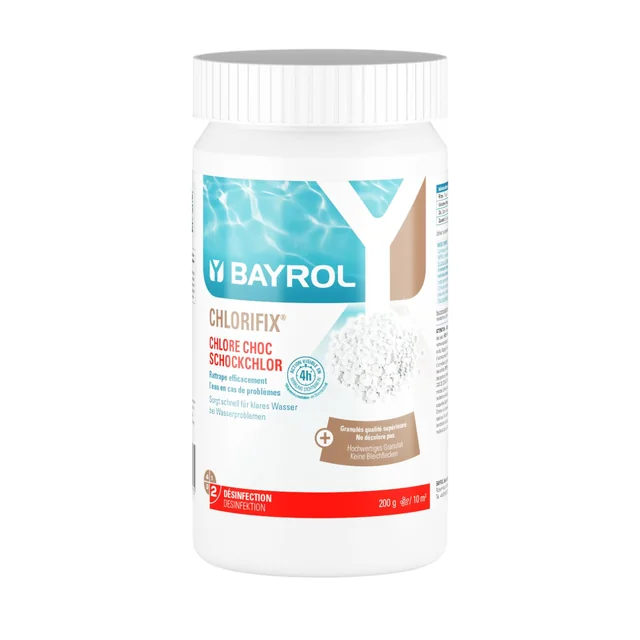
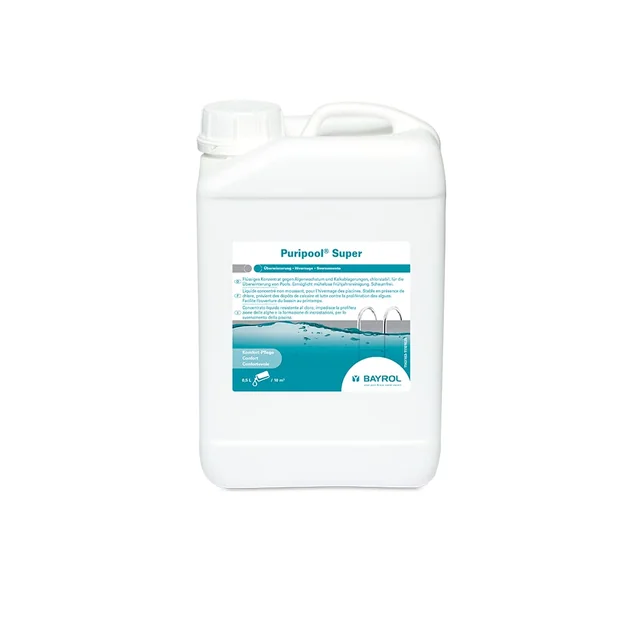
Winterising chemicals and winter closures
Winterising chemical slows down algae and limescale; plugs and skimmer ice compensators keep frost out of the pipes and skimmer.
Covering and ice pressure
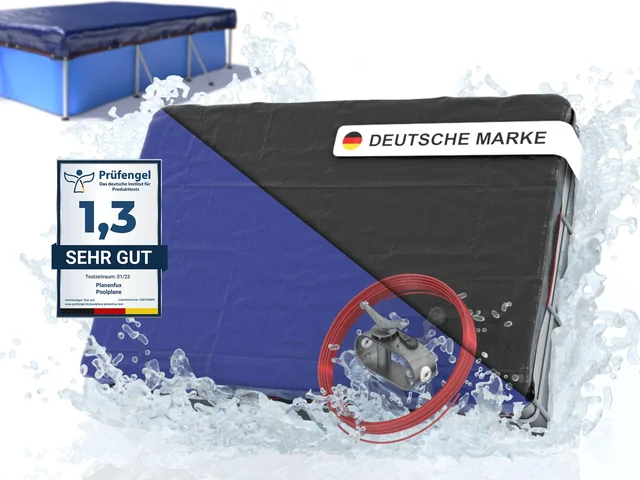
The cover keeps out leaves and light, air pillows absorb the ice pressure, and a low-level suction pump removes rainwater from the cover.


Prices are a non-binding guide and may vary; the price shown on Amazon at the time of purchase always applies.

Pure water — not just in the pool
From reverse osmosis to water testing: water expertise from a single source.
To smardy blueQuick answers
Frequently asked questions about winterising your pool
When should I winterise my pool?
As soon as the water is consistently colder than 12 to 15 °C – manufacturers of pool care products give thresholds in this range. If you winterise too early, algae can grow in the still-warm water under the cover. The pipes and equipment must be drained before the first frost at the latest.
Do I need to drain all the water?
No. With in-ground and steel-wall pools, you only lower the water level – to at least 10 cm below the lowest fitting, unless your pool manufacturer specifies otherwise. The water stabilises the pool; rising groundwater can lift an empty pool.
Do I need a winterising chemical?
Not necessarily, but it’s recommended for passive winterising: it slows down algae and limescale and makes the start of the season easier. It isn’t an antifreeze. Adjust the pH level to 7.0–7.4 first and dose according to the label.
What water values should the pool have before winterising?
Alkalinity 80–120 mg/l, pH level 7.0–7.4 and free chlorine in the usual range of 0.3–0.6 mg/l – or shock chlorination if your winterising chemical calls for it. Also test the water hardness: with some winterising chemicals, the dose depends on it.
Can I leave my frame pool up over the winter?
Only if the manufacturer explicitly allows it to stay up all year round. Otherwise: drain the water, clean, dry thoroughly and store frost-free – some instructions give 5 °C as the threshold for taking it down.
Do I need to change the water in spring?
Recommendations vary: one major manufacturer of pool care products advises replacing at least a third of the water, while some retailers recommend a complete change. Test the pH level, chlorine and alkalinity first, then decide. If you used multi-function tablets, also check the cyanuric acid – it hardly breaks down, and usually only fresh water helps.
Help or advice — feel free to get in touch
Phone: 0800 8727 739
Real people no hold queue — we’re here for you personally.
Mon–Fri 9:00–15:00 · free of charge
Email: info@smardy-blue.com
Drop us a line — we usually reply to every message personally within 24 hours.
Contact us
Still have a question? Through our contact form you’ll quickly find the right answer.