

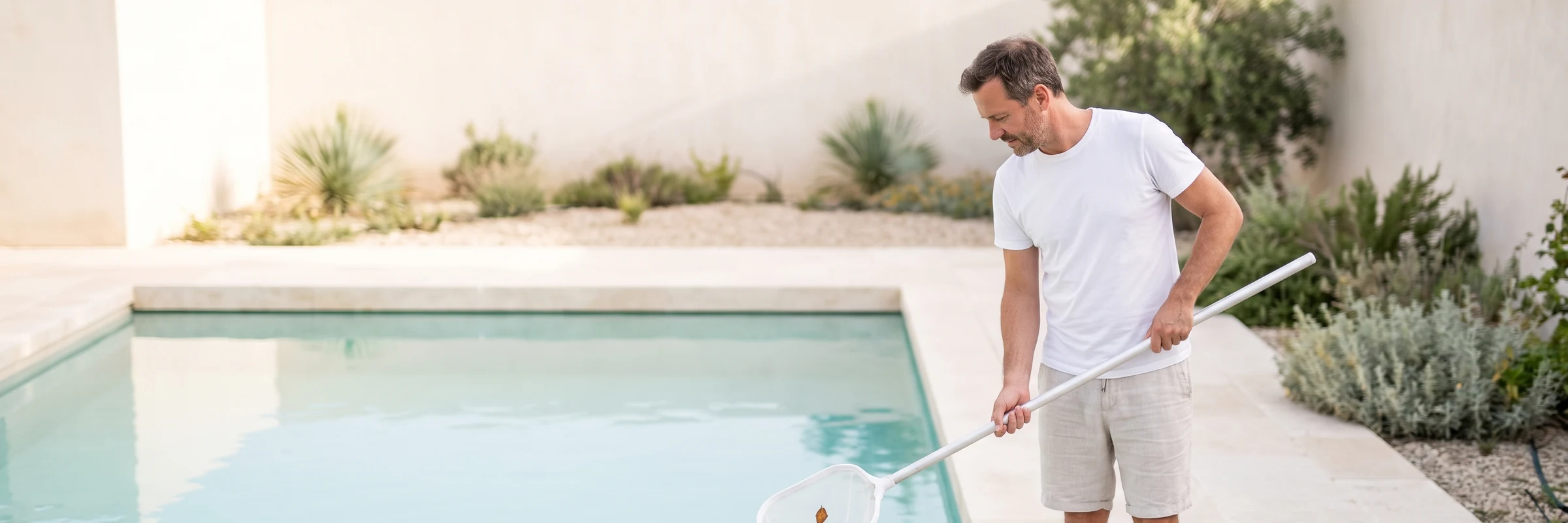
Good pool care rests on three things: the right water values, a filter system that runs long enough and regular cleaning. Measure pH and free chlorine 2–3 times a week in season, and adjust alkalinity first, then pH, then chlorine. One manufacturer gives the water temperature divided by 2 as the daily filter running time in hours.
Good to know
What good pool care is about
Clear pool water is no accident. It depends on three things working together: the right water values, a filter system that runs long enough, and regular cleaning. If one of them is missing, the others cannot make up for it for long.
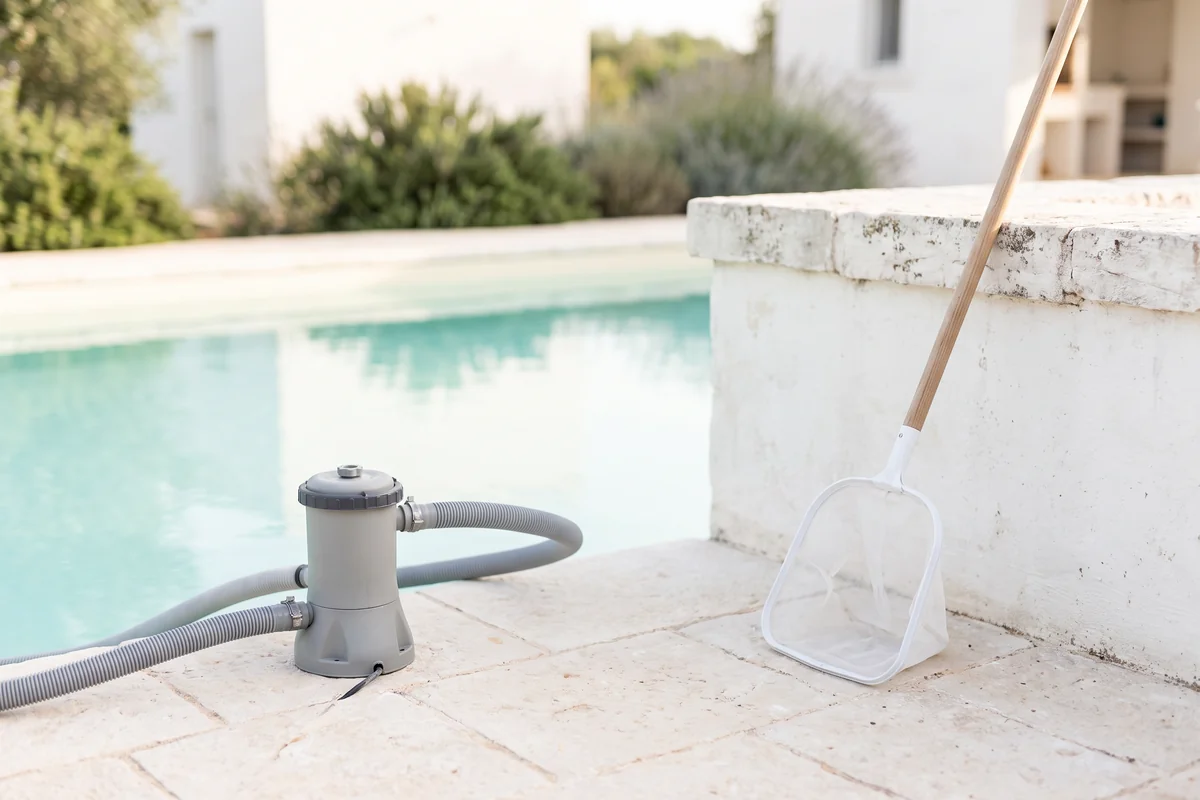
Water values, filter, cleaning
- Water values: Measure the pH level and free chlorine 2–3× a week during the swimming season, and daily in hot weather or when many people are swimming. That is the only way to notice early when a value starts to drift.
- Filter system: It circulates the water and holds back suspended particles. As a minimum running time, a manufacturer recommends the water temperature divided by 2 in hours – so 13 hours at 26 °C.
- Cleaning: Leaves, insects and dirt bring substances into the water that use up chlorine. Whatever you remove early does not have to be dealt with by the filter or the chlorine.
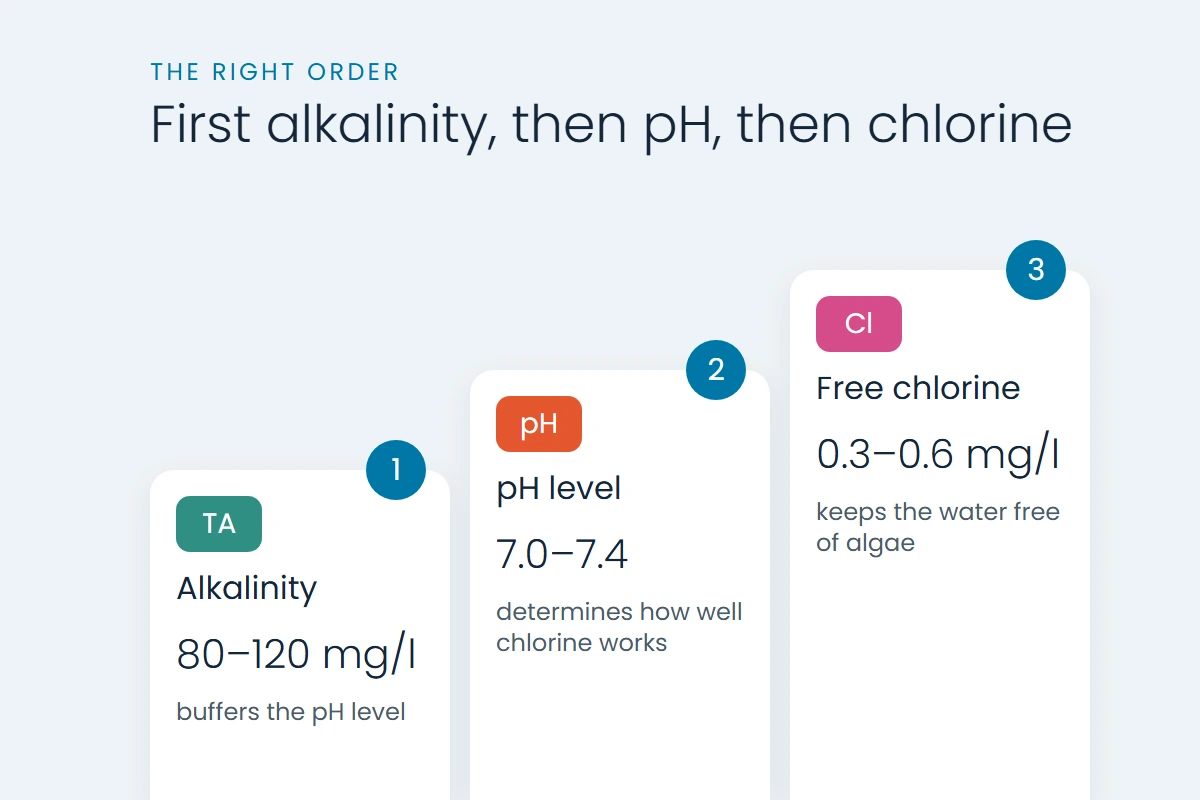
The right order: alkalinity, pH, chlorine
The values depend on each other. Alkalinity buffers the pH level: if it is too low, the pH jumps back and forth. And the pH level determines how well the chlorine works.
So adjust the alkalinity first, then the pH level and only then the chlorine. If you add chlorine while the pH is too high, you waste its effect and quickly end up with too much chlorine.
Target values
Keep an eye on these values
Measure the pH level and free chlorine 2–3× a week during the season. Check alkalinity, cyanuric acid and hardness at the start of the season, after heavy rain or adding fresh water, and about once a month.
7,0–7,4
Chlorine works fully in this range. Adjust it before the chlorine.
0,3–0,6 mg/l
Keeps the water free of algae. Set your dosing to this level permanently.
below 0.2 mg/l
Total chlorine minus free chlorine. If it is higher, the water smells of chlorine.
80–120 mg/l
Keeps the pH level stable. If it is too low, the pH fluctuates widely.
30–50 mg/l
Usually comes from chlorine tablets. Above this, chlorine works more slowly – it can only be lowered with fresh water.
8–14 °dH
A manufacturer states: above 14 °dH and at a pH above 7.6, limescale forms.
A value out of range? The pool care advisor shows you the right action to take. Go to the Pool care advisor
Care plan
What to do and when
A fixed routine saves time and pool chemicals. The instructions for your filter system and your pool chemicals take priority.
Daily
Quick check
- Fish out leaves and insects with the skimmer net
- Check that the filter system is running
- In hot weather or when many people are swimming, measure the pH level and chlorine
2–3× a week
Measure and adjust
- Measure the pH level and free chlorine
- Adjust the pH level first, then the chlorine
- Empty the skimmer basket
Weekly
Clean thoroughly
- Vacuum the floor, brush the walls and waterline
- Read the filter pressure, backwash if needed
- Check the water level and top up
Monthly
The full picture
- Measure alkalinity, cyanuric acid and hardness
- Check combined chlorine
- Inspect the filter sand or cartridge
Step by step
Measuring and adjusting water values correctly
This is how you get balanced values in just a few steps – whether with a shake test, test strips or a photometer.
- 1
Take the sample correctly
Take water from just below the surface, not directly at the inlet nozzle, after the filter system has been running for a while. The instructions for your test take priority.
- 2
Note down all values
Write down the pH level, free chlorine and the date. That way you can see whether a value is slowly drifting, and dose more precisely.
- 3
Alkalinity first
If it is below 80 mg/l, raise it according to the label. Then measure the pH level again.
- 4
Adjust the pH level
Bring it to 7.0–7.4 – with pH minus or pH plus according to the label, in small amounts with the pump running.
- 5
Adjust the chlorine
Only once the pH level is right, bring the free chlorine to 0.3–0.6 mg/l.
- 6
Measure again
After a few hours of circulation, measure again and only then adjust. Never add pool chemicals at the same time.
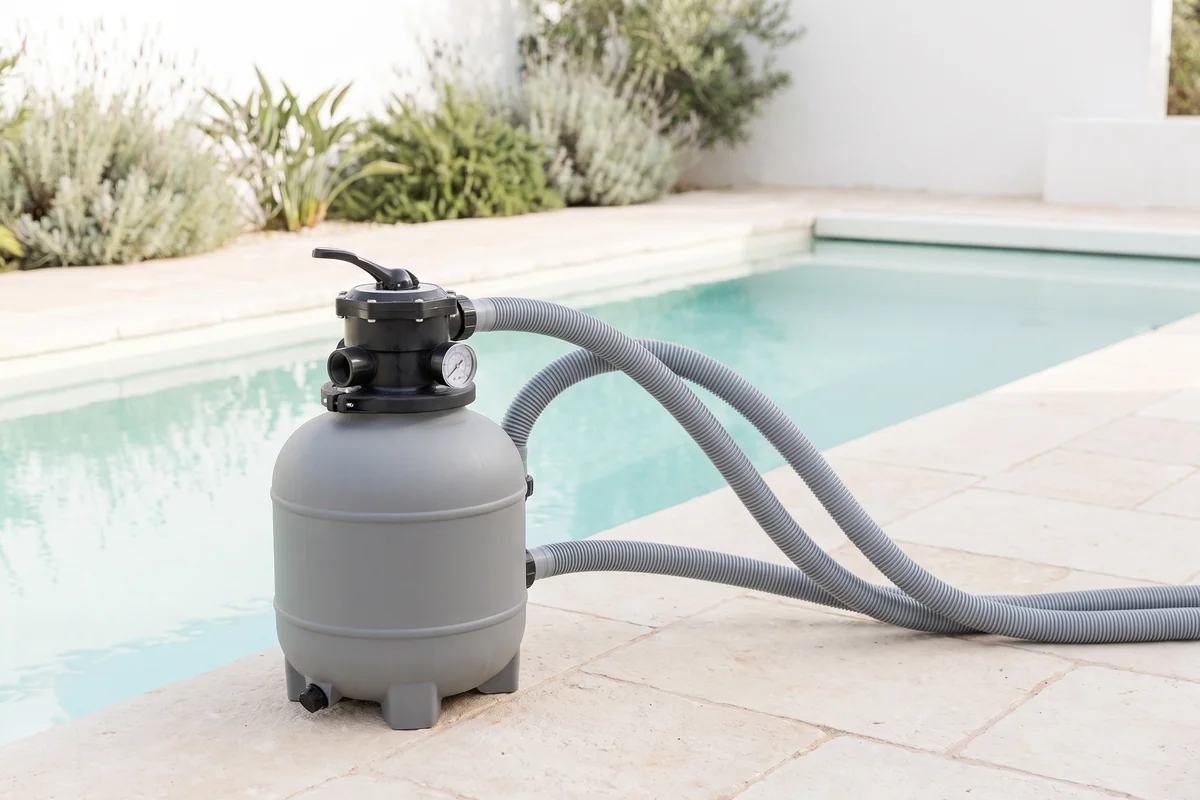
Filter system: running time and backwashing
The filter system is the heart of pool care. As a minimum running time, a manufacturer recommends the water temperature divided by 2 in hours; above 30 °C it recommends filtering around the clock. Other manufacturers give their own rules of thumb – the instructions for your system take priority.
A dirty sand filter is a common cause of cloudy water. Note the pressure on the pressure gauge right after backwashing: if it rises well above that, it is time. A manufacturer recommends backwashing for 3 to 5 minutes about once a week and then rinsing briefly. Clumped sand is replaced; a cartridge is cleaned or replaced.
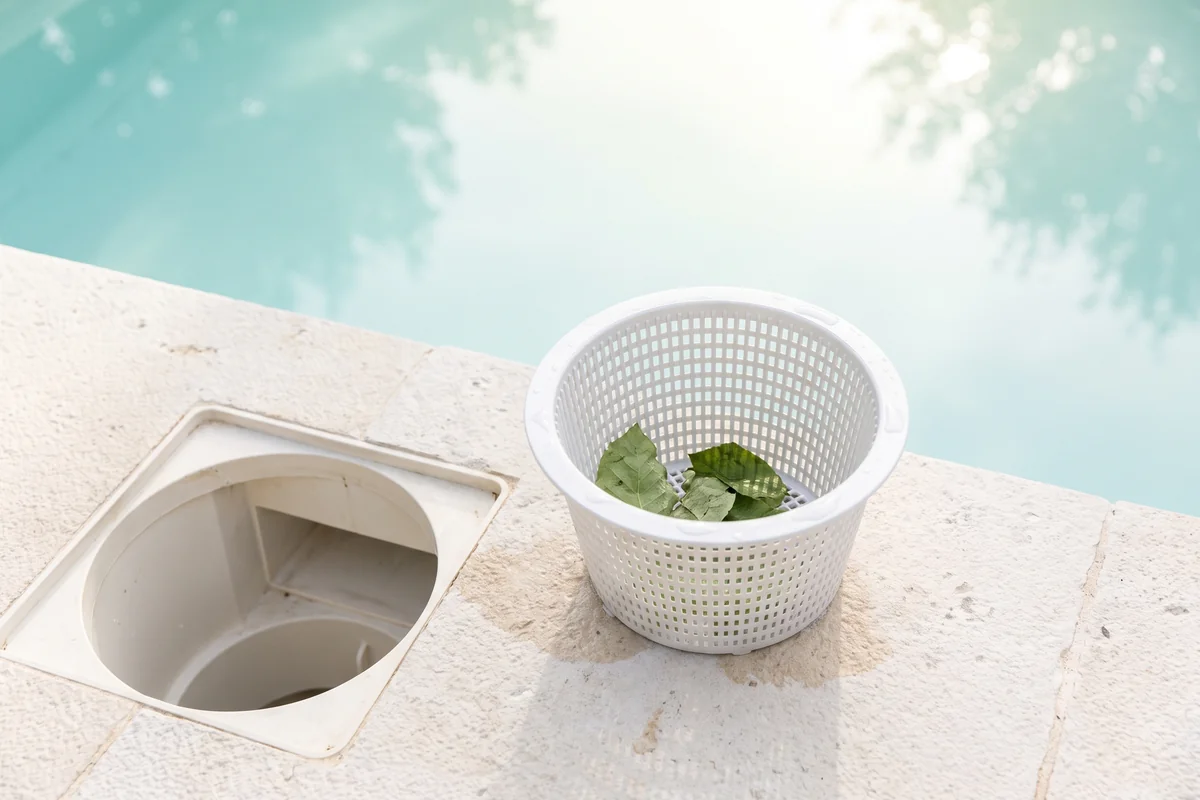
Cleaning: surface, floor, waterline
- Surface: Fish out leaves and insects daily before they sink.
- Skimmer: Empty the basket regularly. The water level should be roughly in the middle of the skimmer opening, otherwise the skimmer draws in air.
- Floor and walls: Vacuum and brush once a week – that way algae cannot take hold.
- Waterline: Always brush it along with the walls – this is where deposits show up first.

Bring less dirt into the water
Swimmers bring sweat, sun cream and hair into the water. These substances combine with chlorine to form combined chlorine – it smells and uses up free chlorine. A quick shower before swimming means less of it ends up in the pool.
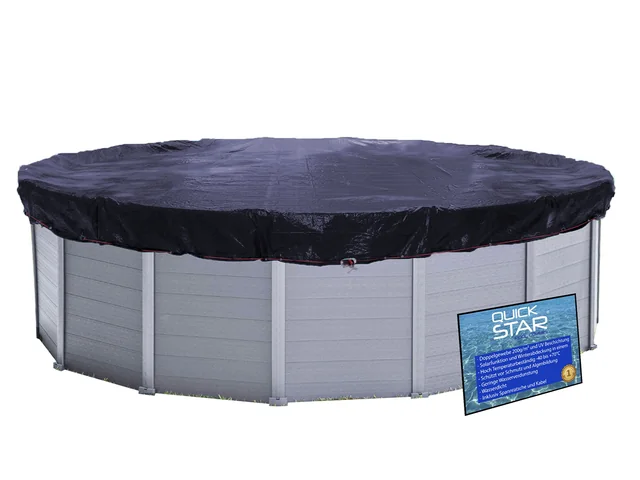
A cover keeps leaves and dirt out when the pool is not in use, and reduces evaporation. After a few days under the cover, measure the pH level and chlorine again before swimming.
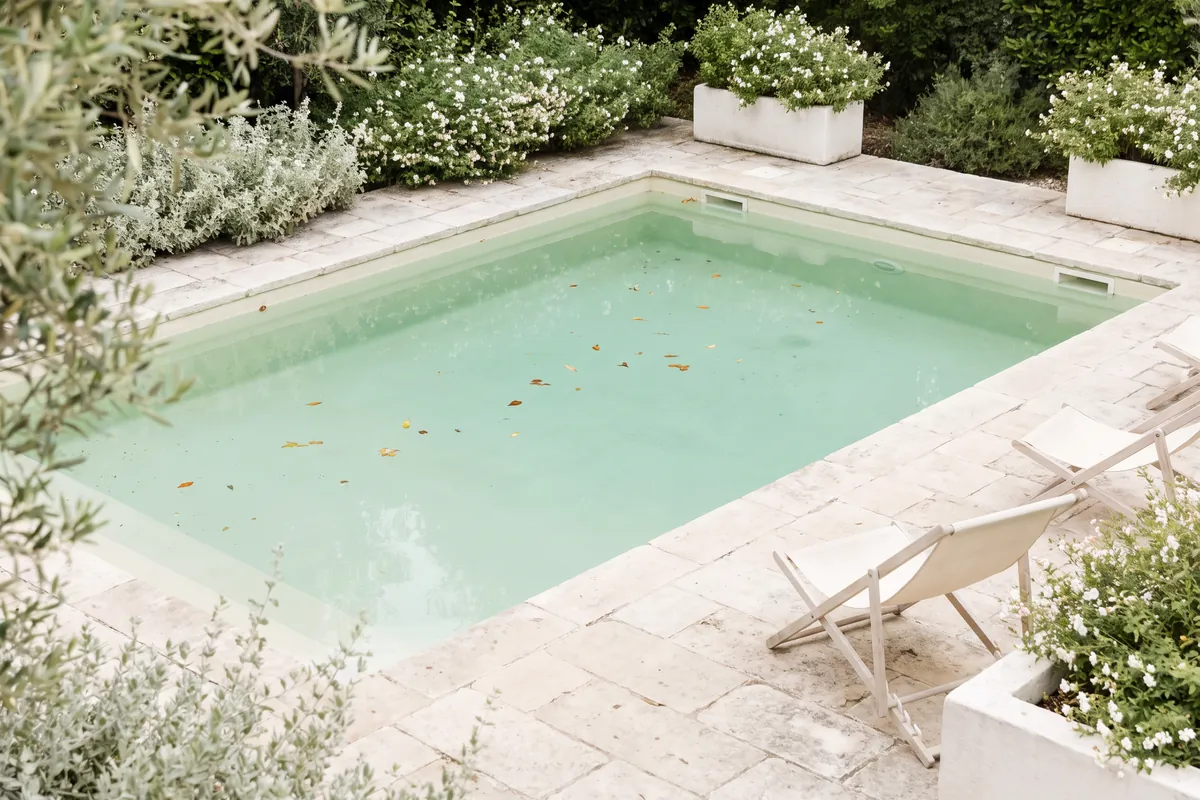
Water cloudy or green?
- Measure first: Often the cause is a pH level that is too high, too little free chlorine or a dirty filter.
- Adjust the values: Bring the pH level to 7.0–7.4. If the free chlorine is too low, shock chlorination according to the label will help.
- Look after the filter: Backwash the sand filter and let the system run longer until the water is clear again.
- Flocculant: If the water stays cloudy, a flocculant binds fine particles into flakes that the sand filter holds back. With cartridge filters, manufacturers say to use a clarifier instead.
Use biocides safely. Always read the label and product information before use.
Common mistakes – and how to avoid them
- Chlorine at too high a pH: The chlorine then works poorly, and you keep adding more and more.
- Dosing by feel: Cloudy water or a chlorine smell do not tell you which value is wrong. Measure first, then act.
- Running the filter too briefly: Electricity saved, pool chemicals wasted: suspended particles stay in the water.
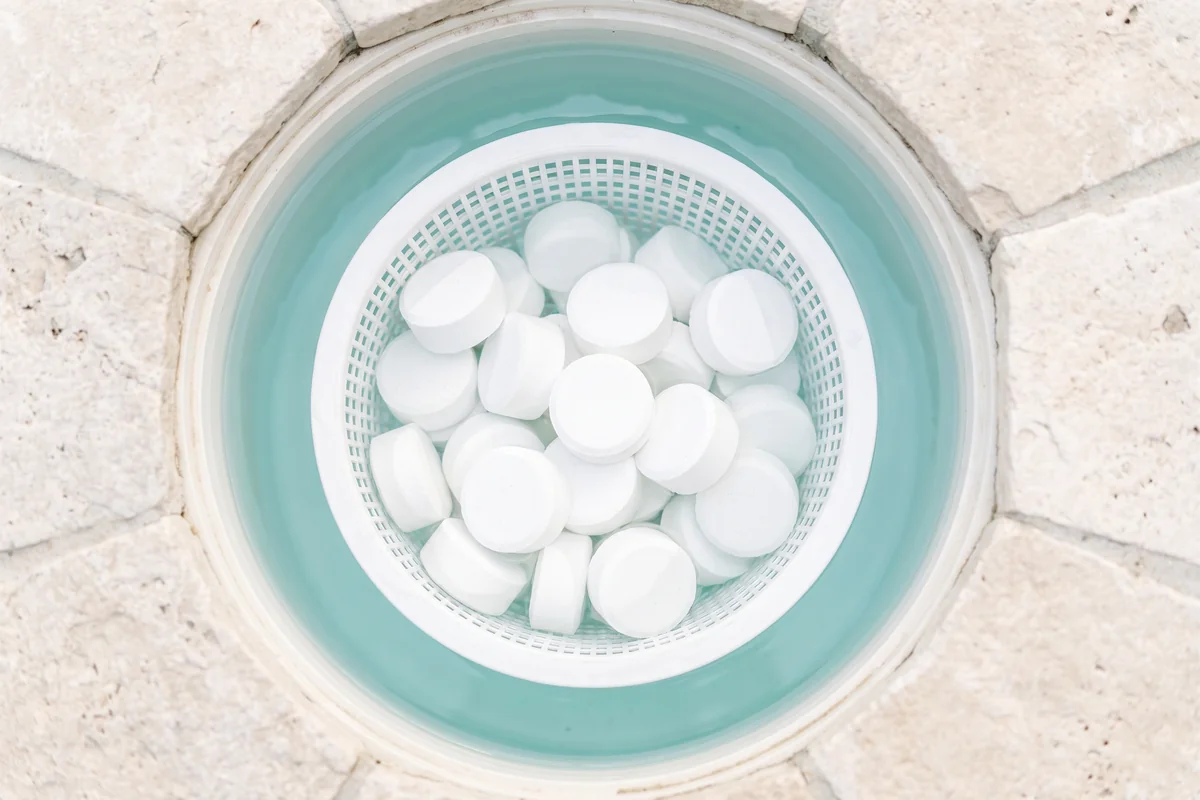
- Mixing pool chemicals: Never put products into the skimmer or a bucket together – add them one after the other with a gap in between.
- Blindly trusting a reading of 0: Right after chlorinating, a test can bleach out if there is a lot of chlorine. Measure again diluted before you add more.
- Forgetting cyanuric acid: If you only use chlorine tablets, it builds up. Measure it now and then and add fresh water if needed.
In short
Measure the pH level and free chlorine 2–3× a week during the season and adjust the values in the right order: alkalinity, pH level, then chlorine. Let the filter system run long enough, backwash it when the pressure rises and keep the surface, floor and waterline clean. That way your pool stays clear with little effort.
Sources:
- Instructions and data sheets from manufacturers of pool chemicals, filter systems and measuring equipment
- Recommendation of the German Environment Agency (Umweltbundesamt) for swimming pools (values according to DIN 19643)
- Biocidal Products Regulation (EU) No 528/2012
Last updated:
Products
What you need for pool care
Our tests for all important water values – plus pool chemicals and accessories from other brands on Amazon.
Advertising: As an Amazon Associate we earn from qualifying purchases.
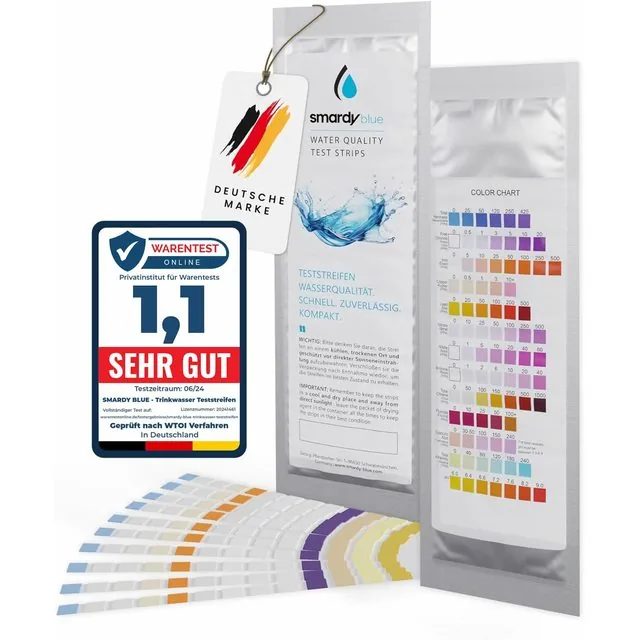
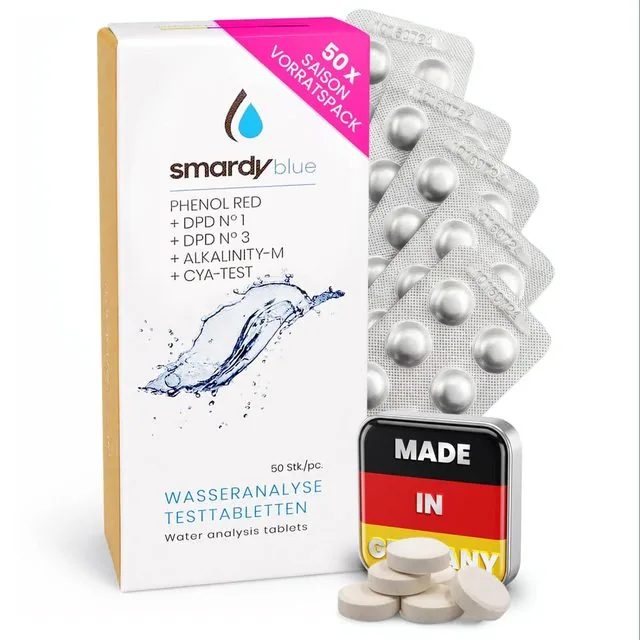
Measure regularly
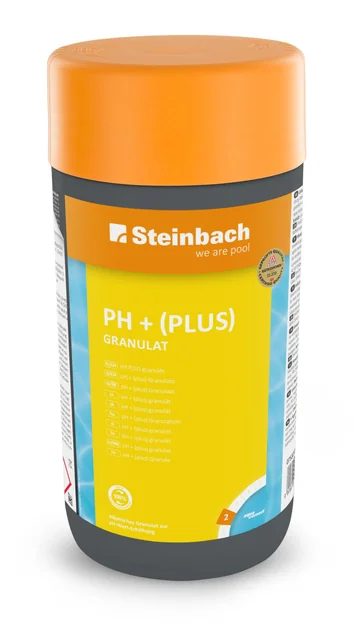
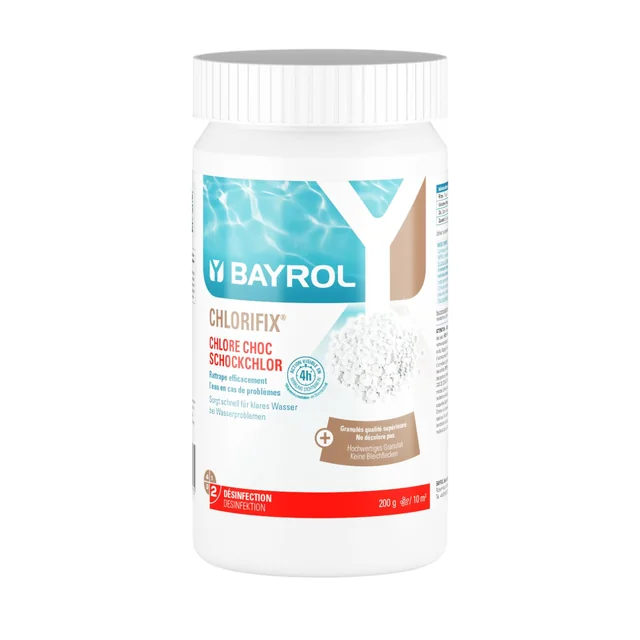
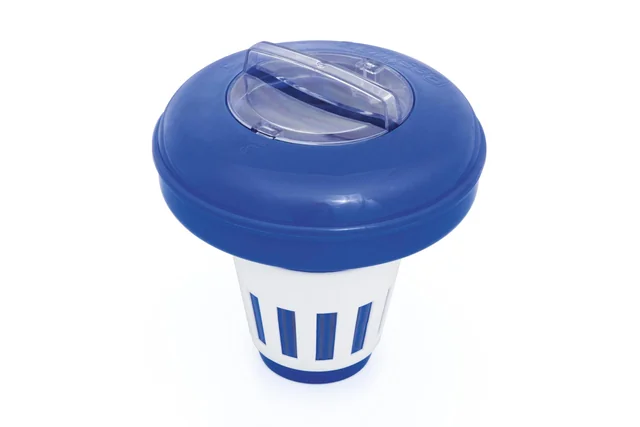
Measure the pH level and free chlorine 2–3× a week during the season, and alkalinity, cyanuric acid and hardness now and then.
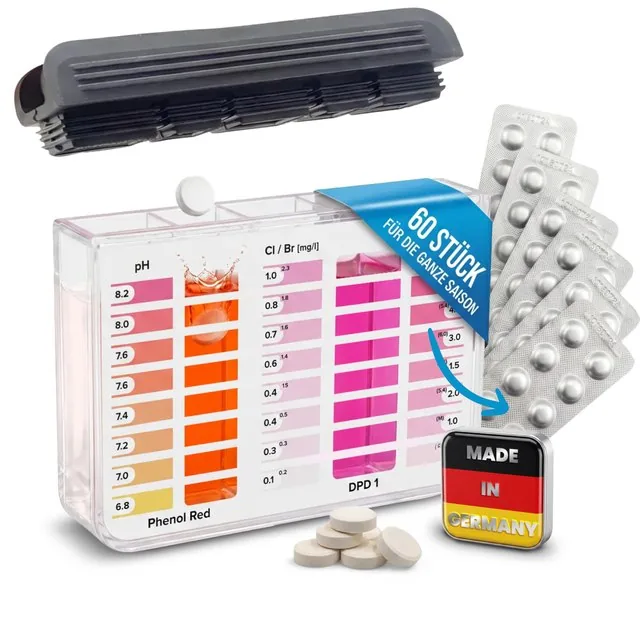
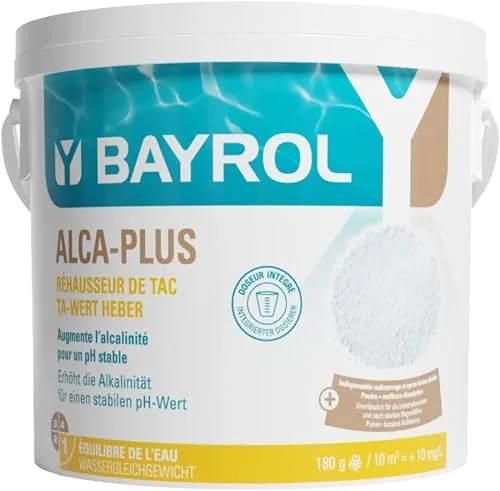
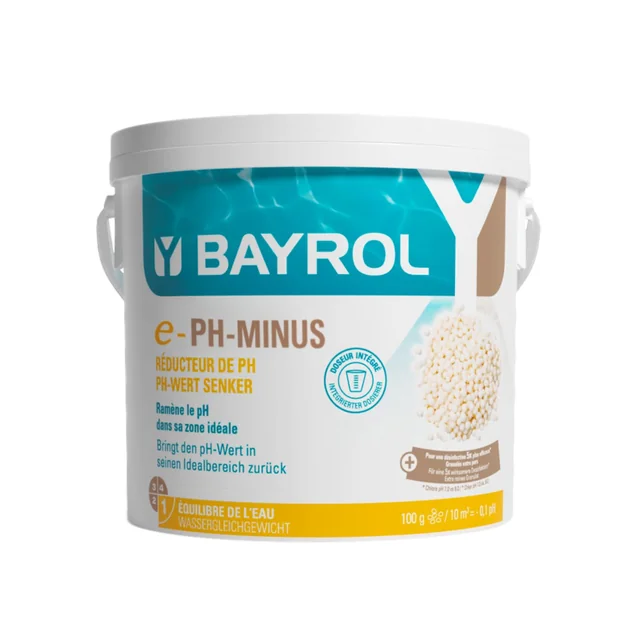
Adjust the values
First the alkalinity, then the pH level, finally the chlorine – always dose according to the label and measure again afterwards.
Cleaning and filtering
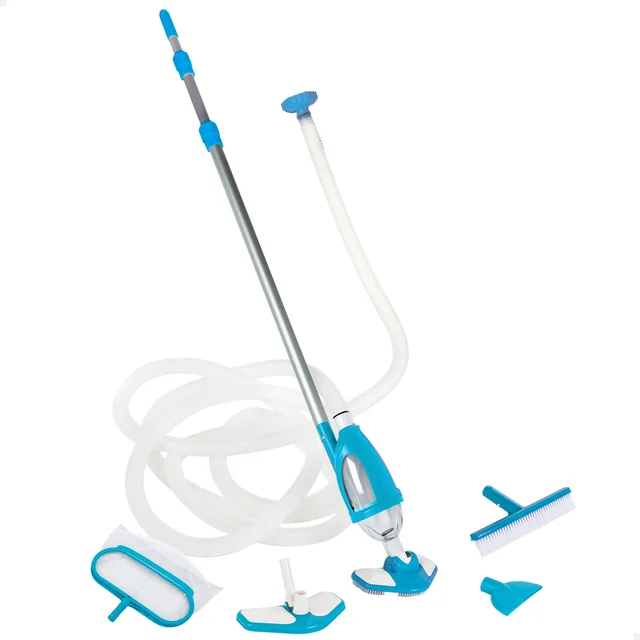
A skimmer net, brush and pool vacuum take work off the filter. Skimmer socks catch fine debris before it reaches the filter.
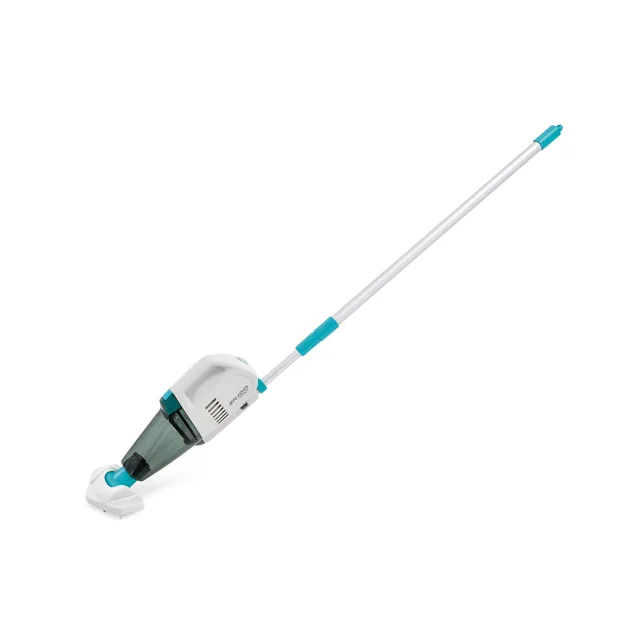
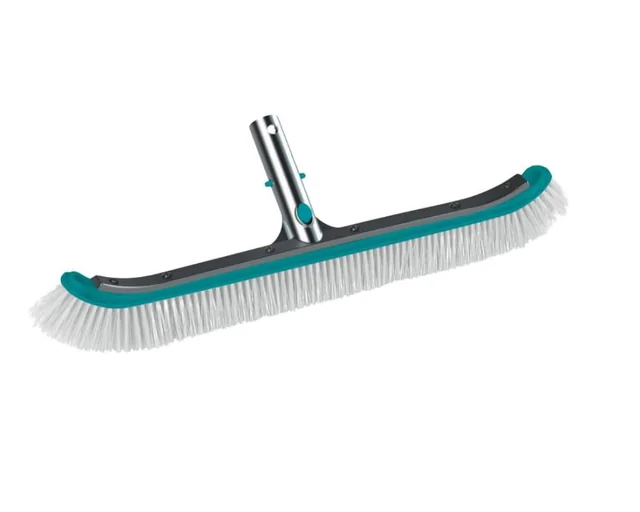
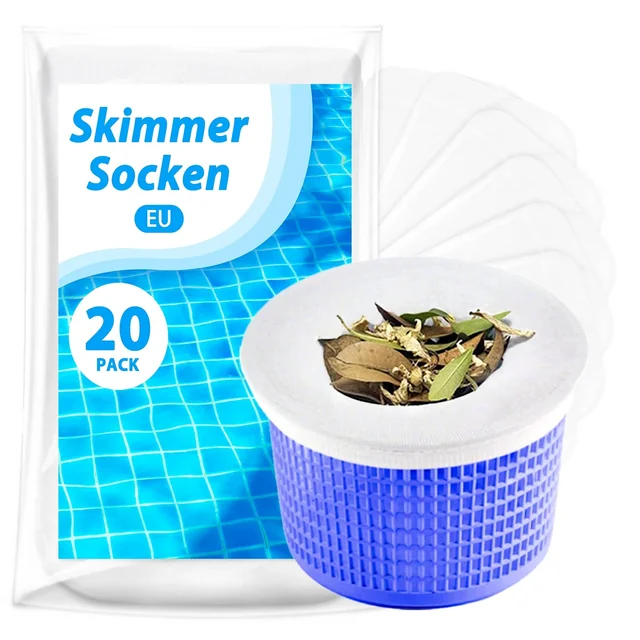
Keep it clear and covered
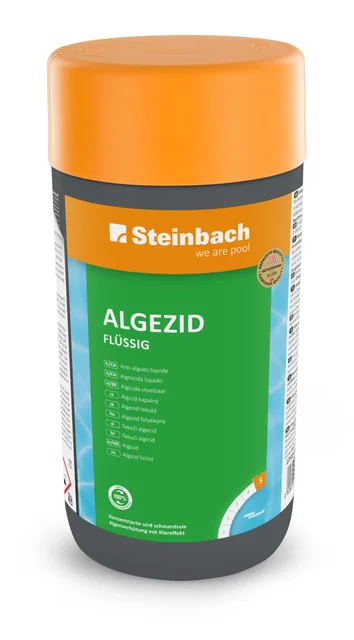
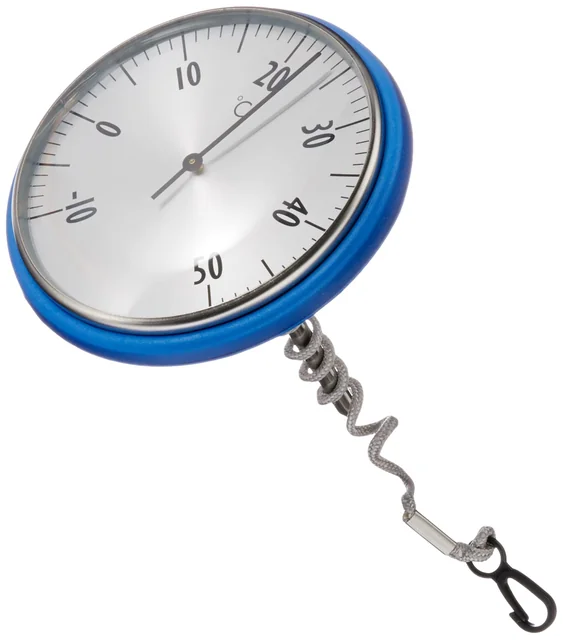
Flocculant and algae prevention help when the values are right. A cover keeps leaves out, and a thermometer shows you the water temperature for the filter running time.
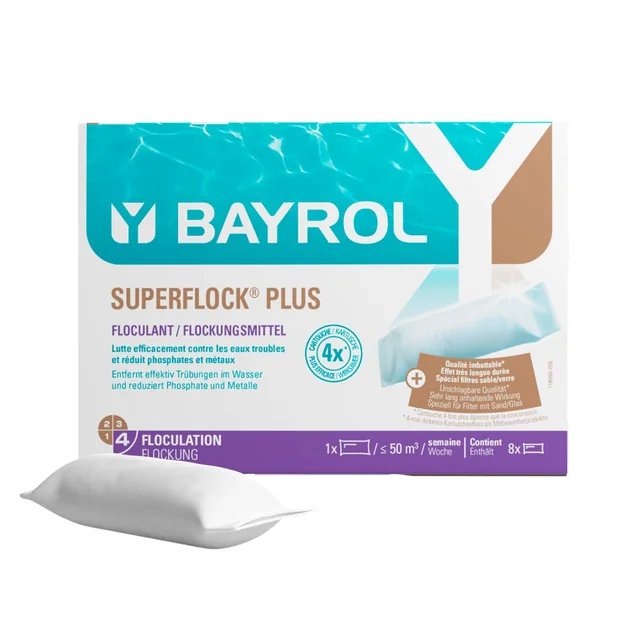
Prices are a non-binding guide and may vary; the price shown on Amazon at the time of purchase always applies.

Pure water — not just in the pool
From reverse osmosis to water testing: water expertise from a single source.
To smardy blueQuick answers
Common questions about pool care
How often should I test my pool water?
During the swimming season, test the pH level and free chlorine 2–3× a week, and daily in hot weather or when many people are swimming. For alkalinity, cyanuric acid and hardness, about once a month is enough, plus after heavy rain or adding fresh water.
In what order should I adjust the water values?
First the alkalinity, then the pH level, and finally the chlorine. Alkalinity buffers the pH level, and the pH level determines how well the chlorine works. Add the products one after the other and measure again after a few hours.
How long does the pool pump need to run each day?
As a rule of thumb, a manufacturer recommends the water temperature divided by 2 in hours – so at least 13 hours at 26 °C, and around the clock above 30 °C. Other manufacturers give their own values; the instructions for your system take priority.
When do I need to backwash the sand filter?
When the pressure on the pressure gauge is well above the reading right after the last backwash. A manufacturer recommends about once a week for 3 to 5 minutes, then rinsing briefly. The instructions for your system take priority.
Why is my pool cloudy even though I use chlorine?
Often the pH level is too high – then the chlorine works poorly. A dirty sand filter is also a common cause. Measure the pH level and chlorine, adjust them, backwash the filter and let it run longer. If that does not help, a flocculant binds fine particles.
Do I need to look after a saltwater pool differently?
The salt water chlorinator produces the chlorine itself – but you still need to measure. Check the pH level and free chlorine as with any pool, and the salt content according to the instructions for your system, because the target value depends on the device. A manufacturer recommends checking the cyanuric acid as well.
How do I prevent algae in the pool?
Keep the pH level at 7.0–7.4 and the free chlorine at 0.3–0.6 mg/l, let the filter system run long enough and brush the walls and floor once a week. A manufacturer also recommends adding an algae prevention product once a week according to the label.
Help or advice — feel free to get in touch
Phone: 0800 8727 739
Real people no hold queue — we’re here for you personally.
Mon–Fri 9:00–15:00 · free of charge
Email: info@smardy-blue.com
Drop us a line — we usually reply to every message personally within 24 hours.
Contact us
Still have a question? Through our contact form you’ll quickly find the right answer.