


In a freshwater aquarium, the key values are pH, KH, GH, ammonium, nitrite and nitrate; ammonium and nitrite should be at zero. In an established tank, a weekly check is usually enough; test more often during cycling, after changes or if the animals behave unusually. Test strips suit routine checks, drop tests precise single values.
Good to know
The key values at a glance
In the aquarium, water chemistry decides whether fish and plants thrive. Especially in the first weeks and after changes, testing is a must.
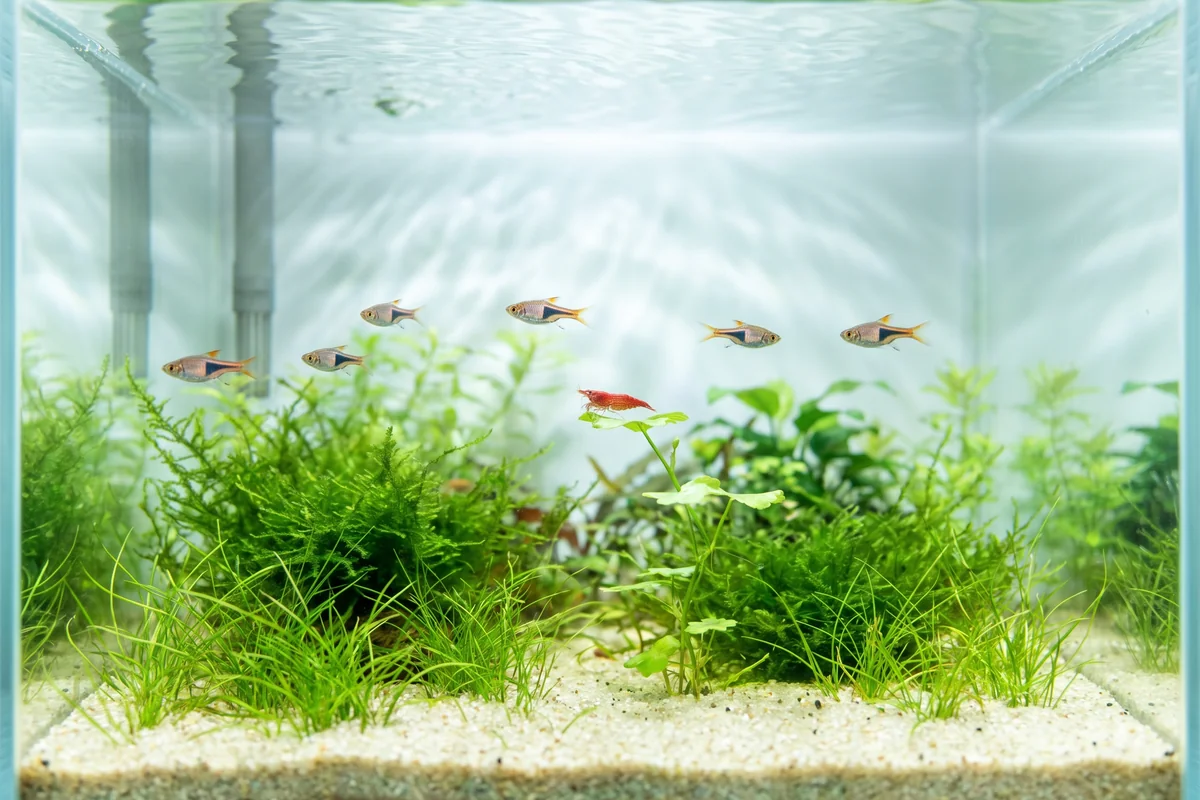
Why should you test your aquarium water?
Clear water does not automatically mean all values are in the safe range. Nitrite, ammonium/ammonia or an unstable pH in particular stress fish, shrimp, plants or corals before you notice much on the outside.
Regular testing takes the guesswork out of care: you spot earlier whether a water change is needed, whether the cycling phase is running stably, or whether unusual behaviour of your animals calls for a closer look.
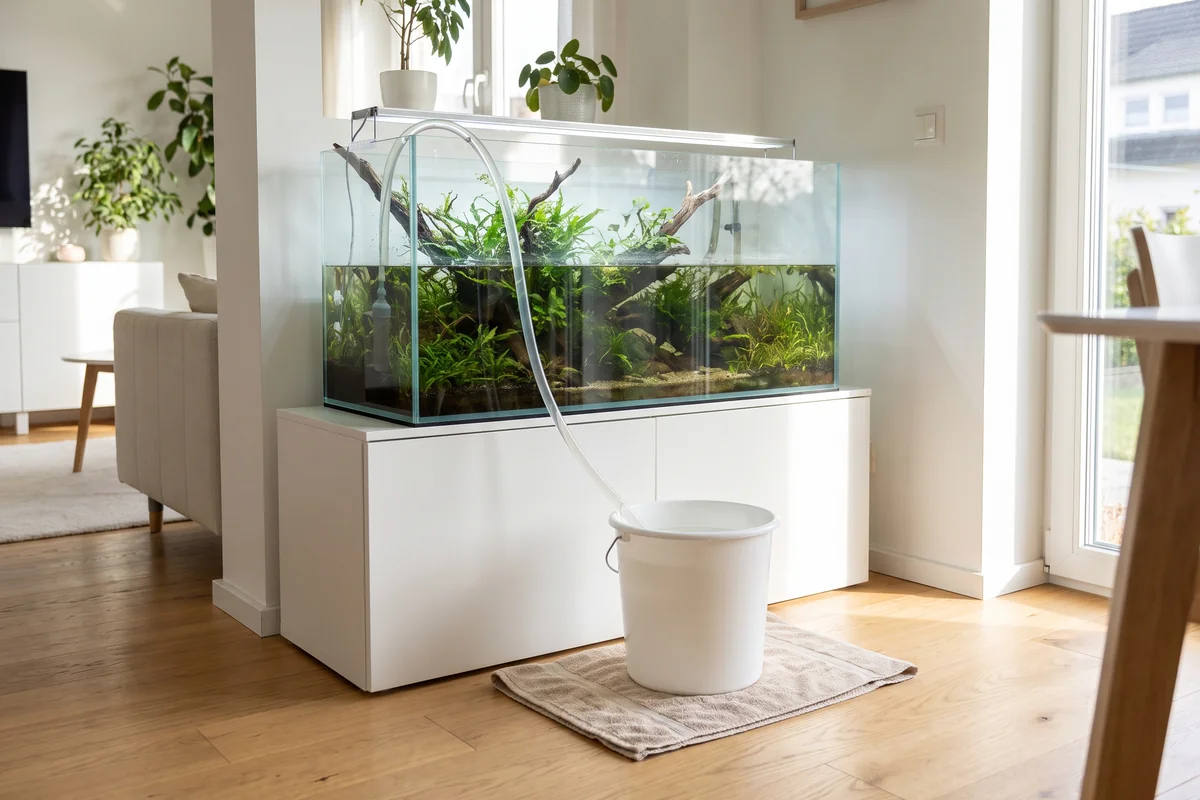
When is an aquarium test especially worthwhile?
A test is particularly worthwhile in these situations:
- during the cycling phase of a new aquarium
- after a water change, filter cleaning or technical problems
- with new fish, shrimp, snails, plants or corals
- when animals breathe heavily, hide or seem restless
- with algae problems, cloudy water or an unusual smell
- for routine checks in the freshwater aquarium
- for basic orientation in the marine aquarium, especially pH, KH, nitrate and salinity
Values at a glance
The values you should check
Tap a value: you'll see the ideal range on a scale, what matters – and the right test methods.
The pH is ideal for most freshwater fish at 6.5-7.5; in seawater more like 8.0-8.4.
How to test this value
Carbonate hardness buffers the pH and keeps it stable - the key against pH fluctuations.
How to test this value
Overall hardness is important for many fish and plant species and osmosis.
How to test this value
Ammonium/ammonia: even traces are toxic; occur primarily when driving in.
How to test this value
Nitrite is highly toxic to fish and must be kept at zero levels permanently.
How to test this value
Nitrate is the end product of the cycle; keep it low by changing water.
How to test this value
Free chlorine from tap water is toxic to fish - remove with a water conditioner.
How to test this value
Salinity is a core value in saltwater aquariums, but in freshwater it is only relevant if salt is added specifically.
How to test this value

What to test with?
The Drop test is the standard in the aquarium because it titrates precisely. Test strips give a quick overview for routine checks.
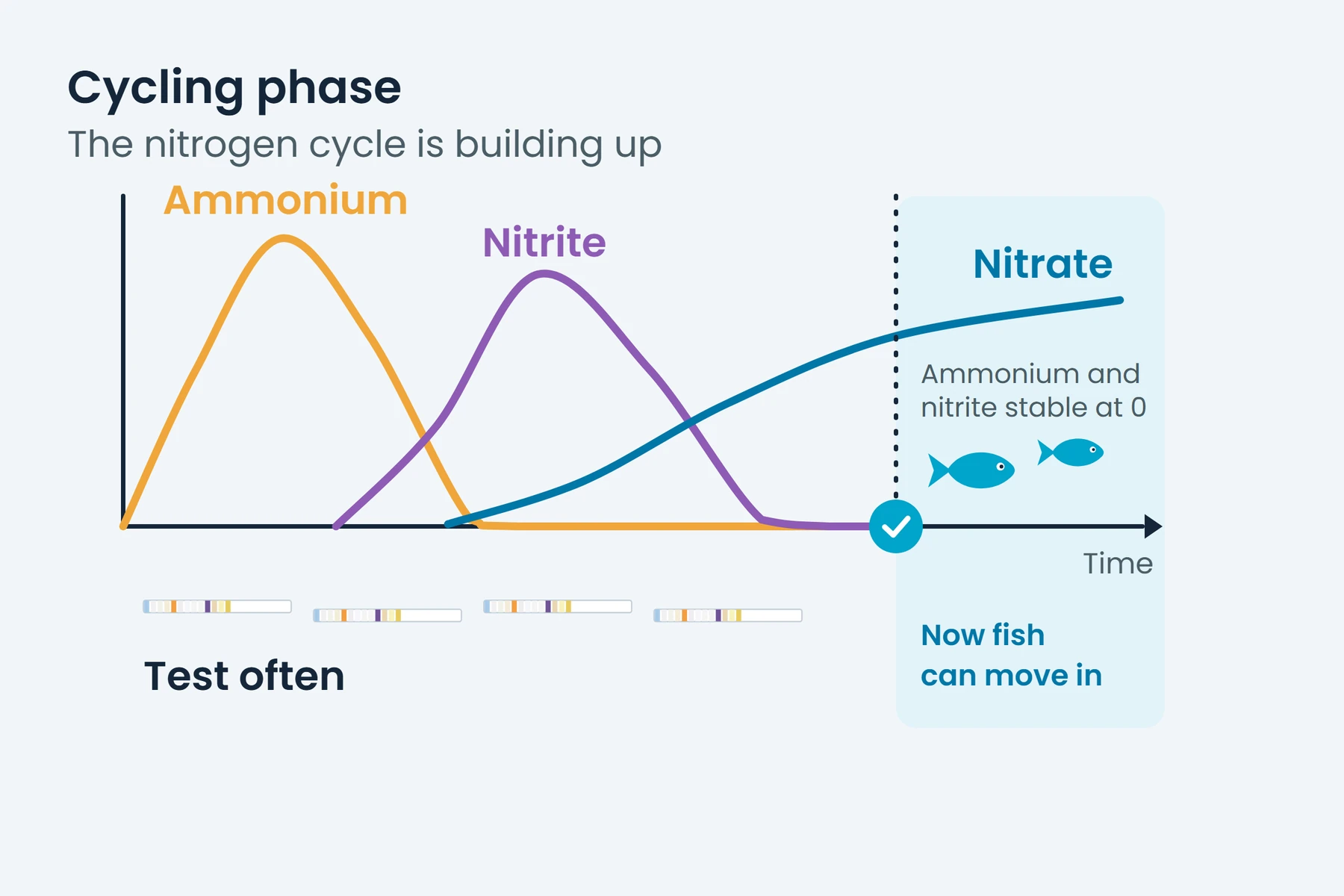
Especially important when cycling the tank
During the break-in phase, the nitrogen cycle is still building up. Test ammonium and nitrite often during this time — only once both are stable at zero should fish move in.
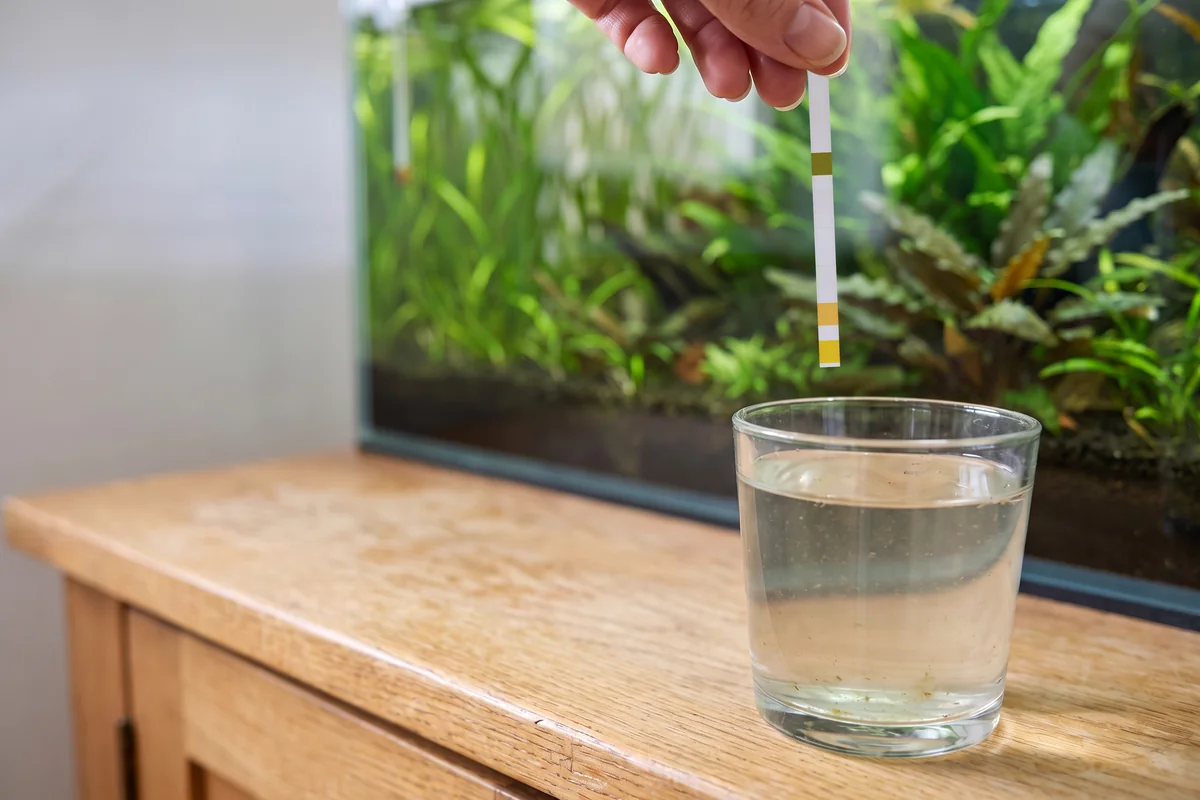
How to test your aquarium water correctly
- Take the test strip out of the tin only just before measuring.
- Briefly dip the strip into the aquarium water as instructed.
- Do not touch the test pads with your fingers.
- Keep to the waiting time and compare the colours with the scale.
- Note the values, especially nitrite, nitrate, pH and KH.
- If values look off, test again and if needed do a water change or a more precise analysis.
In short
Ammonium and nitrite must be at zero. Test often during cycling — only then add fish.

Pure water — not just in the aquarium
From reverse osmosis to water testing: water expertise from a single source.
To smardy blueQuick answers
Frequently asked questions about testing aquarium water
How often should I test my aquarium water?
In an established tank a weekly check of the core values is usually enough. During cycling, after changes or with unusual animal behaviour you should test more often — especially ammonium and nitrite.
Which values matter most in a freshwater aquarium?
The most important are pH, KH and GH as well as ammonium/ammonia, nitrite and nitrate. KH buffers the pH, ammonium and nitrite must be zero, and you keep nitrate low with water changes.
Which values matter in a marine aquarium?
Besides pH, KH, nitrite and nitrate, salinity (density) is a core value in marine tanks. Demanding reef tanks additionally track values like calcium and magnesium, usually via more precise drop tests.
Why is nitrite so critical in an aquarium?
Nitrite forms as an intermediate stage in the breakdown of ammonium and is highly toxic to fish even in small amounts. It blocks oxygen transport in the blood — which is why nitrite must stay permanently at zero.
Are aquarium test strips accurate enough?
For regular routine checks, test strips quickly give several values at once. For very precise single values — such as in sensitive shrimp tanks or in marine water — a drop test is the better choice.
Can I use the test strips for pond water too?
Yes, for a quick orientation in the garden pond, aquarium test strips are suitable to a limited extent. For targeted pond care there are dedicated pond tests tuned to the relevant values.
Help or advice — feel free to get in touch
Phone: 0800 8727 739
Real people no hold queue — we’re here for you personally.
Mon–Fri 9:00–15:00 · free of charge
Email: info@smardy-blue.com
Drop us a line — we usually reply to every message personally within 24 hours.
Contact us
Still have a question? Through our contact form you’ll quickly find the right answer.