

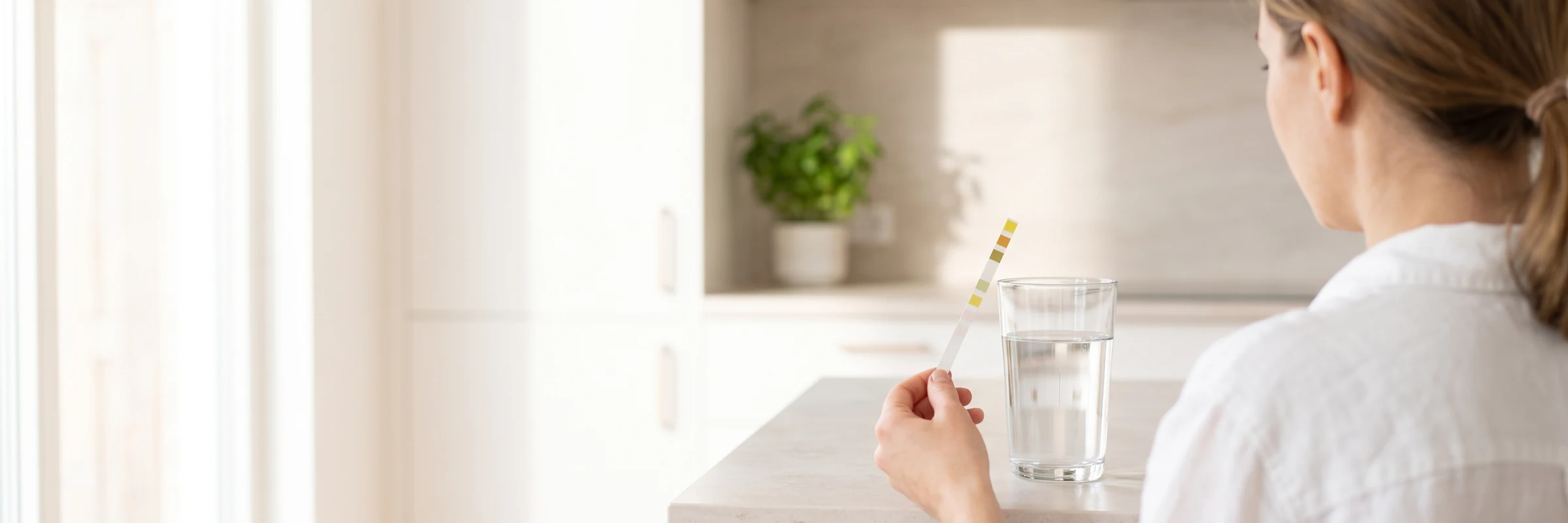
In everyday life, water hardness and pH matter most, while nitrate, nitrite, lead, copper and coliform bacteria have strict legal limits. Test strips give you a quick orientation for hardness, pH and basic values at home. For lead, nitrate or bacteria, a mail-in lab test is the reliable choice, and you test again if taste, smell or colour change.
Good to know
The key values at a glance
Tap water in Germany is strictly monitored — but only up to the property line. What comes through your own pipes after that, you can test yourself.

Why should you test your drinking water?
Tap water is strictly monitored in Germany — but only up to the house connection. What comes through your pipes, fittings, boiler or rarely used taps after that can affect water quality.
A test shows you how the water actually arrives at your home. It is especially useful when moving in, in a newly taken-over property, with your own well, or when you notice changes — without having to commission a costly lab analysis right away.

When a test is worthwhile
- old house with old pipes (lead, copper)
- baby or toddler in the household (nitrate, lead)
- own well or house connection without public treatment
- limescale problems, discolouration or changed taste
- when the water smells, tastes or looks different than usual
- after longer absence, vacancy or rarely used taps
- as a regular check for filters, softeners or water treatment
Tap water quality: what comes out of your tapHow often to test water: your test plan
Values at a glance
The values you should check
Tap a value: you'll see the limit or range on a scale, what matters – and the right test methods.
The pH value shows whether the water is acidic or basic. The allowable area protects pipes and taste.
How to test this value
Water hardness indicates how much lime is dissolved. No limit value, but important for appliances and dosing.
How to test this value
Nitrate mostly comes from fertilisation and agriculture. The limit is 50 mg/l.
How to test this value
Nitrite is an intermediate stage of nitrogen breakdown and is problematic for babies.
How to test this value
Lead comes from old lead pipes. A particularly strict limit applies to it.
How to test this value
Copper comes from copper pipes. Elevated levels occur mainly with acidic water and long standing times.
How to test this value
Iron turns the water brownish and gives it a metallic taste.
How to test this value
E. coli and coliform germs do not belong in drinking water. In cases of suspicion, only a laboratory test can help.
How to test this value
pH level of water, simply explainedDrinking water advisor: understand your test results
What to test with?
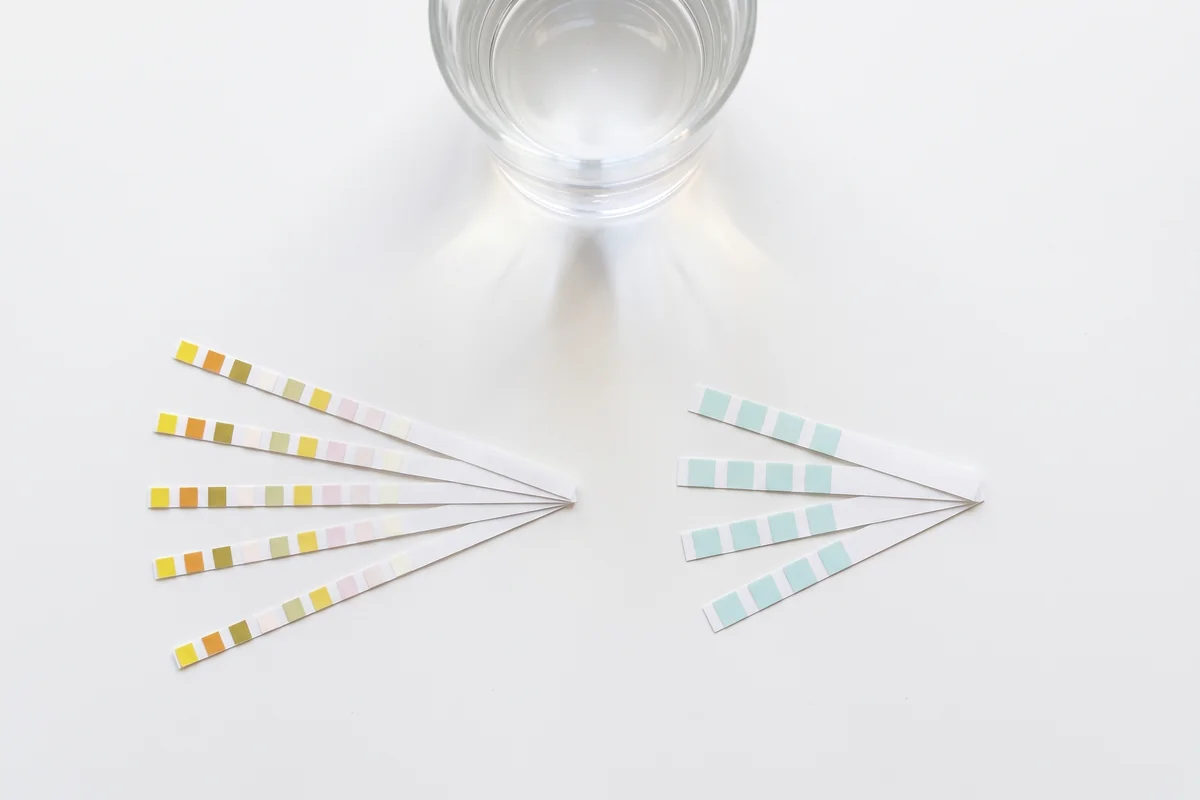
Test strips show hardness and key values quickly at home. For lead, nitrate and bacteria, a Lab test the safe choice via mail-in.
How to test your drinking water correctly
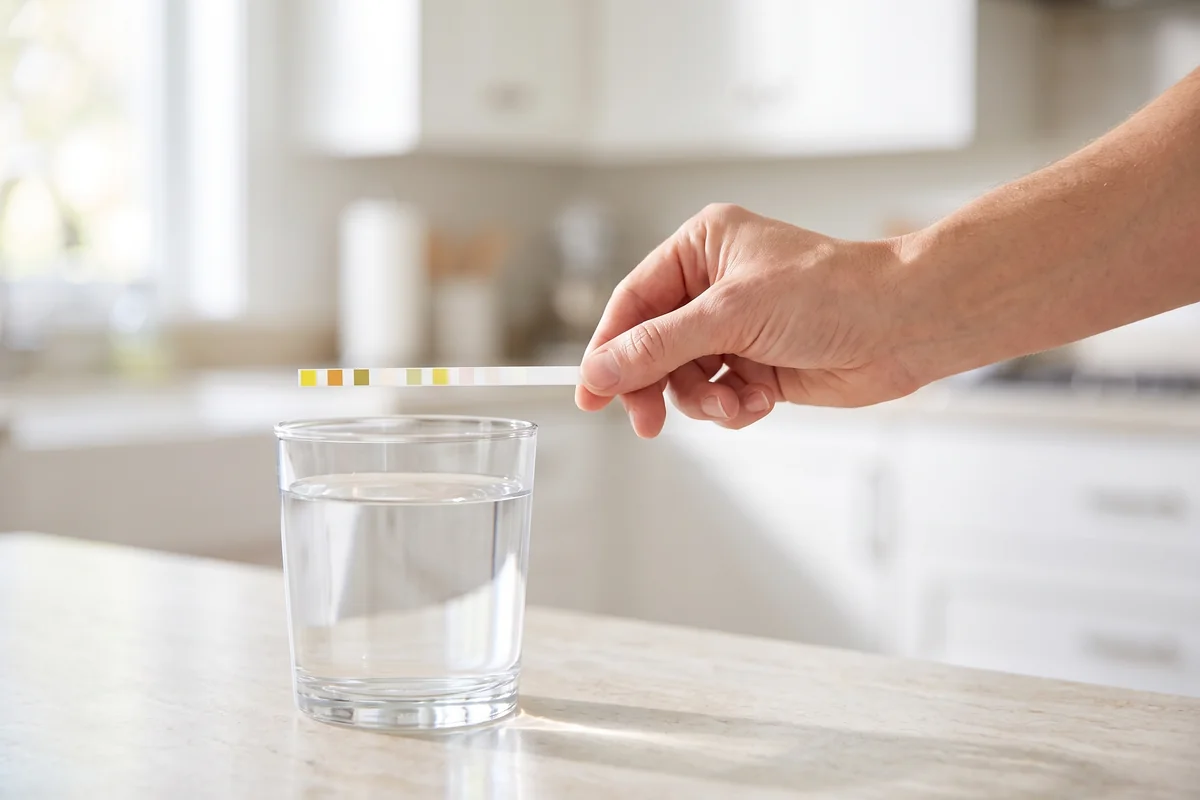
- Use a clean glass or measuring cup free of detergent residue.
- Let the water run briefly if you are testing normally used tap water — or take stagnant water on purpose for the worst case.
- Briefly dip the test strip as instructed.
- Keep to the waiting time and do not touch the test pads with your fingers.
- Compare the colour fields with the scale in good light.
- If results look off, test again or consider a lab analysis.
In short
For hardness & key values, test strips are enough. For Lead, nitrate and bacteria a lab test is the safe choice.

Pure water — not just in the pool
From reverse osmosis to water testing: water expertise from a single source.
To smardy blueQuick answers
Frequently asked questions about testing drinking water
How often should I test my drinking water?
A single measurement is enough for a first overview. After that, retest when taste, smell or colour change, after moving, with your own well, or when sensitive people live in the household.
Are drinking water test strips accurate enough?
For hardness, pH and basic values, test strips give a good quick orientation at home. For safety-relevant values like lead, nitrate or bacteria, a mail-in lab test is the reliable choice.
Can I test well water too?
Yes. Especially your own well or spring water without public treatment should be checked. Test strips give a first impression; for nitrate, lead and germs a lab analysis is additionally recommended.
Which drinking water values should I watch most?
Practically important are water hardness and pH. Strictly regulated are above all nitrate, nitrite, lead, copper as well as coliform bacteria and E. coli — these have fixed limits under the drinking water regulation.
What do I do with unusual test results?
First repeat the test with fresh water and a new strip. If the value is confirmed, a lab analysis helps with a reliable assessment — for lead, for instance, it is worth checking the house pipes.
Which test suits home use?
For a broad overview, multi test strips that cover many values at once are ideal. If you are mainly concerned with limescale and appliances, dedicated water hardness strips are enough.
Help or advice — feel free to get in touch
Phone: 0800 8727 739
Real people no hold queue — we’re here for you personally.
Mon–Fri 9:00–15:00 · free of charge
Email: info@smardy-blue.com
Drop us a line — we usually reply to every message personally within 24 hours.
Contact us
Still have a question? Through our contact form you’ll quickly find the right answer.