

It depends on the water: test pool pH and free chlorine 2–3 times a week in season, a hot tub at every use and a cycled aquarium weekly. Test a pond every 1–2 weeks in season. For drinking water, one baseline test is enough; well water you drink needs a lab test at least once a year.
Good to know
Why the right rhythm matters
Water can look clear even though individual values are already drifting. If you test regularly, you spot changes early and only need small adjustments.
Regularly, not just when there are problems
Cloudy water, algae or stressed fish are usually the result of values that have been off for some time. A fixed testing rhythm shows you the trend before you see anything.
On top of that, if you adjust early, you need smaller amounts of care products. A single reading says little – only several values with dates show whether something is changing.
The rule of thumb: small, warm and busy means more often
How often you test depends on how quickly your water changes. The less water, the warmer it is and the more people or animals use it, the more often a test is worthwhile.
- Hot tub: Little water, high temperature, many bathers – this is where you test most often.
- Pool: Several times a week during the swimming season, more often in hot weather.
- Aquarium and pond: Very often at the start, then on a fixed weekly rhythm.
- Drinking water: Monitored by your water supplier – you mainly test when there is a reason.
Test plan
How often to test in each category
Target values for everyday use. The instructions for your test and your equipment always take priority.
2–3 × a week
pH level and free chlorine. Daily in hot weather or with many bathers; alkalinity, cyanuric acid and hardness about once a month.
every use
Check pH level and sanitiser before bathing – at least once a week even when not in use.
daily to every 2 days
Ammonium, nitrite, pH level and KH, until ammonium and nitrite stay at 0 for several days.
1 × a week
Ideally before the water change. More often in the first weeks after adding new fish stock.
every 1–2 weeks
Weekly at the start of the season in spring, less often in winter – values change slowly then.
once and when needed
A test shows you your current status. Test again after moving house, pipework or if the water seems unusual.
at least 1 × a year
If you drink the water, have it analysed by a laboratory. For garden watering, a check at the start of the season is usually enough.
when setting up
Measure the hardness once and set it. Measure again after moving house or if your water supplier reports a new hardness.
Want to know what the individual values mean? All water values explained
Extra tests
Occasions when you test extra
Besides your fixed rhythm, there are moments when values change especially quickly. That is when an extra test is worthwhile.
Weather
Heat and rain
- Heatwave and strong sun
- Heavy rain or thunderstorms
- For ponds and wells, also after flooding
Use
Heavy use
- Pool party or many bathers
- New fish or pond inhabitants
- After adding medication to the aquarium
Water
New water
- After a water change or topping up
- After moving house or pipework
- After a pipe or pump has been idle for a long time
Unusual
Something is different
- Cloudy or greenish water
- Unusual smell or taste
- Fish behave differently than usual
Step by step
How testing becomes a routine
With these six steps you get values you can compare – and you never forget a test again.
- 1
Choose fixed days
Set fixed days of the week, for example Monday and Thursday for the pool. A reminder on your phone helps you stick with it.
- 2
Always at the same time
The pH value in ponds and aquariums changes over the day. So always test at the same time, otherwise you are comparing apples and oranges.
- 3
Take the sample correctly
Take the sample a little below the surface and not right at the inlet. In pools and hot tubs, let the pump run for a while first.
- 4
Follow the instructions exactly
Only take the test strip out of the container right before testing and stick exactly to the waiting time. Read too early or too late, the value will be wrong.
- 5
Note down the values
Write down the date, time and values, plus the weather or special events. That way you can see whether a value is slowly drifting.
- 6
Adjust and re-test
If a value is off, adjust it according to the label and test again after a few hours. If it stays unusual, test more often over the next few days.
Pool: which value how often
In a pool, the pH level and free chlorine change fastest – sun, warmth and bathers use up chlorine. The other values stay stable for longer.
- 2–3 × a week: pH level (7.0–7.4) and free chlorine (0.3–0.6 mg/l).
- Daily: In hot weather, with many bathers or after a pool party.
- About once a month: Alkalinity, cyanuric acid and hardness – also at the start of the season and after a lot of rain or fresh water.
Hot tub: little water, fast changes
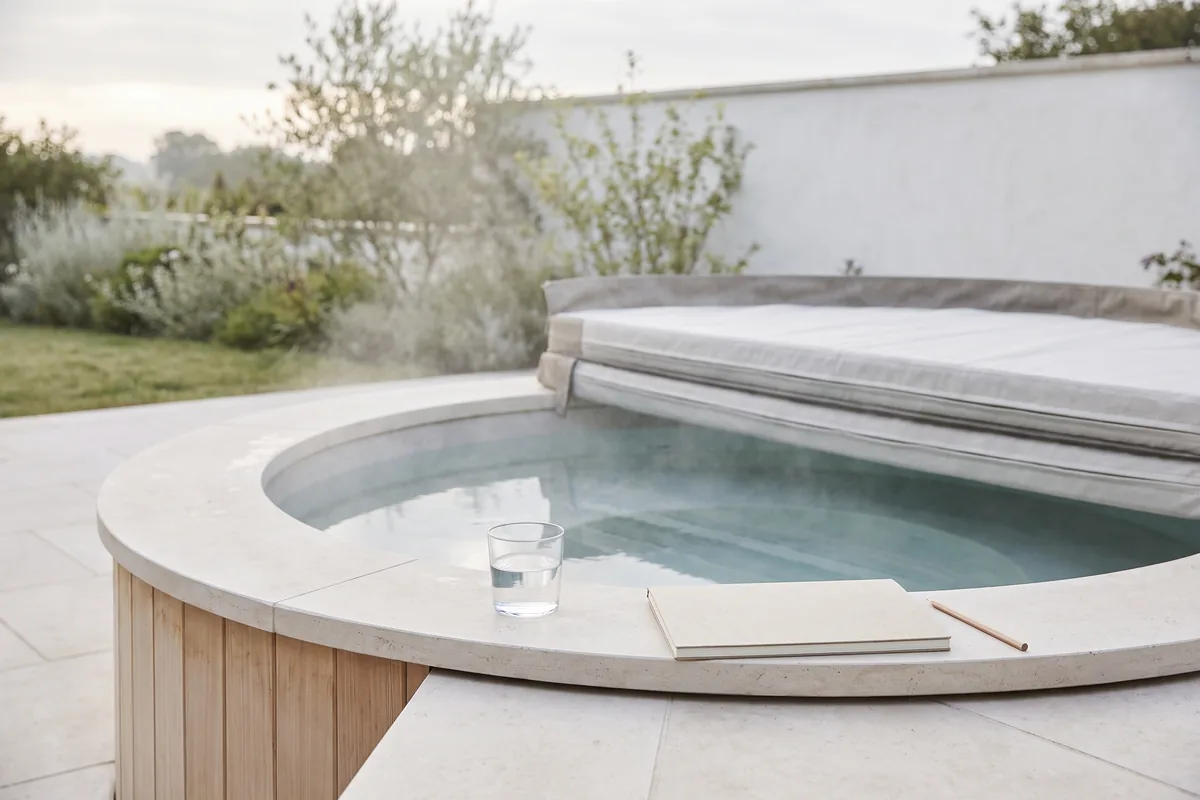
In a hot tub, many bathers share a small amount of warm water. That is why values change much faster here than in a pool. Manufacturers recommend checking the pH level and sanitiser every time you use it.
- Before bathing: Measure pH level and chlorine or bromine and adjust if needed.
- When not in use: Test at least once a week.
- Pump on: The pump runs before every test and every time you add care products.
Aquarium: often at first, then weekly
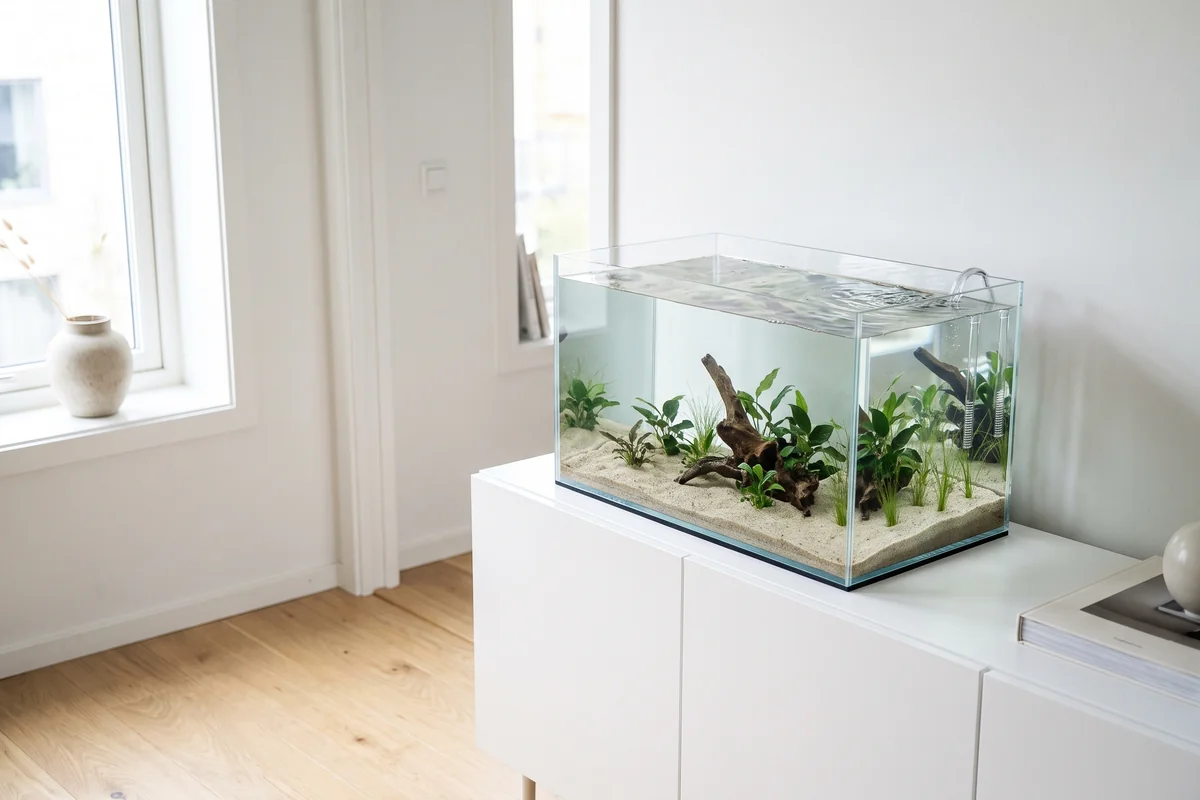
In a new tank, the filter bacteria first have to settle in. During this cycling phase, you measure ammonium, nitrite, pH level and KH daily or every other day.
Once ammonium and nitrite have stayed at 0 for several days, the first fish can move in. In the first weeks after that, you keep testing often; then once a week is usually enough – ideally before the water change.

Garden pond: by season
- Spring: At the start of the season, measure all values once, then weekly – especially nitrite.
- Summer: pH level, KH, nitrite and nitrate every 1–2 weeks, plus KH and pH level after heavy rain.
- Autumn: Check nitrate and phosphate when leaves fall into the water.
- Winter: Test less often – values change slowly in cold water.
Drinking water and wells: when needed and yearly
Up to the building service connection, your water supplier monitors the drinking water and informs you about its quality at least once a year. Your own test shows you what comes out of your tap – once as a baseline and again when something changes.
It is different with your own well: no supplier monitors the water. If you use it as drinking water, the German Drinking Water Ordinance requires you to have it analysed in a laboratory at least once a year.
Storing test strips correctly
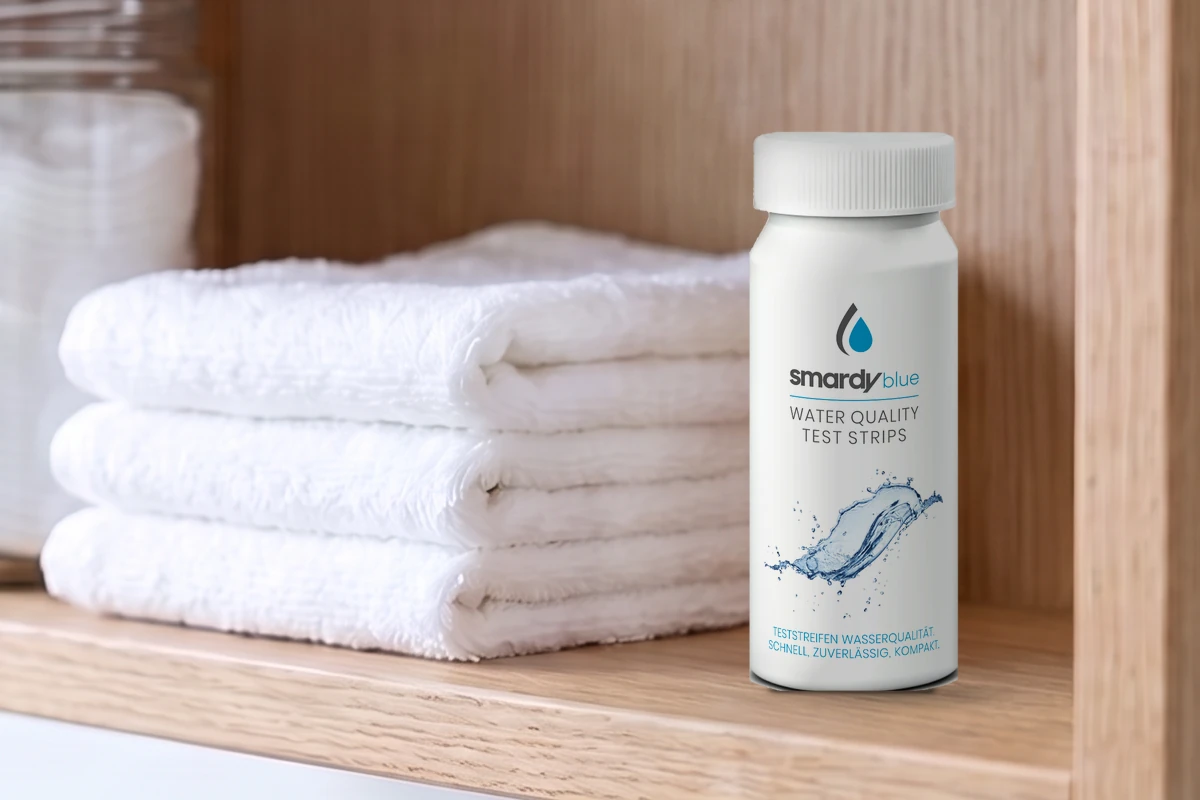
Testing regularly also means your test strips have to stay reliable down to the last strip. Moisture, light and warmth distort the test pads.
- Close the container straight away: Take out one strip and close the container again right away.
- Dry and cool: Store the container somewhere dry and dark, not in direct sun at the poolside.
- Do not touch the pads: Hold the strip by the handle end, never by the test pads.
- Check the shelf life: Once the date on the pack has passed, use new strips.
In short
The smaller, warmer and busier your water, the more often you test: the hot tub every time you use it, the pool 2–3 × a week in season, a new aquarium daily to every 2 days, then weekly, the pond every 1–2 weeks. Drinking water you test once and when needed, a drinking water well at least once a year in a laboratory. On top of that come tests after heat, heavy rain, a water change or whenever you notice something.
Sources: German Drinking Water Ordinance 2023 (§§ 29, 45), care instructions from pool, hot tub, aquarium and pond manufacturers, guides from the German Environment Agency (Umweltbundesamt). As of: October 2026.
Products
What suits your test plan
Our tests for every category – plus thermometers from other brands on Amazon, because temperature helps decide how often you test.
Advertising: As an Amazon Associate we earn from qualifying purchases.
Pool and hot tub
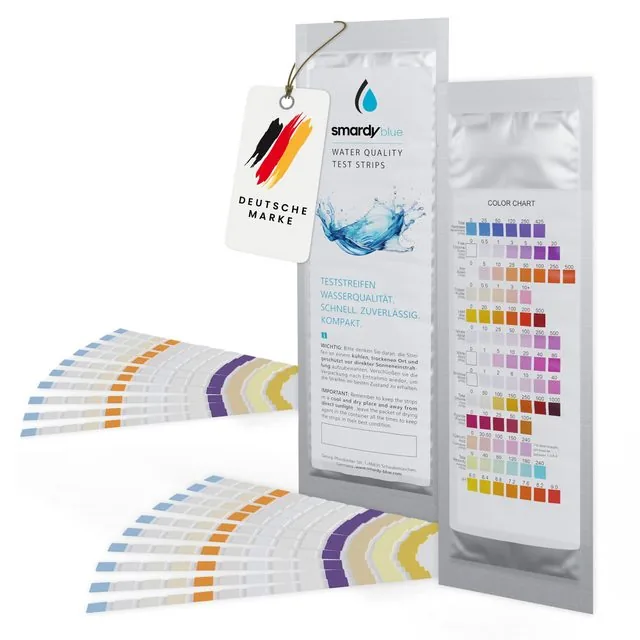
For testing 2–3 × a week: test strips or shake test for pH level and chlorine – and cyanuric acid once a month.

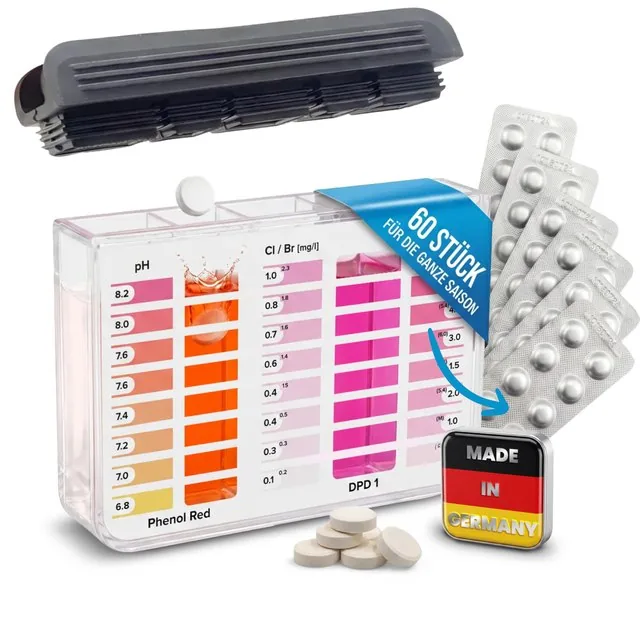
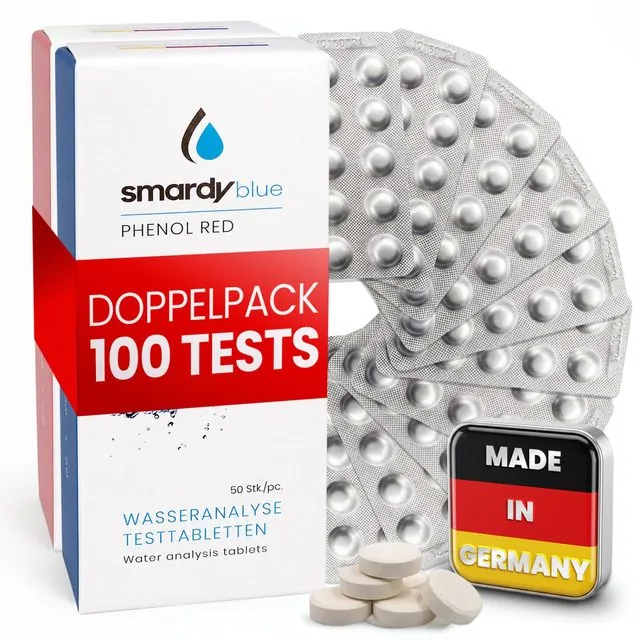
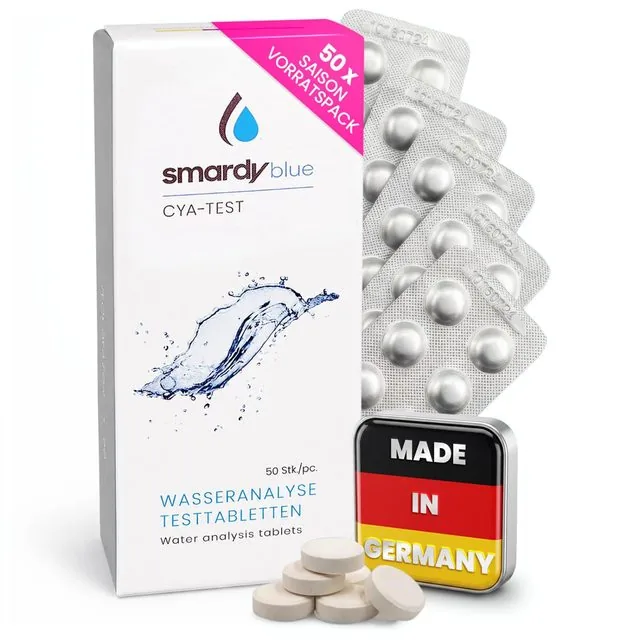
Aquarium and pond
For the cycling phase and the weekly rhythm: one strip for nitrite, nitrate, pH level, KH and GH – as a larger pack for frequent testing.
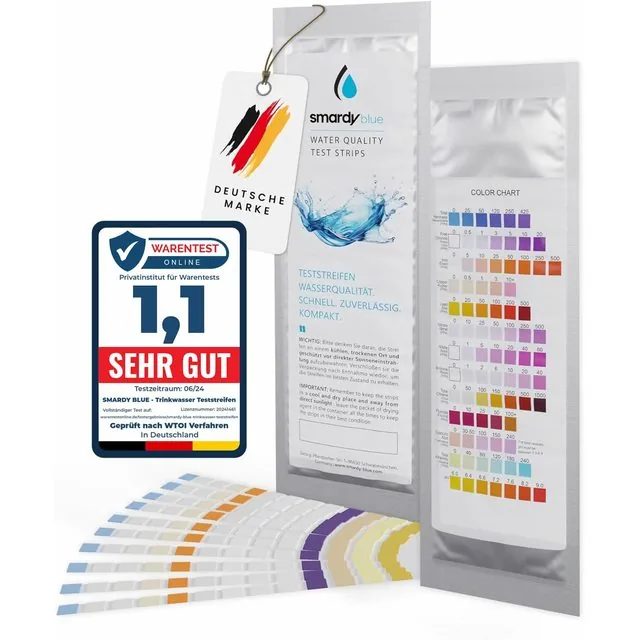
Drinking water and coffee machine
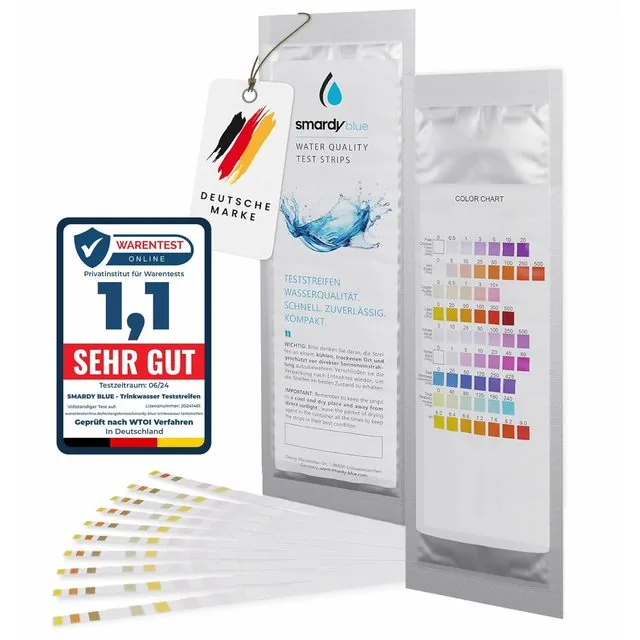
For your baseline and any occasion: test strips for the key values in tap water and for water hardness.
Keep an eye on temperature
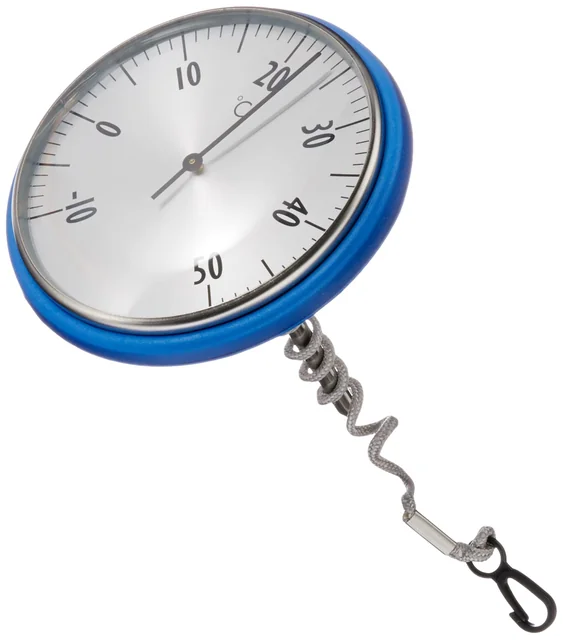
Warm water changes faster. With a thermometer you can see when you should test more often.
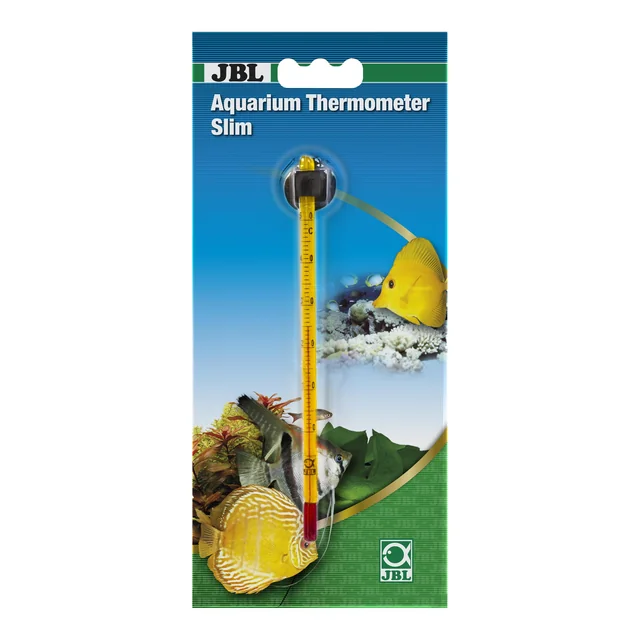
Prices are a non-binding guide and may vary; the price shown on Amazon at the time of purchase always applies.

Pure water — not just in the pool
From reverse osmosis to water testing: water expertise from a single source.
To smardy blueQuick answers
Common questions about how often to test
How often should I test my pool water?
During the swimming season, pH level and free chlorine 2–3 × a week, daily in hot weather or with many bathers. For alkalinity, cyanuric acid and hardness, about once a month is enough, plus after a lot of rain or fresh water.
How often should I test the water in my hot tub?
Manufacturers recommend checking the pH level and sanitiser every time you use it. If the hot tub is not in use, test at least once a week. Let the pump run before every test.
How often should I test my aquarium?
During the cycling phase, ammonium, nitrite, pH level and KH daily or every other day. After adding the first fish, keep testing often for the first weeks; after that, once a week is usually enough.
How often should I test my pond water?
Every 1–2 weeks during the season, plus at the start of the season in spring. Also after heavy rain, after a water change, when adding new fish and whenever the water or the behaviour of the fish changes.
Do I need to test my drinking water regularly?
Up to the building service connection, the water supplier monitors the water. For you, one test as a baseline is enough – and a new one after moving house, after pipework or if the taste, smell or colour changes.
How often should I test my well water?
If you drink it, at least once a year in the lab. Additionally after heavy rain or flooding, after a long period of non-use and if the taste, smell or colour changes. For irrigation water, a check with test strips at the start of the season is usually enough.
What time of day is best for testing?
Always at the same time, so you can compare the values. In ponds and aquariums, algae and plants use up carbon dioxide during the day, which makes the pH level rise. At night it drops again.
When should I test outside my usual routine?
After heat, heavy rain or thunderstorms, after a water change or topping up, after many bathers or new fish stock – and whenever the water turns cloudy, smells different or the animals behave differently.
Help or advice — feel free to get in touch
Phone: 0800 8727 739
Real people no hold queue — we’re here for you personally.
Mon–Fri 9:00–15:00 · free of charge
Email: info@smardy-blue.com
Drop us a line — we usually reply to every message personally within 24 hours.
Contact us
Still have a question? Through our contact form you’ll quickly find the right answer.