

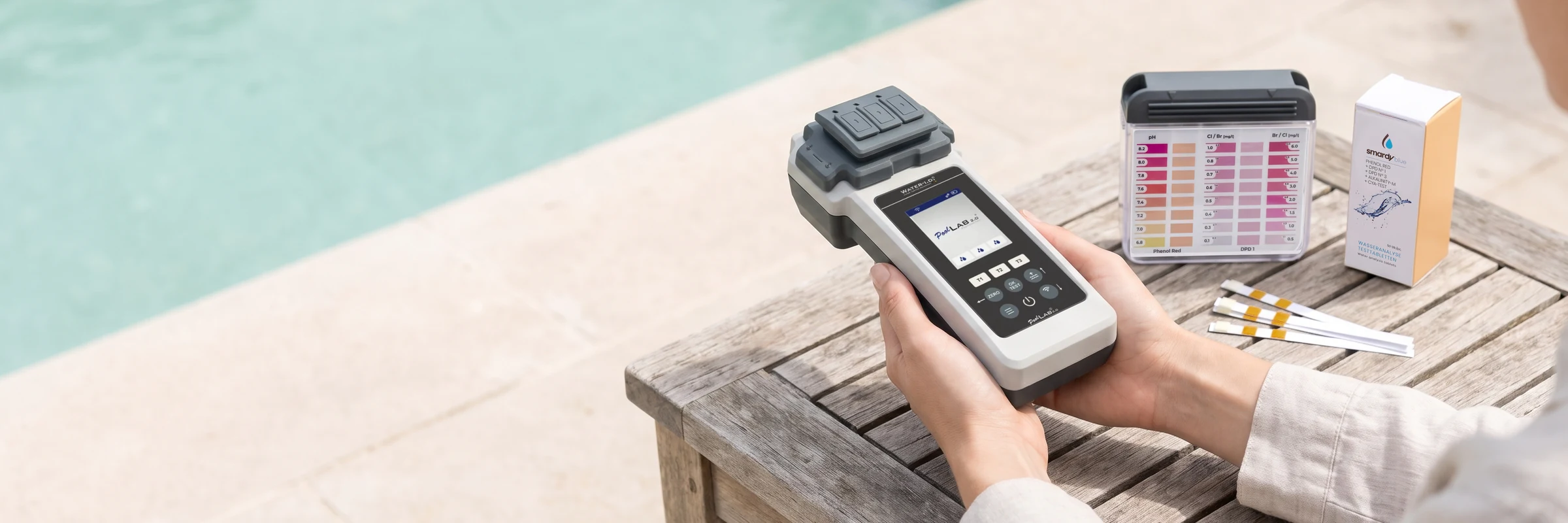
 Shake testerthe pool classic
 Photometerhigh precision
 Drop testread more precisely
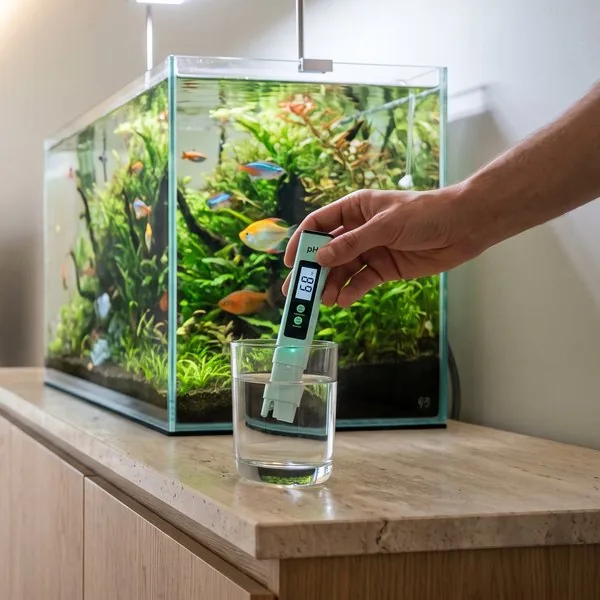
 Digital metersdigital & reusable
 Lab testvery accurate
A lab analysis and the photometer give precise figures. Test strips are enough for everyday use and show several values at once; drop tests and shake testers measure single values more precisely, and digital meters read pH, TDS or salt. For lead, nitrate and bacteria in drinking or well water, you need a lab test.
Guide · Method comparison
The right method for every value
For quick routine checks, test strips are enough — one dip, several values. When a single value gets critical, a reagent drop test or shake test is more accurate. If you want numbers without reading uncertainty, use a photometer or digital meters. Safety-relevant values like lead or bacteria belong in a lab test.
All 6 methods
The methods at a glance
| Method | Accuracy | Speed | Effort | Cost / test | Measurable values | Suited to |
|---|---|---|---|---|---|---|
| Test strips | solid | very fast | very low | € | many at once – pH, chlorine, hardness, nitrate … | Pool · drinking water · aquarium |
| Shake tester | good | fast | low | € | pH & chlorine | Pool & spa |
| Drop test | good–high | medium | medium | €–€€ | single values – pH, nitrite, carbonate hardness … | Aquarium · pond · pool |
| Photometer | very high | medium | medium | €€ | single values, very accurate | Pool (enthusiast) · aquarium keeping |
| Digital meters | high | Seconds | low | €€ device, then € | pH · TDS · salt – reusable | Pool · drinking water · aquarium |
| Lab test | very high | Days | very low | €€€ | Lead, bacteria, nitrate, heavy metals | Drinking water · well water |
€ = low · €€ = medium · €€€ = high cost per test (guide value). You'll find the current price on each product.
Decision aid
Which one suits you?
Everyday & getting started
Test strips — cheap, fast, hassle-free.
Pool under tighter control
shake tester or photometer — for pH & chlorine.
Aquarium & pond
Drop test — fine single values like nitrite.
Digital & reusable
pH, TDS & salt meters — no consumables.
Play it safe
Lab test — lead & bacteria in drinking and well water.
Test strips
fast & easyHow it works
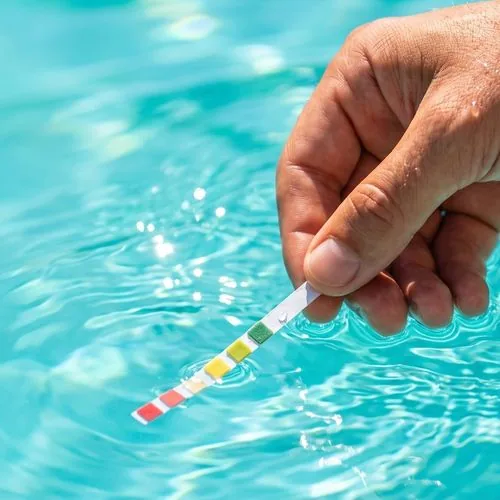
Dip the strip briefly into the water, wait a moment and compare the colour fields with the scale on the tin. One strip often shows several values at once — a quick all-round check.
Strengths
- Very fast — result in seconds
- Cheap, no accessories needed
- Several values in one step
- Ideal for routine checks
Limitations
- Reading by eye is subjective
- Less accurate than reagent or photometer methods
- Sensitive to moisture & age
Common mistakes
- Dipped too long or too briefly
- Shaking the strip instead of letting it drip
- Tin left open (moisture)
- Read in poor light
In short
A good way to start and the method for everyday use. If a value turns critical, you add a more precise method just for that.
Shake tester
the pool classicHow it works
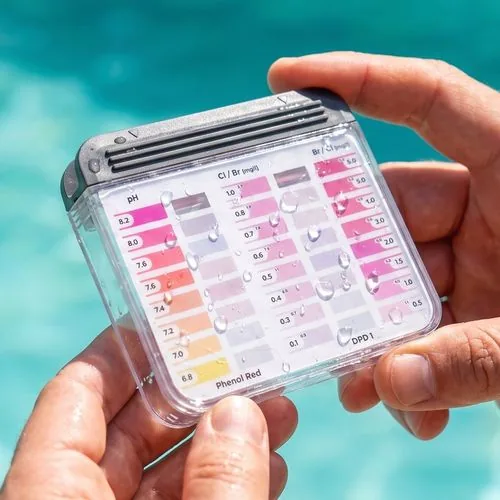
Put the sample water and a tablet into a tube, shake until the tablet has dissolved, and compare the colour with the colour scale — the classic for pH and chlorine at the poolside.
Strengths
- Robust and fast
- More accurate than strips for pH & chlorine
- Ideal right at the pool
Limitations
- Only a few values (mainly pH, chlorine)
- Colour matching is still a judgement by eye
Common mistakes
- Tablet not fully dissolved
- Tube not rinsed clean
- Compared against the wrong background
In short
A solid pool routine for pH and chlorine. For more precision or more values, switching to a photometer pays off.
Photometer
high precisionHow it works
Add a reagent tablet to the sample — the device measures the colour intensity electronically and shows an exact numerical value. No comparing by eye.
Strengths
- Very accurate, with no reading uncertainty
- Reproducible numerical values
- Well suited to keen pool owners & sensitive aquarium livestock
Limitations
- Higher purchase cost
- Tablets as consumables
- Measures single values one after another
Common mistakes
- Cuvette scratched or with fingerprints
- Tablet not fully dissolved
- Forgot the zero calibration (blank)
In short
A very accurate method for home use. Ideal if you want to track values accurately long-term.
Drop test
read more preciselyHow it works
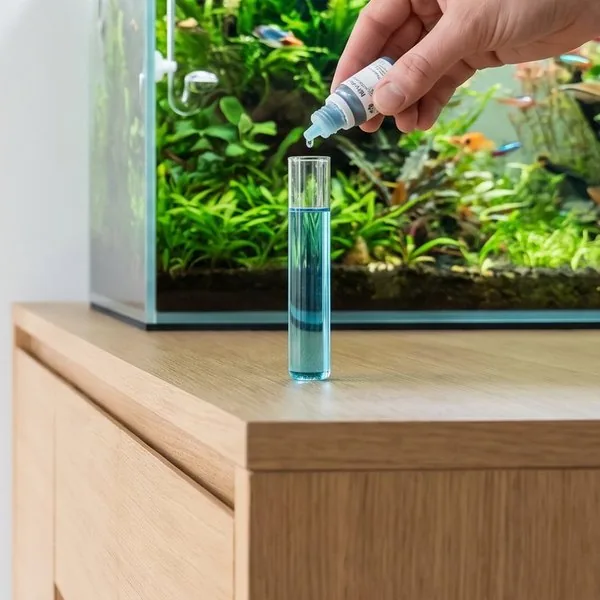
Add reagent drop by drop into the sample water and compare the colour with a scale — for titrations you count the drops until the colour changes. More accurate than strips, especially for critical values.
Strengths
- More accurate than test strips
- Strong for nitrite, pH, carbonate hardness
- Cheap to run
Limitations
- More steps, takes longer
- One value per test
Common mistakes
- Drops dosed too fast or at an angle
- Bottle not held upright
- Not rinsed between tests
In short
The accuracy classic of the aquarium hobby. Well suited when single values need to be read more finely.
Digital meters
digital & reusablePool salt tester: measure salinity digitallyTDS meter: measure dissolved solids digitally
How it works
Hold electronic devices for pH, TDS or salt into the sample — the value appears in seconds. Reusable, no reagents.
Strengths
- Ready in seconds & reusable
- No reagent consumption
- Very accurate per single value
Limitations
- Only the one value, not several at once
- Calibration required
- Electrodes age over time
Common mistakes
- Not calibrated, or too rarely
- Electrode stored dry
- Probe not rinsed before measuring
In short
Ideal for values you check regularly — buy once, measure long-term with no repeat purchases.
Lab test
very accurateHow it works
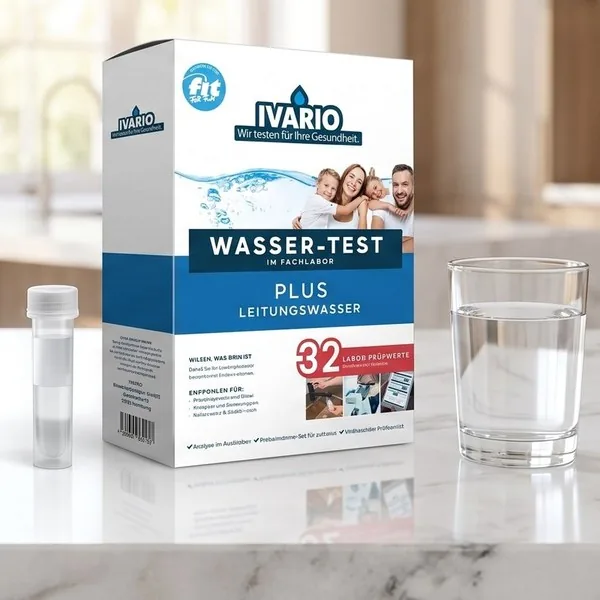
Fill the water sample as instructed and send it in. An accredited lab analyses safety-relevant values and sends you a reliable report.
Strengths
- Very high accuracy
- Detects what you can't see or taste: lead, bacteria, nitrate, heavy metals
- Reliable, documented results
Limitations
- Takes several days
- Highest cost per test
- No instant result
Common mistakes
- Sample filled uncleanly (hands/container)
- Waited too long before sending it off
- Wrong sampling point chosen
In short
The right choice when it comes to values with a legal limit. A reliable method for drinking and well water.

Pure water — not just in the pool
From reverse osmosis to water testing: water expertise from a single source.
To smardy blueQuick answers
Frequently asked questions about water test methods
How accurate are the test methods?
The lab analysis and the photometer are both very accurate. For everyday use, test strips are enough, showing several values at once. The right choice depends on how precise a value you need.
Which method suits beginners?
For getting started, test strips are ideal: cheap, fast and no accessories. They give a good all-round overview — you can add more precise devices later, once you want to track certain values in detail.
Which is more accurate — test strips or drop test?
The drop test is more accurate, because you dose the reagent amount in a more controlled way and read it more finely. In return it takes longer and measures one value per test. Test strips win on speed and several values in one step.
What is the difference between a shake tester and a photometer?
The shake tester compares a coloured water sample with a colour scale — good and fast for pH and chlorine. The photometer measures the colouring electronically and gives more precise numbers without reading uncertainty.
Are test strips enough or do I need a photometer?
For routine checks of pool, drinking or aquarium water, test strips are usually perfectly enough. A photometer is worthwhile if you want to track single values accurately — for example as an ambitious pool owner.
Are digital meters better than test strips?
Digital meters measure single values like pH, TDS or salt very precisely and are reusable. Test strips, in turn, cover several values at once. The two often complement each other depending on the use.
When do I need a lab test?
Always for safety-relevant values you cannot see or taste: lead, nitrate and bacteria in drinking or well water. A lab test provides legally sound, reliable results here.
Can I combine methods?
Yes, and it even makes sense to. Many use test strips for a quick overview and, for unusual or critical values, additionally reach for a drop test, photometer or a lab analysis.
Help or advice — feel free to get in touch
Phone: 0800 8727 739
Real people no hold queue — we’re here for you personally.
Mon–Fri 9:00–15:00 · free of charge
Email: info@smardy-blue.com
Drop us a line — we usually reply to every message personally within 24 hours.
Contact us
Still have a question? Through our contact form you’ll quickly find the right answer.